Recovering, together Respect, unconditional care drive Bruce Oake Recovery Centre staff as they lead participants from the darkness, despair of addiction
Read this article for free:
or
Already have an account? Log in here »
To continue reading, please subscribe:
Digital Subscription
One year of digital access for only $1.44 a week*
- Enjoy unlimited reading on winnipegfreepress.com
- Read the E-Edition, our digital replica newspaper
- Access News Break, our award-winning app
- Play interactive puzzles
*Billed as $5.77 plus GST every four weeks. After 52 weeks, price increases to the regular rate of $19.95 plus GST every four weeks. Offer available to new and qualified returning subscribers only. Cancel any time.
To continue reading, please subscribe:
Add Free Press access to your Brandon Sun subscription for only an additional
$1 for the first 4 weeks*
- Enjoy unlimited reading on winnipegfreepress.com
- Read the E-Edition, our digital replica newspaper
- Access News Break, our award-winning app
- Play interactive puzzles
*Your next Brandon Sun subscription payment will increase by $1.00 and you will be charged $17.95 plus GST for four weeks. After four weeks, your payment will increase to $24.95 plus GST every four weeks.
Read unlimited articles for free today:
or
Already have an account? Log in here »
10:30 a.m.
The Bruce Oake Recovery Centre is awash in summer light. Sun streams through the tall windows at the end of each hallway; through the glass walls of the group rooms, where the men here to recover from addiction are meeting; and through the entry atrium, where an urn holding the ashes of the centre’s namesake rests inside a glass case.
And sunlight dapples the walls of the facility’s family room as Bruce Oake executive director Greg Kyllo breezes in.
He flashes a megawatt smile and apologizes for being a few minutes late; it’s been a hectic morning, as usual. Intake runs around the clock. Men needing help, or their families, call at all hours of the night. Things change.
“It’s already been a day,” Kyllo says with a laugh.
MIKAELA MACKENZIE / FREE PRESS Bruce Oake executive director Greg Kyllo.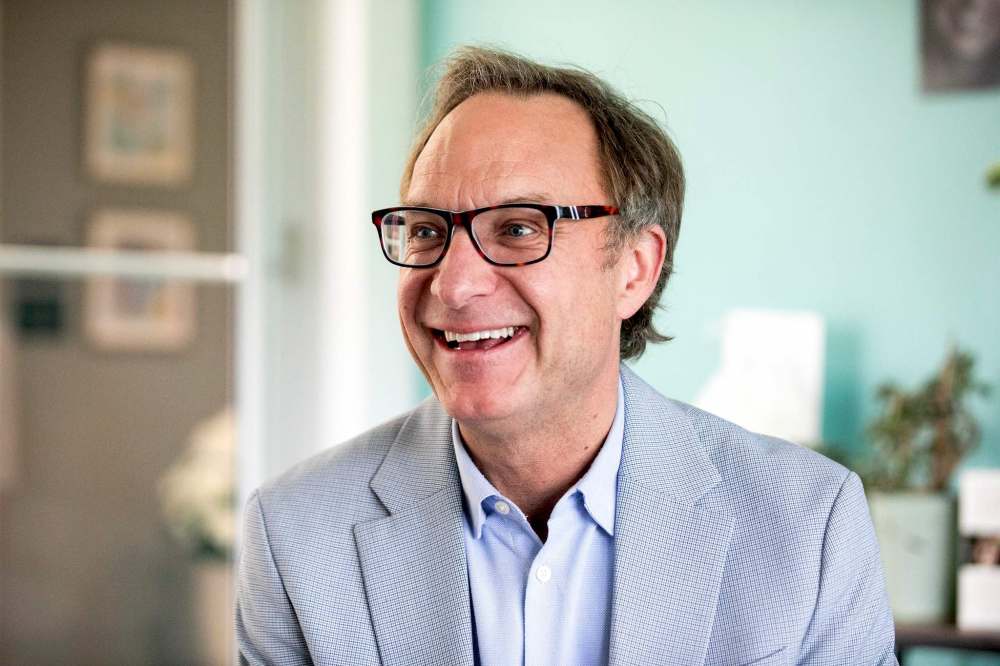
Outside the family room, the centre’s hallways are relatively quiet. Fifty men live here, and their morning began the same way it always does, with a group meditation in the cultural room on the second floor.
It’s a calming space: dim light, the scent of sage, a fire crackling in the electric fireplace set against one wall.
After the meditation, the men split up into four groups of about a dozen each, and head off to work together on developing the coping skills they will need to live without using substances.
In one of the groups, the men are focusing on how to reframe anger, or resentment. On the whiteboard, a chart, handwritten in marker, lays out a list of situations.
“What / Who I Resent.” “Why I Resent Them.” “What Could I Have Done Instead.”
ONE DAY
Our One Day feature is just as it sounds: we will spend one day documenting the everyday work that helps keep our communities going. This month, we spent a day at the Bruce Oake Recovery Centre, an addiction treatment centre for men.
All of the men have been with the same group since they arrived. That’s part of how Bruce Oake’s programs are designed, for them to move through their recovery together. If all goes well, they will graduate after 16 weeks.
Some leave early, but others stay longer; nobody is forced to go. One “participant,” Kyllo notes, stayed in treatment for eight months.
Participant. It’s a notable word. To staff, the men are never “residents” or “patients.” They are only ever “the guys” or “the participants,” a word that invokes a sense of active investment. A person’s residence at rehab can be court-ordered; but to truly participate in something, you have to choose it.
Of the 30 staff members, almost all have their own experience of addiction. Kyllo does too.
Originally from Winnipeg, he’d pursued a high-pressure business career in Toronto when he “got into trouble” with substance use: “I was being the guy in Toronto, chasing that life,” he says.
He went to rehab twice, achieved recovery and turned his focus to mental health.
“Honestly, if you haven’t been through this, it’s not understandable,” he says.
He was about 15 years sober and working at the Canadian Mental Health Association when he met the iconic CBC Sports broadcaster Scott Oake. At the time, Oake was spearheading the creation of a new addiction treatment centre for men in honour of his son, Bruce, who died from an overdose in 2011.
MIKAELA MACKENZIE / FREE PRESS An afternoon group yoga class. 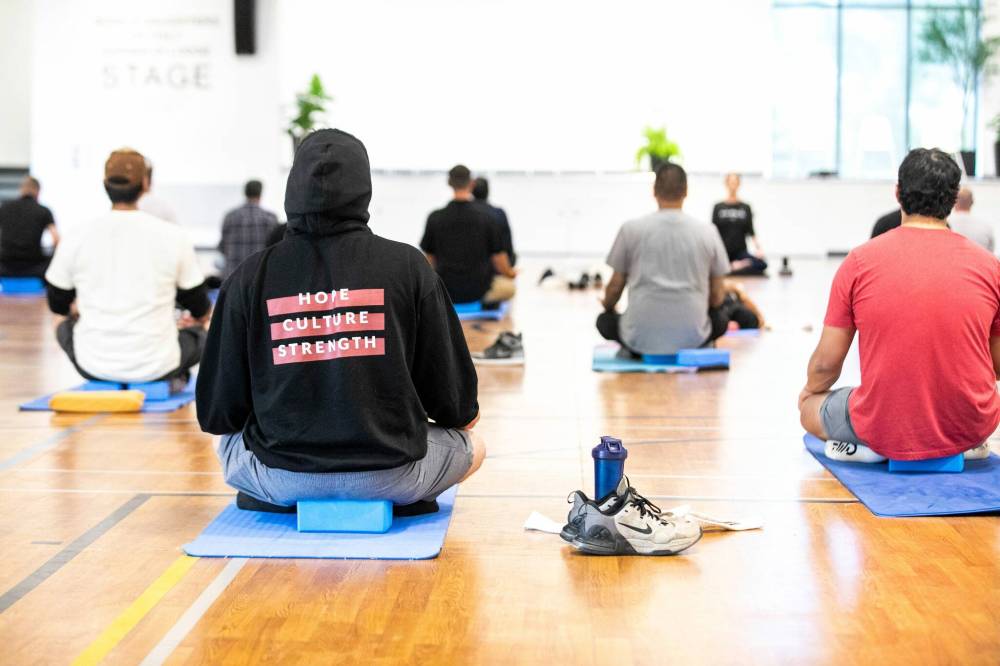
The two clicked. For Kyllo, the opportunity seemed like fate.
He agreed to come home to Winnipeg and start building what they hoped would be a groundbreaking non-profit facility in Manitoba, one that offered a long-term treatment model that didn’t just help men find sobriety, but also convened a lasting community to support them.
Now, five years after the centre opened in May 2021, many things have changed. Substances on the street are evolving; some are more dangerous, cut with contaminants. The complexity of men’s needs has increased.
Yet at Bruce Oake, they’ve learned to roll with those punches. The model is designed to be flexible.
“The most important thing is that this is working,” Kyllo says brightly.
MIKAELA MACKENZIE / FREE PRESS Whiteboard notes detail discussion topics.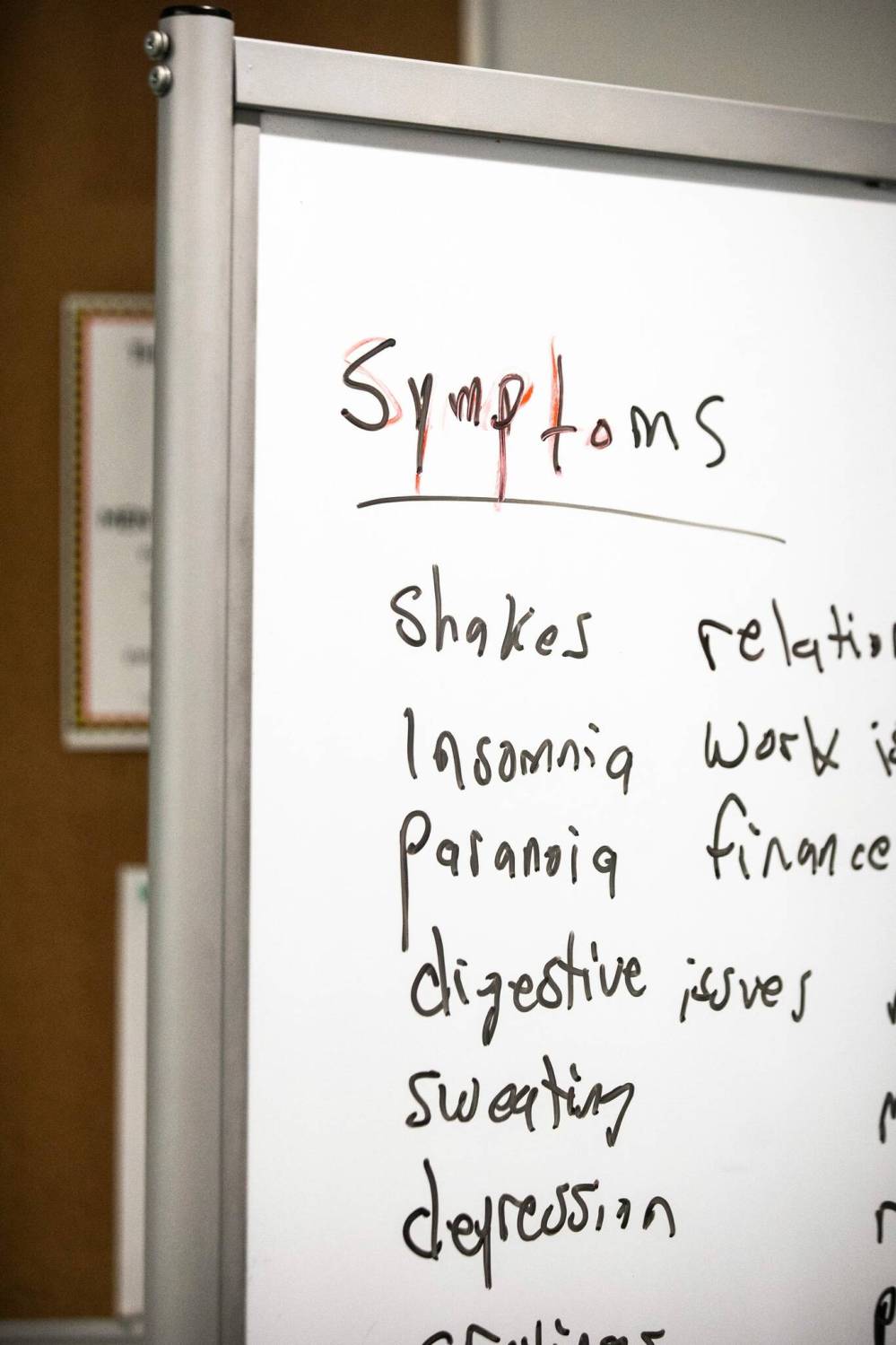
He runs through the numbers. (Part of Kyllo’s job is to gather data, in part to prove to funders that the work is successful.)
By mid-June, 569 men had completed the program. Of those, 59 per cent achieved one year of sobriety on their first try, 76 per cent were working after a year, and 97 per cent were housed.
These are not the only stats they track. Nor do they consider such figures the only measure of success.
Addiction recovery is not neatly linear. Maybe a participant won’t reach a year sober on their first try, but the skills they gained will set them up to manage life better, or make their next try last longer.
For all of them, the important thing is that their connection to Bruce Oake doesn’t end when they leave. Alumni are deeply integrated into the centre’s operations. They’re always welcome to come and share a meal, or work out in the well-equipped basement gym, or speak with their counsellor. Several are now full-time staff members.
And if their sobriety falters, they are always welcomed back to try again.
Just a week before, Kyllo notes, two men who had completed the program years earlier returned after hitting a bump in the road. There’s no judgment here. Nobody will be disappointed to see a former participant come back.
That’s the value of having staff who have been through it. They’ve been there. They understand.
“If you struggle, you call us, and you come right back in,” Kyllo says. “There’s no shame in that return to using substances, because nobody wants to. It’s no longer fun. Once you have severe substance-use disorder, you don’t go out and start using substances again and it’s a party. But most people don’t reach out because of the shame.
“This is the journey, and we don’t prescribe what that should look like,” he adds. “It’s very person-centred.”
Noon
As soon as the clock strikes noon, the morning’s hallways come alive. Men flow out of the group rooms, lining up for lunch in the spacious dining room.
The cooks standing behind the kitchen counter dish out plates heaping with roasted chicken, pasta, steamed vegetables and ice cream for dessert.
Long rows of tables take up most of the room; a trio of oversized couches sits at one end, facing a large flat-screen television, which is currently listing upcoming events including a barbecue and a Scrabble tournament.
Canadian flag pennants dangle from the rafters to mark the ongoing FIFA World Cup. Some of the men like to watch the games here together.
MIKAELA MACKENZIE / FREE PRESS Justine Pescasio serves up lunch of roasted chicken, pasta and steamed vegetables.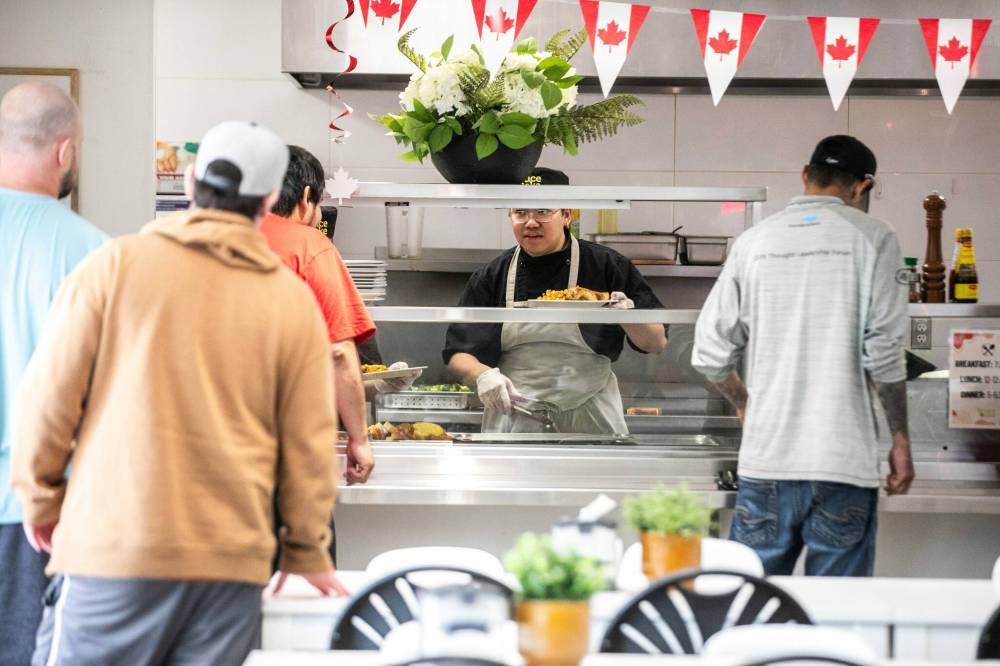
Today’s meal is a special one. Every Thursday, the centre hosts a gratitude lunch, where participants, alumni and staff are invited to stand up and share the good vibes.
A staff member begins by asking men who arrived that week to introduce themselves. At first, no one moves, but Kyllo is encouraging: “Who’s new?”
Two young men shyly rise from their table, ducking their heads. The room breaks into a thunder of cheers and applause.
One by one, men who want to speak stand. They thank the staff, the cooks, their doctors, each other.
They come from all walks of life. Some are young, with shaggy long hair; others are well into middle age. Some have high-stakes professional careers; others came straight from prison or the street. A little over half are Indigenous.
One participant rises. “My name is John, and I’m an alcoholic,” he says.
The men shout his name back in a unanimous voice. “Hi John!”
He beams and continues. “I just want to say thanks to everyone here, staff and the participants, for making me feel welcome. I realize I’ve only been here 10 days now, and I feel like I fit in already… there’s a lot of stuff to do, and the hellos from everyone, high-fives, it makes a difference. Thanks everybody.”
MIKAELA MACKENZIE / FREE PRESS Kyllo congratulates a participant for a sobriety milestone during lunch. The centre holds a gratitude lunch every Thursday.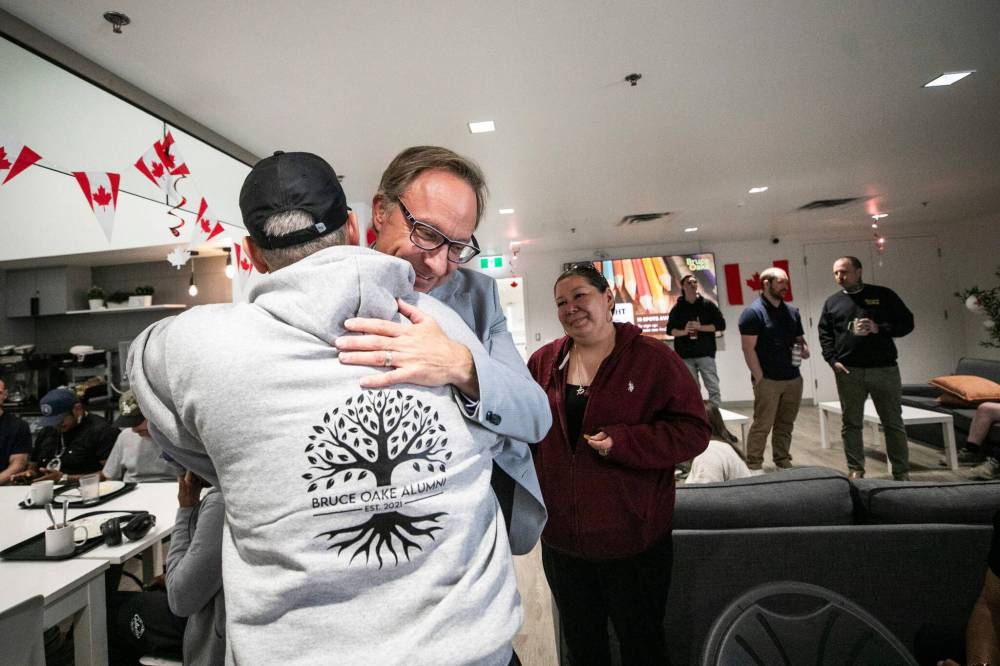
A man in a Toronto Blue Jays shirt rises and grins at the nearly 100 people in the room. He’s over two months into his stay. When he came, another participant recalls later, he was too self-conscious to speak. Now, he raises his voice confidently and looks his peers in the eyes.
“I want to thank all of the staff and everybody who’s making me feel at home, all my brothers here, I love you guys,” he says.
“I remember my first day being here, I was so nervous. Now look at me, I’m standing in front of all you guys. I’ve been sober now for 60 days.”
At this, the room erupts into cheers once again.
A participant in a white T-shirt stands up. His name is Mark. He’s 43 years old and arrived in late March after nearly two decades using cocaine and alcohol. It’s his first time in recovery, and today he’s 80 days sober. It’s the longest he’s gone without using substances in at least 10 years.
“We graduate next week, and I just want to express my thanks to everybody,” he says. “You guys changed my life.”
MIKAELA MACKENZIE / FREE PRESS Participant Mark with his sobriety chips. He graduated from the centre earlier this week.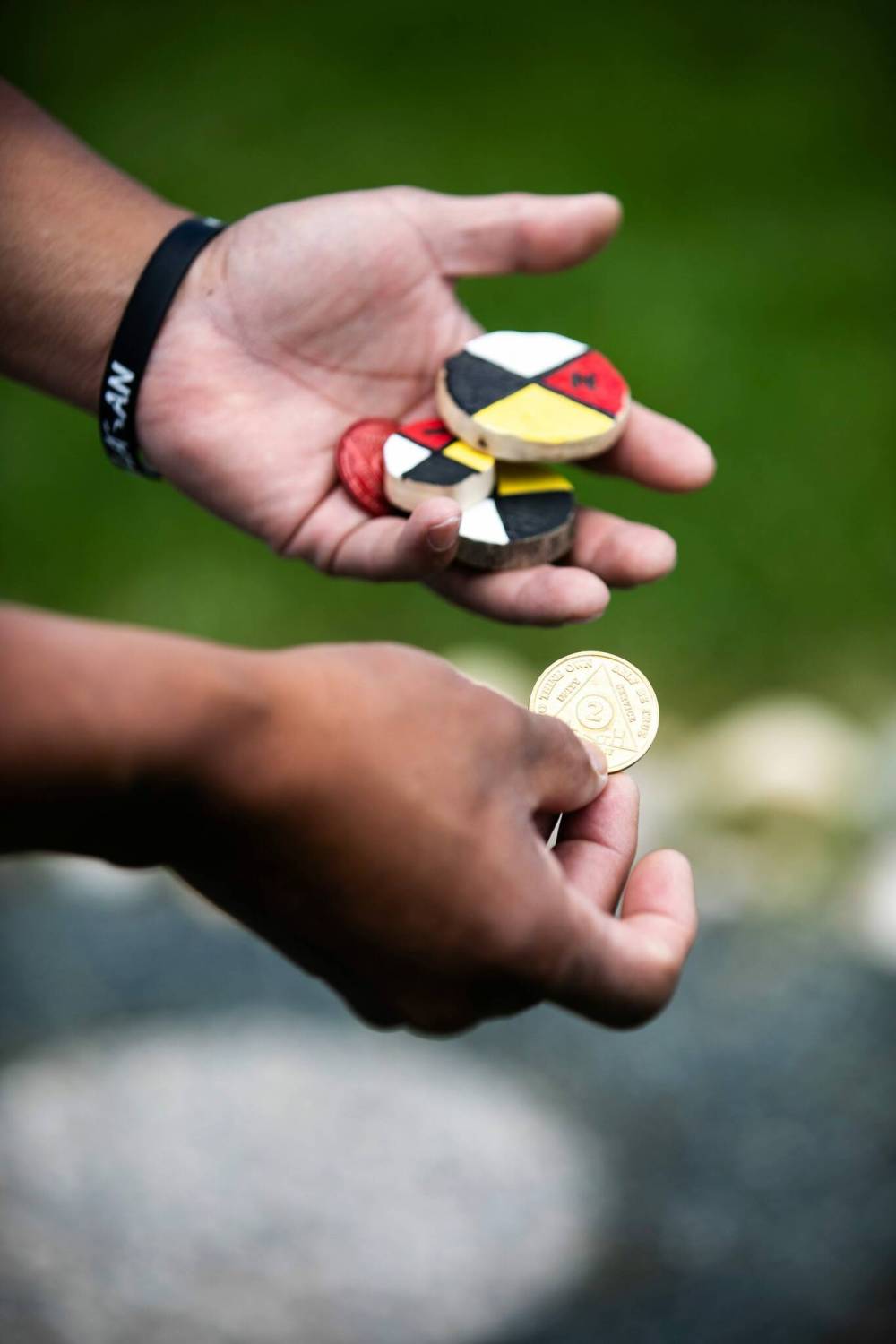
Before Mark came to Bruce Oake, he was holding his life together, if barely. He had a career in the trades and a grown son he adores.
But every day, the drinking chipped away at that life a little more; after he lost his mother to Parkinson’s disease and his sister to cancer 11 months later, he began to spiral.
“The way I like to describe it is I was a train wreck that derailed into a tire fire,” he says, chatting after lunch on the patio just outside the cafeteria. “I was trying my best to either die or just not feel anything.”
One day, he noticed his son was growing distant, and asked why, point-blank. His son replied frankly: he wanted his dad to be sober.
After that, Mark began calling the centre every day, hoping to keep his spot in line. Sometimes, he’d call drunk, but he still called — for 120 days straight.
Finally, he got the news a bed was available. He quit his job and moved in the same day.
When Mark arrived, he was “so scared shitless,” he says. He didn’t know what to expect. Yet from the first moment, he felt welcomed.
He’s learned to deal with heavy emotions “so much better now,” he says; it particularly resonated with him that most of the staff had climbed out of their own addictions.
“When your counsellor is telling you how they used to smoke meth behind a dumpster, you’re like ‘oh my God, you’re not joking,’ that’s when the light bulb goes on,” he says.
“No disrespect, but it’s not like some bookworm that’s never smoked crack or did a line of cocaine, but tells you something because a book tells him to say it that way.”
Now, he’s almost completed the program. If he was scared to come to Bruce Oake; now he’s scared to leave.
But he’s ready to take those steps forward. Staff set him up with housing and even offered him a part-time job in maintenance, to help him get back to work. And he wants all of Winnipeg to know how much that means.
“What I’m telling you is from my heart,” Mark says. “This place saved my f—-ing life.”
1:15 p.m.
For participants and staff, one of the most precious aspects of the Bruce Oake Recovery Centre is its location, nestled in a crook of Sturgeon Creek.
The front doors face a quiet residential neighbourhood; the rear doors open onto a verdant backyard that slopes down to the little waterway, a view that is open and green and dotted by trees.
It’s peaceful in the backyard. It feels a bit like you’re in the countryside. Sometimes, participants with Indigenous fishing rights will cast lines into the creek, reconnecting with the land.
There is also lots of space to hold ceremonies: a sweat lodge sits a short distance from the patio, along the neatly landscaped path to a ceremonial circle.
Around the edge of the circle, the centre’s two Métis knowledge carriers, Kyle McClintock and Louis Sorin, sit enjoying the afternoon sun, when Terrence Morin walks up. He is preparing to drive out with some of the guys to chop wood for a sacred fire, and he has some questions about the logistics.
MIKAELA MACKENZIE / FREE PRESS Terrence Morin (from left), knowledge carriers Louis Sorin and Kyle McClintock, and staff member Kyle Goertzen by the centre’s sweat lodge, located at the rear of the property.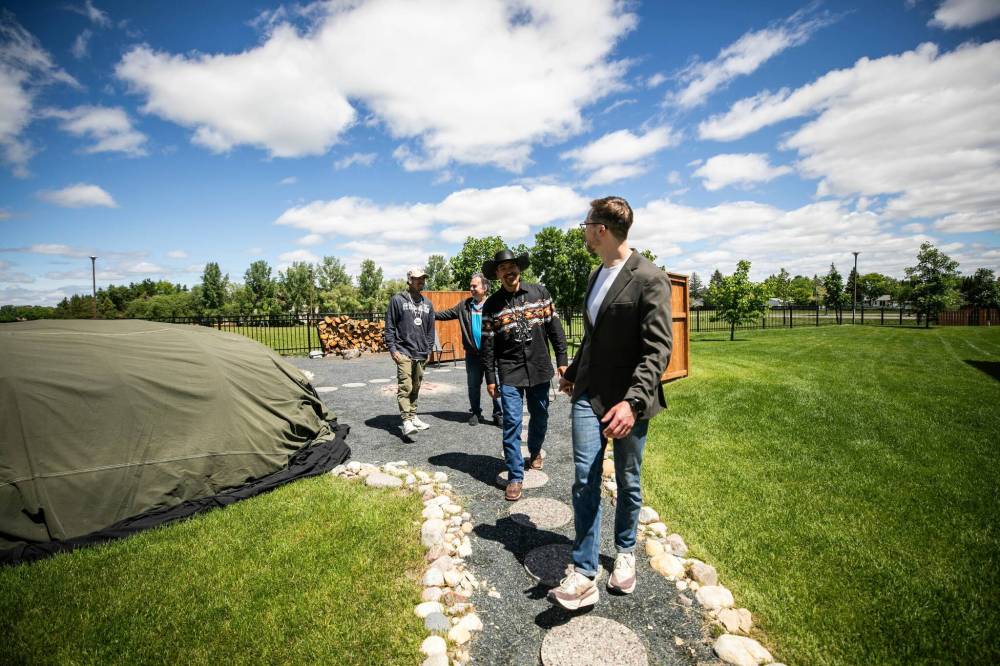
Morin is a beloved figure at Bruce Oake, and also a testament to its vision.
He first came here four years ago straight from one of his stints in prison. Originally from Thompson, he’d had a difficult life, from a childhood marred by abuse to adulthood struggling with addiction, gang life, violence and a long list of crimes.
But since achieving sobriety at Bruce Oake, Morin has thrived. He earned his high school diploma, enrolled in college and became a peer counsellor.
Now, he works on the cultural team at the centre, spending his days supporting participants and alumni through sweat lodges, sun dances and group trips out to the land to connect with nature.
That journey is a prime example of the self-sustaining community the centre has aimed to build since it opened.
“It’s like dropping a rock into a pond of water,” Sorin says. “The ripples are as important as the initial rock that fell in the water. That’s what we’re cultivating. The alumni are the ripples, the waves, that continue to spread out.”
MIKAELA MACKENZIE / FREE PRESS Alumni Terrence Morin’s journey from addict to staff member is a testament to the centre’s vision.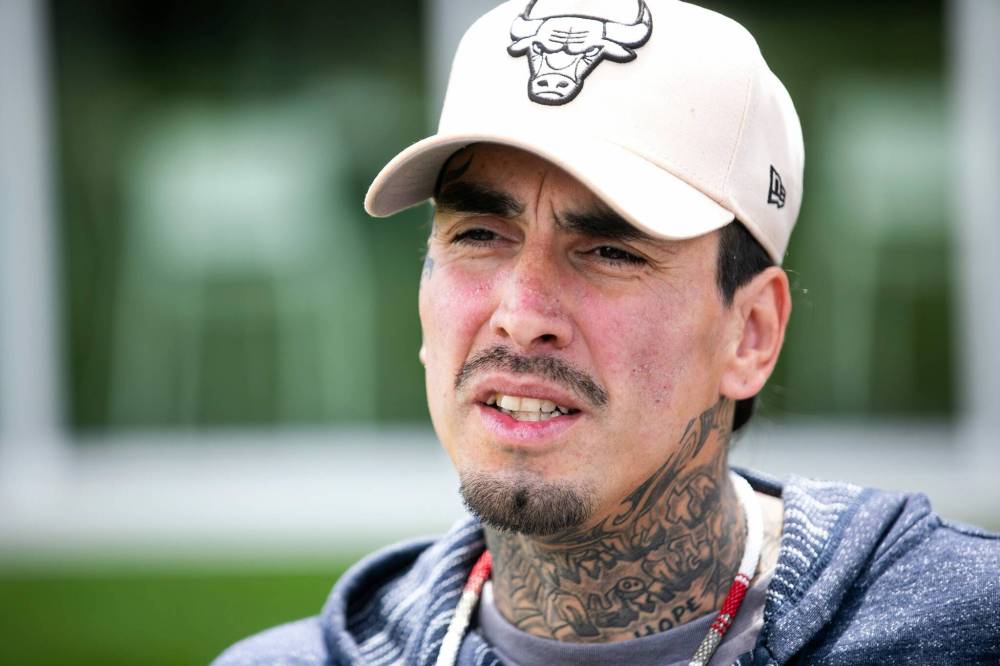
Morin’s transition to staff has not changed his relationship with the participants. He still feels more like one of them, because in the ways that matter, he still is.
Some of the men he sees are guys he knew from his life in gangs; now, some say they look up to him, which affirms he’s on the right path.
“I just tell the men, you guys are my people,” he says. “This is where I come from. My experience being here, I think that’s my purpose.
“Everything I’ve been through, all the work that I put in, is to lead by example and give these men hope and to support them the best way they know how. If they struggle, I ask, ‘how do you need me to show up for you?’”
Often, the way they show up best for each other is through the cultural team’s activities. Through group outings to the bush, or ceremonial activities, the knowledge carriers aim to give participants space to break down what they learned about being men in the world, and rebuild that knowledge in healthier ways.
“You know, as men we’ve been taught to suppress our emotions,” McClintock says “We were never allowed to cry, and so a lot of that comes out in unhealthy ways. So we take them to the water and teach them how to use the water to let go, or how to use a tree, to touch a tree and connect with it and just yell.
“Terrence and I are both from Wolf Clan, so we like to teach them how to howl, to let it out in the bush where it feels safe. When they get that experience, it’s like, ‘you can use that anywhere now.’
“It doesn’t have to be a meeting or a sweat lodge. Now you have a relationship with the land, you can go on your own when you’re struggling.”
Even the journey to nature becomes its own sort of healing. The cultural staff have observed there’s something about a long drive that seems to bring out conversation in the men.
As soon as they’re on the road, guys will start asking each other how they’re doing; one might reply that he’s struggling, and then the words begin to flow.
“It becomes a sacred space,” McClintock says.
Morin nods. “I do notice that actually. When you’re driving, you go deep, and that’s when you really connect with the men.”
1:45 p.m.
If mornings are when participants do the work of healing their minds, afternoons are all about healing the body.
After lunch, the men are encouraged to do some sort of movement, whether lifting weights or just going for a walk. Today, the highlight activity is a staff-versus-participants volleyball game.
The gymnasium is beautiful. A stage sits against one wall for ceremonies; large windows let natural light fill the airy space.
More than 200 Winnipeg Jets jerseys dangle from the rafters, each emblazoned with the last name of an alumni who reached one-year sober. These are presented at regular ceremonies, and stay here as both testament and motivation.
MIKAELA MACKENZIE / FREE PRESS Addiction recovery focuses on the whole person, from working out and participating in physical activities to meditation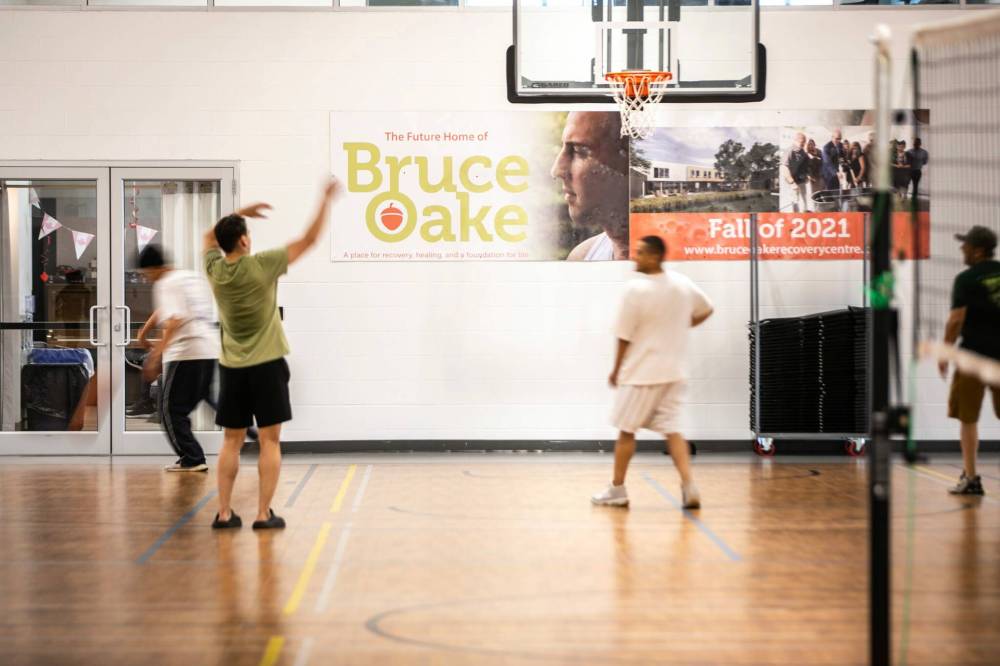
At one end of the gym, two teams are battling it out at the volleyball net. They cheer each other as they go, praising each attempt.
The ball floats over the net and sails toward a lithe man in a white T-shirt. He springs into action, stretches out his arms, and bumps it back over.
His name is Larry and he arrived in late March, around the same time as Mark. He’d waited more than seven months to get a bed; his situation wasn’t as critical as someone who has nowhere to sleep, he acknowledges.
He had a steady job at a restaurant, a wife, kids and a mortgage. His employer is supportive; his job will be waiting for him when he graduates in a week.
Twelve years ago, Larry had gone into a different treatment program. It didn’t stick. At the time, he says, he felt as if he’d been forced into it, and after he got out he returned to using alcohol and cocaine.
But the toll it was taking on his life, work and relationships was growing; when he first heard about Bruce Oake, he felt impelled to try again.
“When they were building this place, I knew,” he says. “I saw it on the news that they were building it and I was just not doing good. I was like, ‘one day I’m going to be there.’ I wish this place would have existed 12 years ago, because this place has changed my life.”
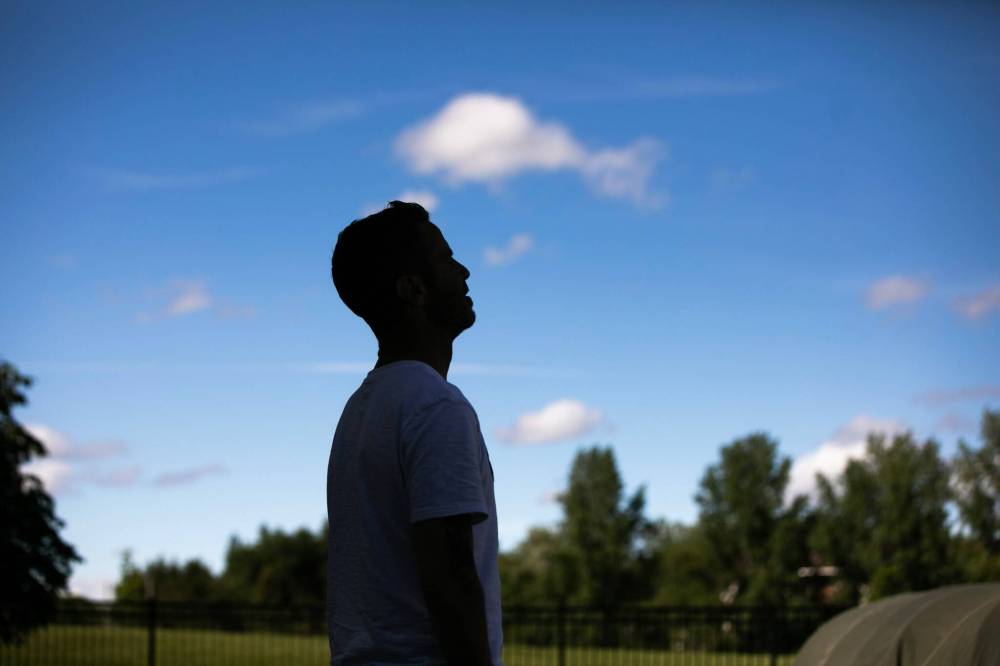
'Knowing that I can come back and be part of the community, and the brotherhood, is awesome. I want to help other people. I’m not jumping to conclusions yet, I’ve had a 20-year addiction and I’m three months in (to recovery). But knowing I could come back and actually help, I could volunteer, it’s awesome'–Participant Larry
From his first day, Larry says, he realized the centre was “different” than where he had tried in the past. All of the other guys came up to shake his hand.
He felt as if he belonged; soon, he realized that feeling wouldn’t fade when he left, and that has given him a new sort of motivation.
“Knowing that I can come back and be part of the community, and the brotherhood, is awesome,” he says. “I want to help other people. I’m not jumping to conclusions yet, I’ve had a 20-year addiction and I’m three months in (to recovery). But knowing I could come back and actually help, I could volunteer, it’s awesome.”
The volleyball game has hit a snag: the ball got stuck in the rafters. One of the men grabs a basketball and the guys take turns throwing it as hard as they can toward the ceiling, trying to knock the volleyball loose, laughing when each attempt falls short.
Soon, this effort becomes a game in itself — not quite the one they’d planned, but they adapt, have fun and figure it out together. It’s sort of like life, in that way.
2:00 p.m.
A couple of hours after lunch, Scott Oake strolls into the facility that bears his late son’s name.
He’s one of the most famous broadcasters in Canada. His family’s story is embedded into the very walls of this place. Oake and his late wife Anne, who died in late 2021, dreamed up the facility and then made it reality. Their son’s ashes rest in the atrium.
The couple even designed the family visit room themselves. Anne picked out the comfy couches; Scott painted the teal-blue statement wall. Anne wanted it to feel like a real living room, so participants could relax and enjoy dinner with their loved ones in a space that felt like home.
Yet for all the importance of Oake’s role, there’s no fanfare when he arrives, no VIP treatment.
While he is the self-described “mascot” of the centre, some may not realize just how present he is here on a near-daily basis. He comes by for lunches and events, and just to get to know the guys. Sometimes, he simply lounges in the family room and scrolls on his phone.
MIKAELA MACKENZIE / FREE PRESS Scott Oake describes himself as the centre’s ‘mascot.’ But he’s much more than that. He is on site almost daily where he makes sure to get to know every participant personally.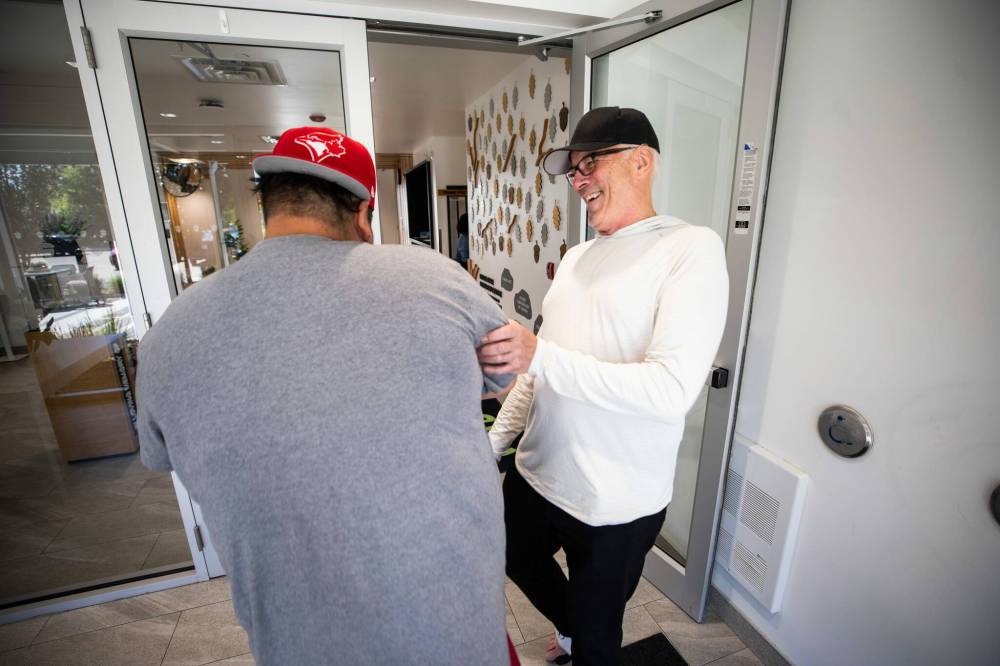
(Participant Larry says Oake is “unbelievable” for the guys: “He’ll look at our pictures when guys first come in, because he likes to make a point of sitting with you and eating with you. And it’s not just for show, like he’ll sit there and shoot the s—- with you, just talk with you.”)
So often is Oake here, and such a low-key profile does he keep, that his role is sometimes mistaken. On several occasions, staff have witnessed Oake sit down for lunch or start a workout in the weight room, when one of the participants turned and, in a spirit of community welcome, asked how long he’d been in the program.
“I usually say, ‘oh, I’m not in the program, I’m just here,’” he says. “I’m not stupid enough to think that everybody should know who I am. And if you’re not a hockey fan, then you probably wouldn’t have the first clue. So sometimes I don’t tell them who I am, but it’s a measure of how open they are.
“And they’ll share their story with me, and then the next day in group, they’ll see a video (with Oake in it), and they’ll go, ‘OK, I get it now.”
MIKAELA MACKENZIE / FREE PRESS The urn holding the ashes of Bruce Oake, the centre’s namesake, is on display in the atrium.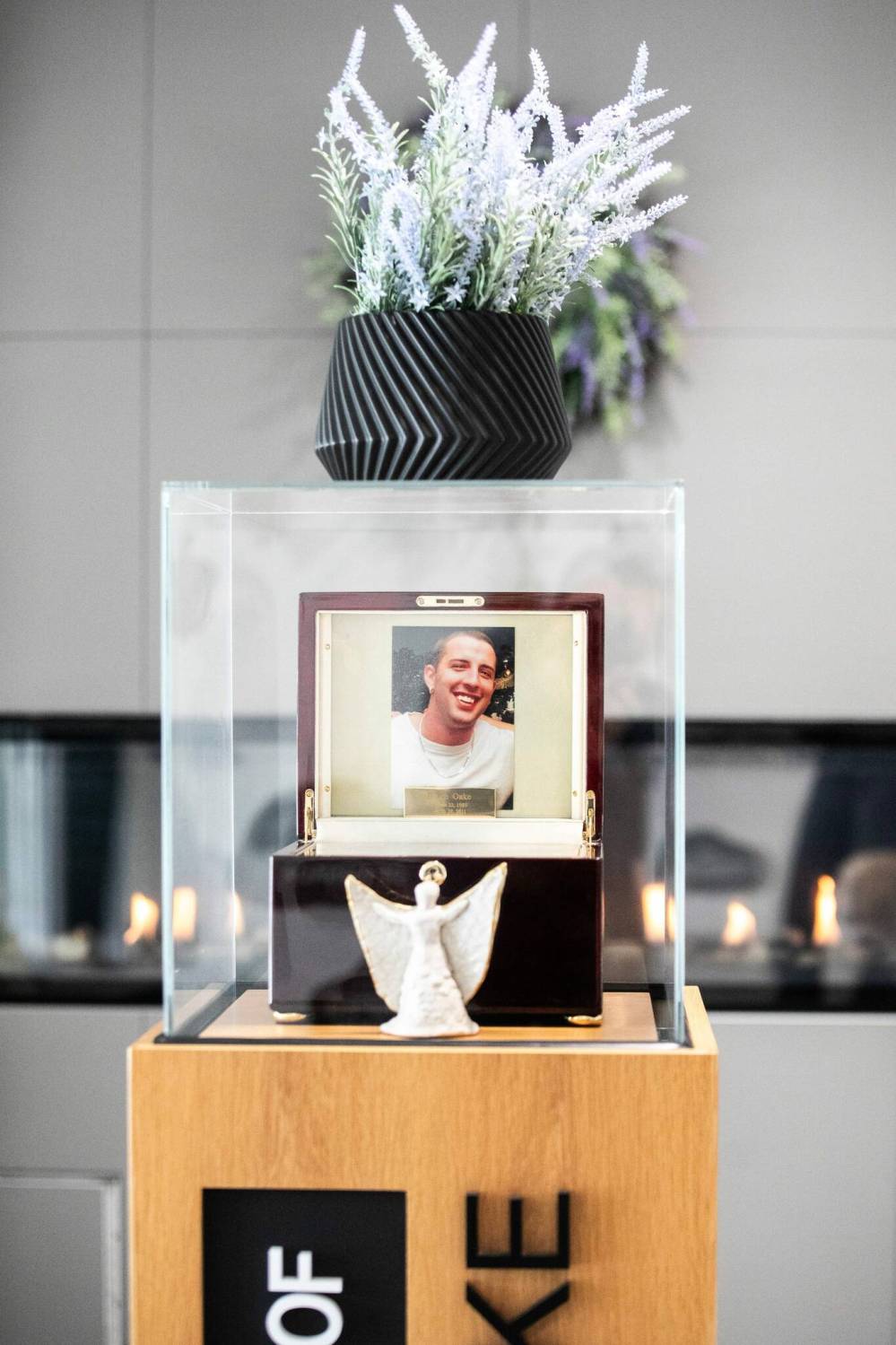
So he would usually have been at the gratitude luncheon — he rarely misses one, outside the NHL season — but he had a meeting with a donor for the new Anne Oake Family Recovery Centre, which has recently begun construction and is set to open in December 2027.
That facility, situated in south Winnipeg near the Victoria Hospital, will be a continuation of the model they have developed at Bruce Oake, but designed for women’s needs.
There will be 75 beds and a licensed daycare, so mothers can stay with their children. Staff believe it will be the first of its kind in Canada, and possibly North America.
“We always said when Bruce Oake was up and running, with successful results and sustainable funding, that we would turn our attention to women,” he says.
“A lot of women are reluctant to reach out for help for fear of losing their kids, and prefer to suffer in silence. The Anne Oake Family Recovery Centre will answer that concern.”
He modestly defers all questions about the centre’s programs to the staff — recognizing, he explains, that he’s not an expert in addictions treatment. (“I’m good at two things,” he says. “Having lunch and asking for money. The heavy lifting was done by a lot of people who know what they’re doing.”)
Sometimes, Oake jokes, that since Bruce’s ashes are here and Anne’s will rest at the centre that bears her name, eventually there will be his ashes and the whole network will just be a big Oake family mausoleum.
This thought raises a question: does he feel their presence when he’s here?
“Oh yeah,” he says, simply.
In a good way?
Oake nods. “Yeah. I mean, some days it’s a conundrum. You know, at graduations, I wish Bruce was there. If he’d been in a program like the one offered here, he might still be alive. But then this place wouldn’t exist.”
EPILOGUE — Wednesday, June 24
One week after the Free Press visit, the centre hosts its monthly Ceremony of Gratitude, celebrating the men who are completing the program.
There are 11 men in this graduating group, just one off the record; Larry and Mark are among them, sitting on stage, gazing out at the scene in wonder.
These ceremonies are open to the community, and the community has come out in full force. The gymnasium is full of well-wishers, including alumni and supporters, and friends and family of the men. There are snacks, speeches and a framed certificate of completion for each graduate.
MIKAELA MACKENZIE / FREE PRESS The recovery centre opened in May 2021. Since then, nearly 600 men have completed the program.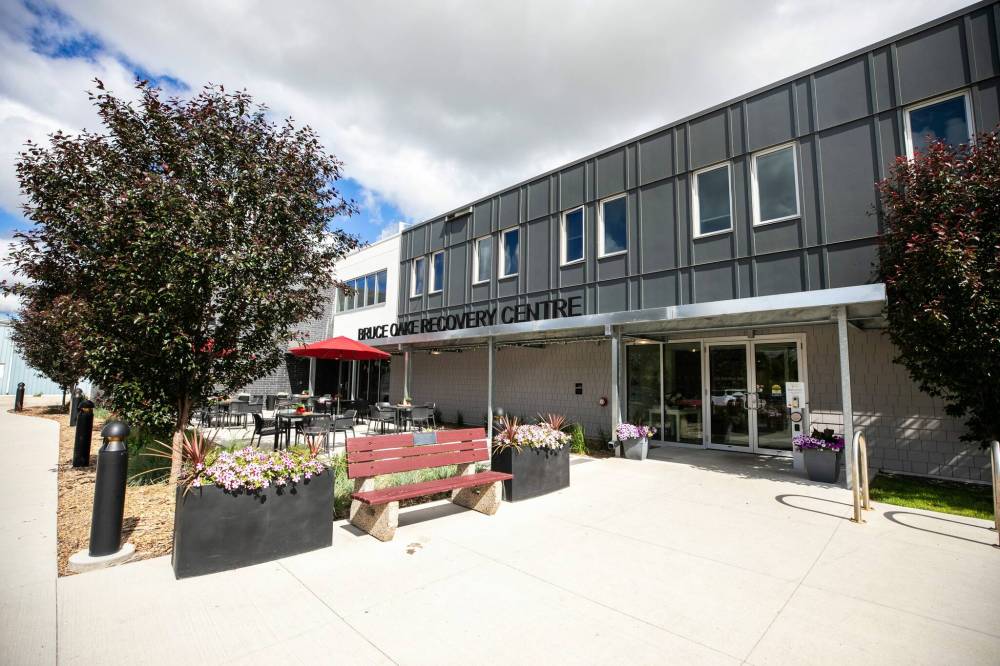
Scott Oake takes the podium with his two young grandchildren in his arms. One by one, he goes down the row of 11 men, and delivers a personal tribute to each. He recalls jokes they’d shared and speaks in awe of how they’d changed since he first met them.
Then, it’s time for the graduating participants to have their own moment in the spotlight, to offer their own words of pride and thanks for those who helped them on the journey.
When it’s Mark’s turn, he delivers a passionate ode to the centre; he looks at his son, who is sitting in the audience, and tears stream down his face.
“Your dad’s back, baby,” he declares proudly.
The crowd in the gymnasium bursts into jubilant cheers and applause. Recovery is hard work; but it is joyful, too.
melissa.martin@freepress.mb.ca

Melissa Martin
Reporter-at-large
Melissa Martin reports and opines for the Winnipeg Free Press.
Every piece of reporting Melissa produces is reviewed by an editing team before it is posted online or published in print — part of the Free Press‘s tradition, since 1872, of producing reliable independent journalism. Read more about Free Press’s history and mandate, and learn how our newsroom operates.
Our newsroom depends on a growing audience of readers to power our journalism. If you are not a paid reader, please consider becoming a subscriber.
Our newsroom depends on its audience of readers to power our journalism. Thank you for your support.
History
Updated on Friday, June 26, 2026 7:55 AM CDT: Fixes subheadline
Updated on Friday, June 26, 2026 9:18 AM CDT: Corrects photo cutline