

Stony Mountain inmate sentenced to more than eight years for $1.2-M drone-delivered drug stash in cell

Advertisement
Read this article for free:
or
Already have an account? Log in here »
To continue reading, please subscribe:

Digital Subscription
One year of digital access for only $205*
- Enjoy unlimited reading on winnipegfreepress.com
- Read the E-Edition, our digital replica newspaper
- Access News Break, our award-winning app
- Play interactive puzzles
*First annual payment billed as $205.00 + GST for one year. This annual subscription will automatically renew at $233.00 + GST every 52 weeks (10% off the regular annual price of $259.35). Offer available to new and qualified returning subscribers only. Cancel any time.
To continue reading, please subscribe:
Add Free Press access to your Brandon Sun subscription for only an additional
$1 for the first 4 weeks*
- Enjoy unlimited reading on winnipegfreepress.com
- Read the E-Edition, our digital replica newspaper
- Access News Break, our award-winning app
- Play interactive puzzles
*Your next Brandon Sun subscription payment will increase by $1.00 and you will be charged $17.95 plus GST for four weeks. After four weeks, your payment will increase to $24.95 plus GST every four weeks.
Read unlimited articles for free today:
or
Already have an account? Log in here »
A Stony Mountain Institution inmate who was caught with a cache of illicit drugs worth more than $1.2 million behind prison walls played a high-level role in a “sophisticated operation” that used a drone to smuggle contraband directly to his cell window, a judge has ruled.
“It was the largest drug seizure ever at Stony Mountain,” wrote Court of King’s Bench Justice Jeffrey Harris, as he sentenced 26-year-old Ronald Kehler for possessing cocaine and methamphetamine for the purpose of trafficking late last month.
“It was a sophisticated operation orchestrated by a sophisticated criminal organization.”
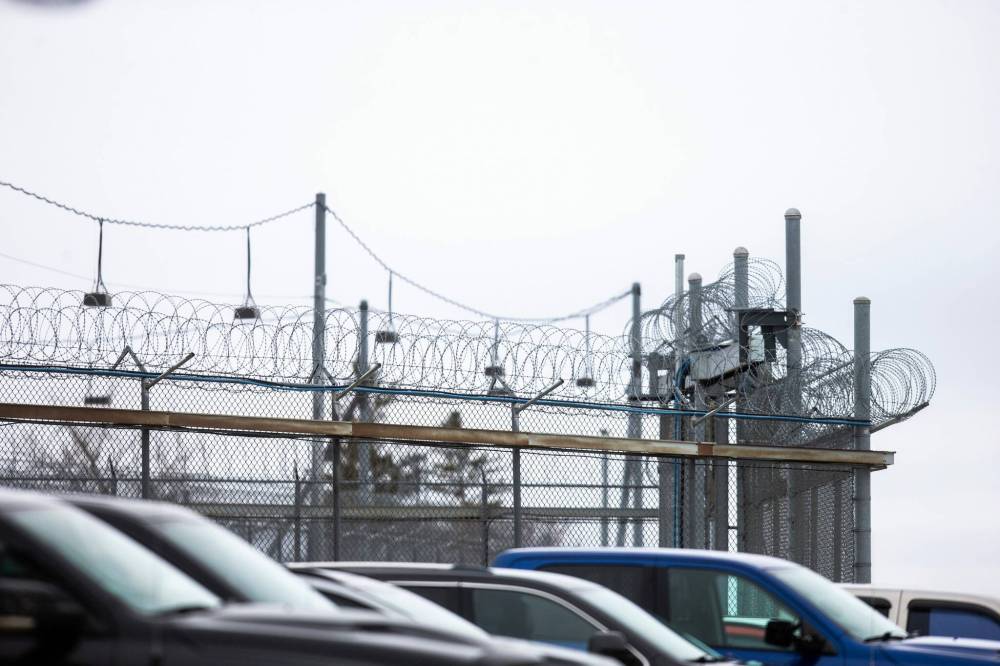
MIKAELA MACKENZIE / FREE PRESS FILES
A resident of Stony Mountain called the institution to say they spotted a drone flying by the institution.
Harris gave Kehler, who pleaded guilty to the charge at first opportunity, an eight-year, four-month prison sentence.
Corrections officers searched his cell and found a total of 555.4 grams of methamphetamine, 160.5 grams of cocaine, 393.6 grams of cannabis concentrate and 167.3 grams of cannabis bud in a large cardboard box under his cell bed that had been smuggled in by drone early on Sept. 26, 2023.
The contraband, if sold inside the prison for 10 to 20 times the going rate on the street, was estimated to be worth $1,258,860.
An eagle-eyed resident of the town that surrounds the federal prison just north of Winnipeg had called the institution at about 5:45 a.m. that day to advise they had spotted a drone flying, said Harris.
At about 7:40 a.m., correctional officers patrolling outside the prison’s walls saw that the window to Kehler’s cell — unit 6-H2-12 — was broken, leaving it open to the outdoors.
Correctional staff then searched his cell with reasonable grounds to suspect that a drone delivery had taken place, said Harris.
In addition to the drug cache, officers found four empty Cheerios cereal boxes with twine attached that the drone had used to carry the drugs through the cell window.
Text messages from cell phones seized from Kehler, who’s a member of the street gang Cash Money Brothers, showed that the drone had delivered the boxes full of drugs via four trips earlier that morning.
Kehler, who was two years into a seven-year prison sentence for discharging a firearm with intent at the time of the smuggling incident, insisted in court he was essentially a mid-level courier who was forced into collecting the drugs on behalf of someone above him.
“It was a sophisticated operation orchestrated by a sophisticated criminal organization.”
He told court he did not arrange for the drone pilot and had no choice about his role in this matter.
But Harris disagreed, ruling Kehler was a “highly trusted member” of the smuggling network.
Kehler’s responsibility included communicating with the drone pilot and the higher up, identified by the name “Larry Bird” in court, and deciding whether the pilot would deliver four or more shipments.
He was also expected to keep six ounces of drugs for himself to sell, which a corrections official told court suggested he was a high-level trafficker within the prison.
The official, Christer McLauchlan, a senior project officer with the prevention, security and intelligence branch of the Correctional Service of Canada, testified as an expert on drug trafficking in federal prisons.
He told court that drugs are a “prevalent problem in federal penitentiaries,” with seizures of increasing amounts made every day.
“McLauchlan testified that if the drugs seized were distributed equally to each of the 800 inmates (in the prison), there was enough methamphetamine for seven days, enough cocaine for one day and enough THC for three months,” wrote Harris.
The corrections official said the high-level seizure could have had a “significant impact” on the operations of the prison if the drugs had been distributed.
“…There was enough methamphetamine for seven days, enough cocaine for one day and enough THC for three months.”

He told court that drones are now responsible for the bulk of drug smuggling at Stony and other federal prisons.
A report from another corrections official found that drugs in prisons worsen health outcomes, increase safety risks for inmates and staff, strengthens the influence of gangs, ratchets up violence and affects correctional resources, among other effects.
(The official’s report says) illicit drone payload deliveries have significantly undermined the safety and security of their institutions, creating an environment of heightened risk, unpredictability, and operational disruptions that negatively impact CSC’s ability to fulfil its mandate,” wrote Harris.
Kehler was also banned from possessing weapons for life and ordered to hand over his DNA to law enforcement officials.
erik.pindera@freepress.mb.ca
Erik Pindera is a reporter for the Free Press, mostly focusing on crime and justice. The born-and-bred Winnipegger attended Red River College Polytechnic, wrote for the community newspaper in Kenora, Ont. and reported on television and radio in Winnipeg before joining the Free Press in 2020. Read more about Erik.
Every piece of reporting Erik produces is reviewed by an editing team before it is posted online or published in print — part of the Free Press‘s tradition, since 1872, of producing reliable independent journalism. Read more about Free Press’s history and mandate, and learn how our newsroom operates.
Our newsroom depends on a growing audience of readers to power our journalism. If you are not a paid reader, please consider becoming a subscriber.
Our newsroom depends on its audience of readers to power our journalism. Thank you for your support.
Erik Pindera is a reporter for the Free Press, mostly focusing on crime and justice. The born-and-bred Winnipegger attended Red River College Polytechnic, wrote for the community newspaper in Kenora, Ont. and reported on television and radio in Winnipeg before joining the Free Press in 2020. Read more about Erik.
Every piece of reporting Erik produces is reviewed by an editing team before it is posted online or published in print — part of the Free Press‘s tradition, since 1872, of producing reliable independent journalism. Read more about Free Press’s history and mandate, and learn how our newsroom operates.
Our newsroom depends on a growing audience of readers to power our journalism. If you are not a paid reader, please consider becoming a subscriber.
Our newsroom depends on its audience of readers to power our journalism. Thank you for your support.
Related Articles
Ability to detect drugs at Stony ‘sliced and diced’: union
Advertisement Advertise With Us
Advertisement Advertise With Us