

Work permits extended to 2027 for international grads
Move would allow province to process ‘huge backlog’ in provincial nominee applications

Advertisement
Read this article for free:
or
Already have an account? Log in here »
To continue reading, please subscribe:
Digital Subscription
One year of digital access for only $1.44 a week*
- Enjoy unlimited reading on winnipegfreepress.com
- Read the E-Edition, our digital replica newspaper
- Access News Break, our award-winning app
- Play interactive puzzles
*Billed as $5.77 plus GST every four weeks. After 52 weeks, price increases to the regular rate of $19.95 plus GST every four weeks. Offer available to new and qualified returning subscribers only. Cancel any time.
To continue reading, please subscribe:
Add Free Press access to your Brandon Sun subscription for only an additional
$1 for the first 4 weeks*
- Enjoy unlimited reading on winnipegfreepress.com
- Read the E-Edition, our digital replica newspaper
- Access News Break, our award-winning app
- Play interactive puzzles
*Your next Brandon Sun subscription payment will increase by $1.00 and you will be charged $17.95 plus GST for four weeks. After four weeks, your payment will increase to $24.95 plus GST every four weeks.
Read unlimited articles for free today:
or
Already have an account? Log in here »
The federal government is offering a reprieve for international graduates who found work and settled in Manitoba, giving the province more time to process a backlog of provincial nominee applications.
Ottawa will extend 2,700 work permits until Dec. 31, 2027, so provincial nominee program applications can be processed before their permits expire.
“These are folks that are working. Employers need them,” Liberal MP Terry Duguid (Winnipeg South) said Monday.
MIKAELA MACKENZIE / FREE PRESS FILES “This is good news for Manitoba, good news for our economy, good news for employers and, of course, the work permit holders,” Liberal MP Terry Duguid (Winnipeg South) said Monday.
“This is good news, particularly for those folks who would be out of status quite soon. These folks are not a burden at all on our community. This is good news for Manitoba, good news for our economy, good news for employers and, of course, the work permit holders.”
“This is good news, particularly for those folks who would be out of status quite soon.”
The MP said it is up to Manitoba Immigration Minister Malaya Marcelino to accept the federal government’s proposal.
“This is what Minister Marcelino has asked for, so we are delivering on what she asked for,” Duguid said.
In 2024, Marcelino asked the federal government for a three-year extension to allow the province to deal with a “huge backlog” of provincial nominee applications due, in part, to cuts made by the previous Progressive Conservative administration. Ottawa responded at the time with a two-year extension set to expire Dec. 31.
Duguid, along with Liberal MP Kevin Lamoureux (Winnipeg North), announced the latest extension Monday.
“Obviously this is good news, both for those wanting to stay in Manitoba and it will help businesses that were concerned about the potential impact a loss of employees would have on their organizations,” said Chuck Davidson, Manitoba Chambers of Commerce president and CEO.
“Obviously this is good news, both for those wanting to stay in Manitoba and it will help businesses that were concerned about the potential impact a loss of employees would have on their organizations.”
The federal government hit pause on population growth in 2024 to get its immigration system in order and reduce pressure on housing and infrastructure. Its 2025-2027 immigration plan cut the intake of temporary residents — specifically international students and foreign workers, as well as those granted permanent residence. The target of 500,000 permanent residents was cut to 395,000 in 2025, 380,000 in 2026 and 365,000 in 2027.
Bram Strain, president and CEO of the Manitoba Business Council, said businesses that rely on the workers are “very grateful” for the extension.
Growing francophone community
Canada’s Immigration, Refugees and Citizenship Minister Lena Metlege Diab announced $1.3 million for a new project to grow Manitoba’s francophone population.
It will streamline the immigration process for francophone and bilingual candidates who meet labour market needs using “innovative promotional initiatives and digital solutions, targeted research and increased support for recognition of skills,” a news release said.
It will be administered with the Economic Development Council for Manitoba Bilingual Municipalities, Diab said at a news conference in Winnipeg.
The minister also announced that the Francophone Minority Communities Student Pilot will be extended for an additional year, through August 2027. “Thanks to this extension, Canada will continue to attract French-speaking international students who contribute to the vitality of francophone minority communities and the growth of the Canadian economy, and encourage them to remain in the country.”
The governments of Canada and Manitoba are joining forces to strengthen official language minority communities by addressing their labour needs and fostering their economic and linguistic vitality, Diab said.
“It provides stability until the end of 2027 and allows the province to work on processing provincial nominations, so that those folks can stay permanently.”
Manufacturers and food processors in places like Neepawa, Brandon and Winnipeg rely on those workers who stay because they have a path to permanent residency, Strain said. They’re on temporary work permits while they await their application being processed and approved.
“If they would have expired, folks would have left the country, we would have been short of workers, and then they would have to start the whole process over again,” Strain said.
For the past two years, international students and graduates have protested at the Manitoba legislature about not being invited to apply for the provincial nominee program, even though they were employed, had set down roots in the province and, in some cases, bought homes.
They said they decided to study in Manitoba because it promised a pathway to permanent resident status through the provincial nominee program.
In 2025, Manitoba’s allocation of provincial nominees was cut to 4,750 from 9,500 in 2024. In 2026, the province was allocated 6,239 nominations.
Those who protested over the years expressed concern their work permits would expire before they were invited to apply for the provincial nominee program and they’d be forced to leave Canada.
Strain said he expects Marcelino will welcome the proposal and ask for an increase in provincial nominee allocations.
“We need to keep working with the federal government to increase the provincial nominee program to adequate numbers so that we don’t get ourselves in this type of situation again,” Strain said.
Marcelino was not available for an interview Monday but a statement was issued on her behalf by press secretary Andrew Chapman.
TIM SMITH / THE BRANDON SUN FILES Manitoba Immigration Minister Malaya Marcelino asked the federal government in 2024 for a three-year extension to allow the province to deal with a “huge backlog” of provincial nominee applications.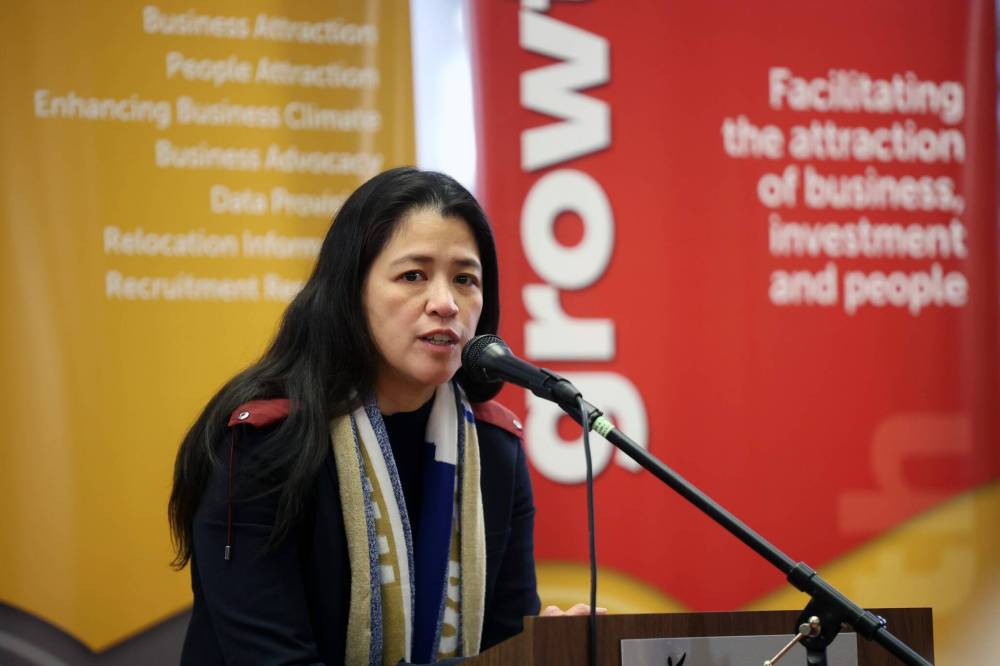
“Our government has advocated for several years for more allocations in our Manitoba provincial nominee program. This proposed extension is the result of ongoing requests from Minister Marcelino since fall 2025 to the federal government to ensure we can continue to bolster our workforce,” it said.
Lamoureux said he and Duguid have been pushing for Manitoba to receive more provincial nominee allocations for the last two years.
The work permit extension will provide relief to many waiting for a chance to stay permanently in Manitoba, Lamoureux said.
“It provides the legitimate opportunity for up to 2,700 people to be able to remain in Canada and become, ultimately, permanent residents,” Lamoureux said. “It definitely will provide relief to 2,700 people today.”
carol.sanders@freepress.mb.ca
Carol Sanders
Legislature reporter
Carol Sanders is a reporter at the Free Press legislature bureau. The former general assignment reporter and copy editor joined the paper in 1997. Read more about Carol.
Every piece of reporting Carol produces is reviewed by an editing team before it is posted online or published in print — part of the Free Press‘s tradition, since 1872, of producing reliable independent journalism. Read more about Free Press’s history and mandate, and learn how our newsroom operates.
Our newsroom depends on a growing audience of readers to power our journalism. If you are not a paid reader, please consider becoming a subscriber.
Our newsroom depends on its audience of readers to power our journalism. Thank you for your support.
Carol Sanders
Legislature reporter
Carol Sanders is a reporter at the Free Press legislature bureau. The former general assignment reporter and copy editor joined the paper in 1997. Read more about Carol.
Every piece of reporting Carol produces is reviewed by an editing team before it is posted online or published in print — part of the Free Press‘s tradition, since 1872, of producing reliable independent journalism. Read more about Free Press’s history and mandate, and learn how our newsroom operates.
Our newsroom depends on a growing audience of readers to power our journalism. If you are not a paid reader, please consider becoming a subscriber.
Our newsroom depends on its audience of readers to power our journalism. Thank you for your support.
Related Articles
Ottawa boosts previously cut immigration number in Manitoba but ‘it’s still not enough,’ NDP minister says


Advertisement Advertise With Us
Advertisement Advertise With Us