Trial by virus As Canada’s newest top doc, Dr. Joss Reimer immediately had to confront two deadly global outbreaks
Read this article for free:
or
Already have an account? Log in here »
To continue reading, please subscribe:

Digital Subscription
One year of digital access for only $205*
- Enjoy unlimited reading on winnipegfreepress.com
- Read the E-Edition, our digital replica newspaper
- Access News Break, our award-winning app
- Play interactive puzzles
*First annual payment billed as $205.00 + GST for one year. This annual subscription will automatically renew at $233.00 + GST every 52 weeks (10% off the regular annual price of $259.35). Offer available to new and qualified returning subscribers only. Cancel any time.
To continue reading, please subscribe:
Add Free Press access to your Brandon Sun subscription for only an additional
$1 for the first 4 weeks*
- Enjoy unlimited reading on winnipegfreepress.com
- Read the E-Edition, our digital replica newspaper
- Access News Break, our award-winning app
- Play interactive puzzles
*Your next Brandon Sun subscription payment will increase by $1.00 and you will be charged $17.95 plus GST for four weeks. After four weeks, your payment will increase to $24.95 plus GST every four weeks.
Read unlimited articles for free today:
or
Already have an account? Log in here »
OTTAWA — The whirlwind that has been Dr. Joss Reimer’s career has officially touched down in Building 62.
A modern, non-descript complex in a suburban industrial park, Building 62 is the only name given to the headquarters of the Public Health Agency of Canada, and Reimer’s new home as the country’s chief public health officer.
For the record, whirlwind is hardly an exaggeration.
Seven years ago, Reimer was a well-respected, somewhat low-key obstetrician and medical educator in Winnipeg. Along the way, she spent time as a YouTube public-health influencer, the Winnipeg Regional Health Authority’s medical director for public health, the provincial government’s medical officer of health and — in the role most familiar to Manitobans — the medical lead and official spokesperson for the provincial COVID-19 vaccine implementation task force.
Reimer gained national attention in August 2023 when, along with serving as the WRHA’s chief medical officer, she was elected president of the Canadian Medical Association, an advocacy organization for Canadian physicians.
Her three-year CMA term was interrupted in April when it was announced she had been appointed Canada’s chief public health officer.
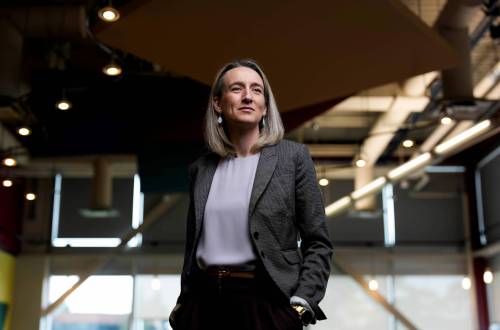
Dr. Joss Reimer, Canada’s chief public health officer, currently faces emerging threats such as Ebola and hantavirus, so she’s unlikely to get much downtime.
Now in Ottawa full time, Reimer says she’s still adjusting to the city and new job. She hasn’t completely settled into her new home, and as a result, hasn’t been able to keep up her well-publicized fitness routine, in which she runs or bikes to work every day.
“Once I’m settled in my place, I hope to be able to get back to that, but it’s been hard with all the other things that I have to do for this job,” Reimer says.
Last week while sitting in a huge, vacant boardroom at the headquarters — a complex that gives off ghost town vibes thanks to lingering work-at-home policies — Reimer describes her first few months as the chief public health officer.
As she details the scramble that she experienced at the outset, she demonstrates the calm tone and unflappable demeanour that many Manitobans witnessed during the pandemic when she led the vaccine deployment.
And that is something, given the convergence of events that greeted her when she started the new role.
On April 1, the same day Reimer started, passengers boarded the ocean liner MV Hondius in southern Argentina for an Antarctic cruise. Five days later, a Dutch man was struck by a mysterious affliction and died April 11. Other passengers began to fall ill and die. By early May, the World Health Organization confirmed an outbreak of hantavirus, a highly contagious and deadly virus spread by rodents.
As the world raced to identify people who might have come into contact with passengers, another global public health threat arose.
Canada's Chief Public Health Officer, Dr. Joss Reimer provides updates about the Andes Hantavirus and actions taken by the Government of Canada during a press conference at the National Press Theatre in Ottawa in May,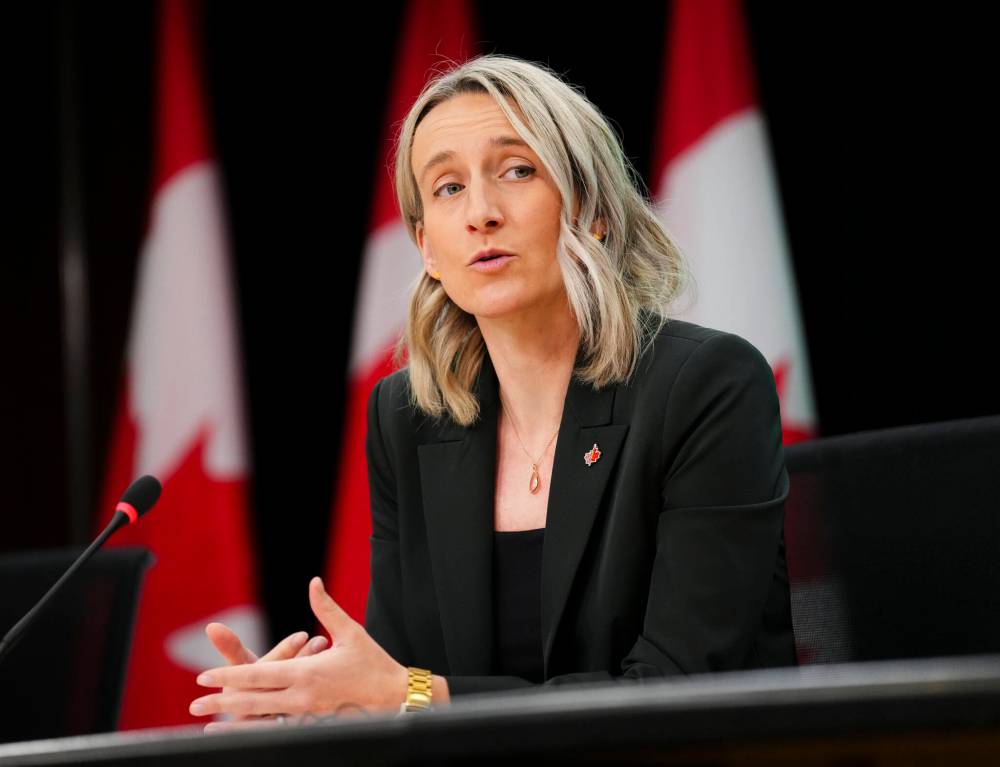
On May 14, the WHO confirmed a major Ebola outbreak in the Democratic of Congo. On May 18, Reimer accompanied federal Health Minister Marjorie Michel to the World Health Assembly, a powerful annual gathering of public health officials under the auspices of the WHO. Suddenly, Reimer found herself at ground zero of a global effort to control a deadly outbreak.
“When I took this job, the plan was to slowly get to know the portfolio, to learn about how the agency works, to really get a feel for what I thought my objectives would be,” says Reimer, 42.
“Instead we just jumped straight into two different high-consequence pathogens where we were working seven days a week, and just trying to make sure we were protecting Canadians, which was a pro and a con.
“The con is that obviously I didn’t get the chance to get the orientation that might have been very nice, but also, what better orientation than jumping into something where you quickly get to see all the players and how decisions are made and what’s really important?
“I can’t even count how many meetings (I’ve had) with the chief medical officers of health across the country since starting the job, whereas normally we would have met, you know, once or twice a month.”
The urgency of her new responsibilities stands in stark contrast to how her career was evolving in Manitoba.
Before accepting the national post — officially replacing Dr. Theresa Tam, who had a high profile during COVID-19 — Reimer says her career trajectory was carrying her away from public health and into administrative leadership roles in Manitoba. Reimer acknowledges that although the work was extremely important, it was not her passion.
“We just jumped straight into two different high-consequence pathogens where we were working seven days a week.”
“I knew that I wanted to be in public health, that’s where my real passion has always been,” says Reimer, who was born and raised in Winkler and who will be back in Winnipeg next week to receive the Order of Manitoba.
“So when this opportunity came up, it felt like this is a great opportunity for me to bring both the perspective (from serving at the helm of the Canadian Medical Association) together with public health, which has been something that I have loved since the day I started in residency.”
Seizing opportunities — or having opportunity seize her — has been a constant theme in Reimer’s career.
Back in the spring of 2020 when COVID-19 struck, Reimer started doing YouTube videos — CoronaChats with Dr. Joss — to explain what medical professionals knew and did not yet know about the virus.
The first in what would become a series of videos was decidedly homemade, just Reimer talking into her phone’s camera and trying to ease Manitobans’ concerns about a crisis that was not fully understood.
Reimer says making the videos, which were not “viral” by any reasonable measurement, was a somewhat embarrassing experience.
“I found it incredibly uncomfortable, but particularly at the beginning of the pandemic, when everybody had a million questions, nobody knew what to think about this virus, and how serious it was, and how to prevent or protect themselves from it,” Reimer says.
“I was getting the same questions over and over and over again. So, for me, it actually felt like this is a time-saving thing.”
Dr. Joss Reimer as the medical lead for the Manitoba Vaccine Implementation Task Force at a news conference in 2022.
Providing crucial information, helping to reduce anxiety and addressing fear is why Reimer got into public health. However, it was a challenging time when so much was not known about the virus. This was evident on health care’s front lines, where there was a lot of fear and, at times, panic.
“I remember when we had one of our first cases of COVID, and they went into an emergency room, and we had a meeting to debate whether or not we should shut down that emergency room,” she says.
“That’s the kind of meeting I was in, where I was going, ‘OK, well, here’s what we know, here’s what we don’t know.’”
Reimer says her transition from the medical director of public health for the WRHA to chief spokesperson for the vaccine rollout represented a “quick turnaround” in her career – one that developed in real time with little advanced planning.
Dr. Brent Roussin, Manitoba’s chief public health officer, quickly enlisted Reimer to help with the vaccine rollout.
Initially, Reimer says, she was told it was a “two-day per week” commitment. In her first week, she was suddenly conscripted to appear with Roussin in one of the daily pandemic briefings that were held at the legislature news conference theatre and broadcast live online.
“I don’t even know if I had been (on the job) for a week when I got told, ‘OK, you’re going to the Leg today, you’re doing a press conference.’ And so I was like, ‘Oh, OK, here we go, guess I’m going.’
“And when I got there, my speaking notes said, ‘Hi, I’m Dr. Joss Reimer, the medical lead and spokesperson for the vaccine implementation task force.’ I was like, ‘I am?’ And they were like, ‘Well, the public just needs a title.”
“My speaking notes said, ‘Hi, I’m Dr. Joss Reimer, the medical lead and spokesperson for the vaccine implementation task force.’ I was like, ‘I am?’”
At first, Reimer says she was somewhat mortified at heading up the task force, particularly when there were more qualified experts.
“I talked to one of the other docs who actually is a lifelong vaccine expert, and who I saw as the medical lead, and he basically said, ‘Hey, as long as I don’t have to talk about this on camera, you can call yourself anything you want.’”
Thus began the arduous task of encouraging Manitobans — a strong minority of whom were extremely hesitant to buy in — to get their jabs to help control the spread of the virus. A task that put medical professionals such as Reimer directly in the cross-hairs of a toxic blow-back.
“I didn’t know I was going to be in the role where people would take their anger towards me, but I guess I’m not surprised that once I was in that role, that that would have happened,” she says.
“I think any time you take on a public role, there’s always going to be some opposition from some parts of the community, and vaccines, there are people who have very strong feelings about them.”
Strong enough, Reimer says, that there were moments where she felt the threat level escalate. Some of the aggrieved in the anti-vaccine community managed to find Reimer’s email address and started sending alarming messages.
“I can think of one individual who sent me enough emails, you know, on late night weekends. He was very upset, sending me very personal information, pictures of his kids, and with threats. I think with him, the justice department had to get involved …
“There was a point where Canada Post worked with the justice department and stopped delivering my office mail. I don’t know if I missed anything important, but Canada Post kept all of the mail that went to my office and stopped it completely because of things that were showing up.”
Notwithstanding experiences such as this, Reimer is quick to note she did not have to deal with COVID-19 directly on the front lines. And that it is clear that many of those health-care workers continue to experience various forms of post-traumatic stress disorder.
Dr. Joss Reimer on a run along Sherbrook Street in November 2023. Physical activity is one of the ways she stays healthy. 
It was, in part, Reimer’s respect for what front-line health professionals went through that she opened up about her own mental-health challenges. In October 2023, Reimer responded to a post on X (formerly Twitter) about whether physical exercise was better for treating mental illness than medication.
In her reply, Reimer acknowledged that she has been diagnosed with depression, and although daily running and biking was key to managing her condition, so were antidepressants. She followed up by agreeing to an interview with the Free Press in which she detailed her lifelong struggle with depression.
After the better part of three years living in the communications crucible of the provincial vaccine task force, Reimer said she was a bit unprepared for the huge reaction she got to her willingness to discuss her own mental health. In a profession where public officials often keep very private lives, Reimer admits it was a whole new level of scrutiny.
“I wouldn’t use the word regret,” Reimer says. “I don’t think I ever had any regret, but there’s no question it was uncomfortable when your mental illness is front-page news. So (I had) some anxiety around it, and definitely some discomfort.
“But I think it still was a net-positive, because the whole reason that I did it was to try to reduce stigma, to give people who are in that depth of a mental illness some hope that, that there is for most people a way out.”
It’s unlikely Reimer is going to get much in the way of downtime in her new role. Along with emerging threats such as Ebola and hantavirus, there is also the matter of preparing for the next inevitable global pandemic.
The same month Reimer took over her new post, the Global Preparedness Monitoring Board, an international surveillance organization that tracks the world’s planning for pandemics, issued its annual report, which had a stark warning that far too many countries failed to learn from the hard lessons of COVID-19. That report concluded most countries are “not meaningfully safer” than they were in 2019 when COVID-19 struck.
Reimer acknowledges the report’s warning, but insists Canada did learn its lessons and is “better prepared.”
“We have a plan, we’re working together with Health Canada and across government to have things in place. We have a national stockpile (of vaccines and personal protection equipment) that is kept up to date to be ready for a variety of potential threats.”
“We have a plan, we’re working together with Health Canada and across government to have things in place.”
Vaccine opposition does, however, remain a critical concern for Reimer, both as the country’s top doctor and a Manitoban, who grew up as a daughter of a family doctor in Winkler.
Her home community is a hotbed of vaccine hesitancy and ground zero for one of the largest measles outbreaks in Canada. Reimer says she is deeply concerned about what appears to be a growing rejection of vaccines for a variety of medical threats.
When childhood vaccination rates drop, Reimer says measles is typically one of the first diseases to show up. However, experience in other countries has shown that other deadly diseases follow if vaccination rates do not improve.
“Growing up in rural Manitoba gave me so many gifts, like what a wonderful childhood and freedom, and you get to experience life that’s quite different than if you grew up in a city or different parts of the country. I’m very thankful, but I would be lying if I didn’t say that I feel genuinely sad about seeing people in my home community being harmed by measles, by COVID, by the next one that comes, which I mean, if I had to put money on, I’d probably put it on diphtheria….
“I’ve dedicated my whole career to help my community be healthy, and when we have a tool that can keep people healthy, it’s so sad to see people still be harmed.
“I know that we can make a positive difference. I don’t know that there is a winning or losing of this battle, but I know that fighting it is important.”
dan.lett@freepress.mb.ca


Dan Lett is a columnist for the Free Press, providing opinion and commentary on politics in Winnipeg and beyond. Born and raised in Toronto, Dan joined the Free Press in 1986. Read more about Dan.
Dan’s columns are built on facts and reactions, but offer his personal views through arguments and analysis. The Free Press’ editing team reviews Dan’s columns before they are posted online or published in print — part of the our tradition, since 1872, of producing reliable independent journalism. Read more about Free Press’s history and mandate, and learn how our newsroom operates.
Our newsroom depends on a growing audience of readers to power our journalism. If you are not a paid reader, please consider becoming a subscriber.
Our newsroom depends on its audience of readers to power our journalism. Thank you for your support.
Related Articles
Federal officials cite decline in opioid-related deaths but warn progress is fragile