Building community Inner City Youth Alive changes lives, one program at a time, in Winnipeg's North End
Read this article for free:
or
Already have an account? Log in here »
To continue reading, please subscribe:

Digital Subscription
One year of digital access for only $205*
- Enjoy unlimited reading on winnipegfreepress.com
- Read the E-Edition, our digital replica newspaper
- Access News Break, our award-winning app
- Play interactive puzzles
*First annual payment billed as $205.00 + GST for one year. This annual subscription will automatically renew at $233.00 + GST every 52 weeks (10% off the regular annual price of $259.35). Offer available to new and qualified returning subscribers only. Cancel any time.
To continue reading, please subscribe:
Add Free Press access to your Brandon Sun subscription for only an additional
$1 for the first 4 weeks*
- Enjoy unlimited reading on winnipegfreepress.com
- Read the E-Edition, our digital replica newspaper
- Access News Break, our award-winning app
- Play interactive puzzles
*Your next Brandon Sun subscription payment will increase by $1.00 and you will be charged $17.95 plus GST for four weeks. After four weeks, your payment will increase to $24.95 plus GST every four weeks.
Read unlimited articles for free today:
or
Already have an account? Log in here »
It has served Winnipeg’s North End for nearly 40 years, attempting to bring hope and a brighter future to youth and their families in the inner city.
Founded in 1986, Inner City Youth Alive has worked in the neighbourhood running programs including a drop‑in centre, summer camps, school support and a wilderness program.
The Christian non‑profit charity reaches more than 1,200 youth and young adults each year through its programs, providing a safe and active environment for many who are experiencing poverty, abuse and neglect.
The Free Press spent a day following the organization’s work.
9 a.m.
It’s a rainy Thursday morning in the North End. Grey clouds hang low on another gloomy day in what has felt like a particularly stormy Winnipeg summer, but inside an unassuming building on Salter Street, the atmosphere is markedly different.
A group of about 16 men sits in a loose circle in a room that doubles as a kitchen, gym and meeting space.
It doesn’t take long to notice the familiarity between them. They trade jokes and poke fun at one another, but the mood changes quickly when the conversation turns serious. The room falls quiet, and everyone listens.
This is Step Up Construction — a social enterprise that employs and trains young adults from the neighbourhood.
MIKAELA MACKENZIE / FREE PRESS From left: Mark Poirier, Morley Daniels, Tom Cameron and Jason Eheler help lead Step Up.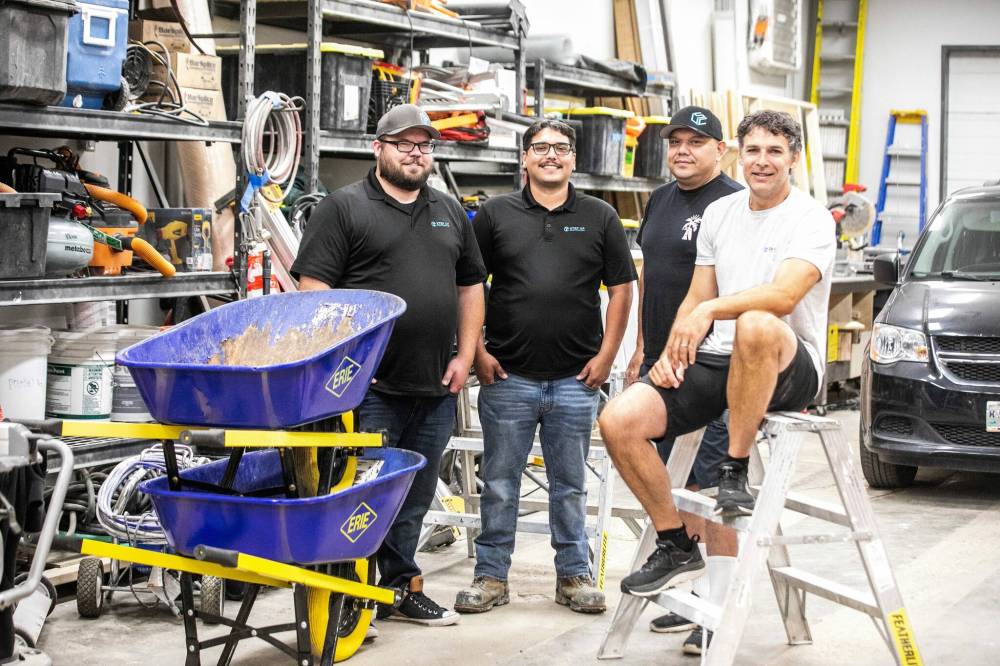
By 9 a.m., the morning meeting at Step Up has wrapped up, and most of the crews have left to carry out residential renovations, commercial projects and infrastructure work across Manitoba.
The meeting is part of the routine at Step Up. Before heading out for the day, the men check in with one another, talk through what is happening in their lives, share updates and take time for a devotion.
Project managers, company leaders, and a few construction workers remain at the office, showing a glimpse into the culture the organization has built over the past several years. Again and again, the men describe that culture in the same way: family.
Launched in 2021, Step Up gives young adults hands-on experience in carpentry and construction through paid employment. The program aims to help young people move away from gang or street involvement while building long-term career opportunities.
Charlie Chamakese-Frost is in his fifth year as a crew member. After spending two years in jail, Chamakese-Frost joined the program through his brother, who was working with Step Up at the time.
“I wanted to change my life around,” he said. “I changed a long way; I started accepting the Lord in my life.”
“Back then, I was a little kid running around kicking walls; I guess now I’m fixing them.”
“I was a little kid running around kicking walls; I guess now I’m fixing them.”
Like Chamakese-Frost, senior lead hand Morley Daniels said Step Up became an opportunity for a fresh start. He joined the program a couple of years after his colleague.
“I was in a really bad place,” Daniels said. “Just freshly out trying to figure out (of prison) what I was going to do with my life, where I was going.”
He said Step Up trusted him early by giving him responsibilities and opportunities he never had. Within a year, he became lead hand.
“I was a criminal most of my life and coming here, I was able to shed that, become something else,” he said. “I got arrested out of this place when I was 19, and now it’s a building that I’m working at.”
Daniels said he has been able to build stability outside of work and recently bought a home and got engaged.
MIKAELA MACKENZIE / FREE PRESS A program participant works on building a picnic table.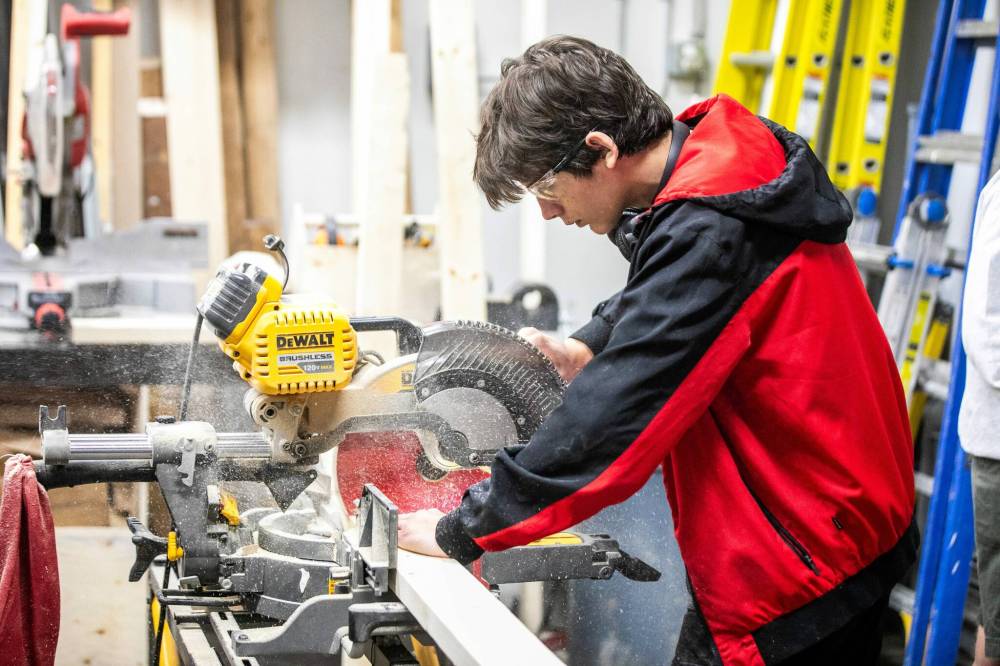
Step Up director of operations Anthony Ho said witnessing people change makes the work meaningful.
“It’s been a privilege to see men’s lives being radically changed,” Ho said. “They will change it. Like I might not see it, but they will change the North End because they’re buying homes. Like ‘I’m not moving out. I’m going to live here.’”
Ho said his own background shapes his view of the work. He is doing well today because multiple people gave him chances.
“When we look at society, and especially Winnipeg, we see all this mess, and we need community to come alongside us to help us clean up that mess,” he said. “That’s Step Up. It’s a safe place to land.”
Tom Cameron helped start Step Up. He had worked in carpentry and residential construction before connecting with Inner City Youth Alive through subcontracting and family. The charity used to have a home‑renovation program years ago, but it eventually fizzled out.
“I just asked if we could just start something off really super-small, doing small repairs, small renovations,” he said.
“I’m from the community; I spent most of my life in the Winnipeg North End kind of area, kind of come from a rough background as well. So I wanted to mentor and help guys get on their feet again because now I was on my feet.”
Cameron said Step Up has created a “big return” by providing employees with competitive wages while generating enough revenue for the organization to sustain its operations.
“Families are gaining homes, guys are rebuilding the community and reuniting with family, buying vehicles, getting homes, good‑paying jobs, contributing to massive infrastructure projects across the province.”
MIKAELA MACKENZIE / FREE PRESS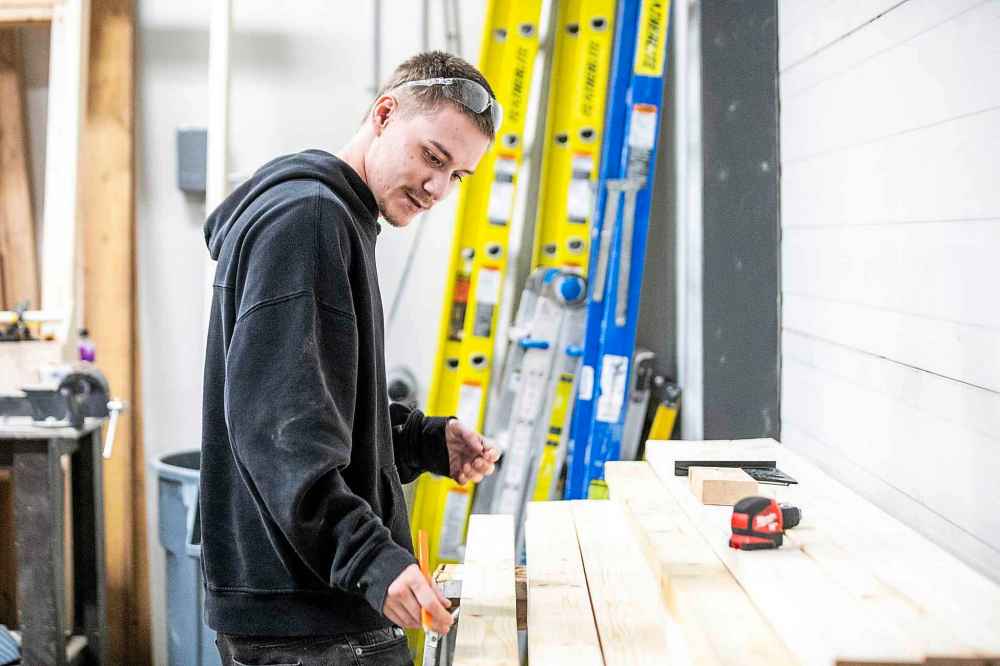
While Step Up is faith-based, Cameron said the organization is focused on meeting people where they are.
“We’re not Bible beating nobody. We’re not forcing anybody to drink the Kool‑Aid, so to speak, or anything like that. It’s just, we’re doing life together.”
The non-profit’s founder, Kent Dueck, said the need for a program such as Step Up was tied to what he saw around the neighbourhood.
“Ten feet from the door … a young man was shot and killed,” he said. “Three weeks later, another guy was shot and killed 10 feet from there.”
“We’re not forcing anybody to drink the Kool‑Aid… It’s just, we’re doing life together.”
A report by Pier Solutions and Step Up Construction found that approximately 38 per cent of individuals in the North End live in poverty, compared to 13.2 per cent across Winnipeg. The report notes the area has a reputation for higher crime rates, including gang activity, and says youth can be particularly vulnerable to gang recruitment, which can increase their risk of violence and criminal involvement.
Dueck recalls someone telling the organization they could not ask people to leave gangs unless they could offer them another option.
“We had a guy years ago tell us we should stop telling people to get out of gangs,” Dueck said. “Because if you don’t offer them a job, then if they get out of the gang, baby needs diapers, and then they have to go back to the gang to deal with that.”
Dueck said the work is about reaching “young men that just didn’t have a purpose and a sense of meaning.”
Profits go back into training new workers and creating more opportunities through the program.
11 a.m.
Under a two‑minute drive from Step Up is the charity’s main building on Aberdeen Avenue.
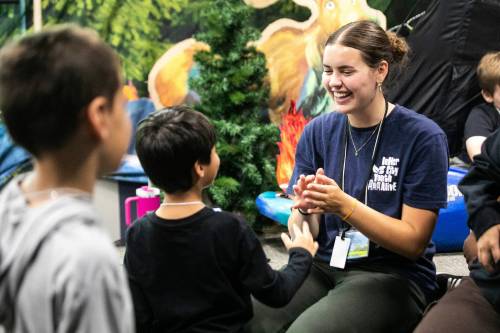
In the basement, a few groups of kids work on crafts with camp counsellors. Then someone calls for a dance break, and the Vacation Bible School summer camp starts excitedly following a pop worship song that’s projected on the wall.
The camp is one of several summer programs run by Inner City Youth Alive.
MIKAELA MACKENZIE / FREE PRESS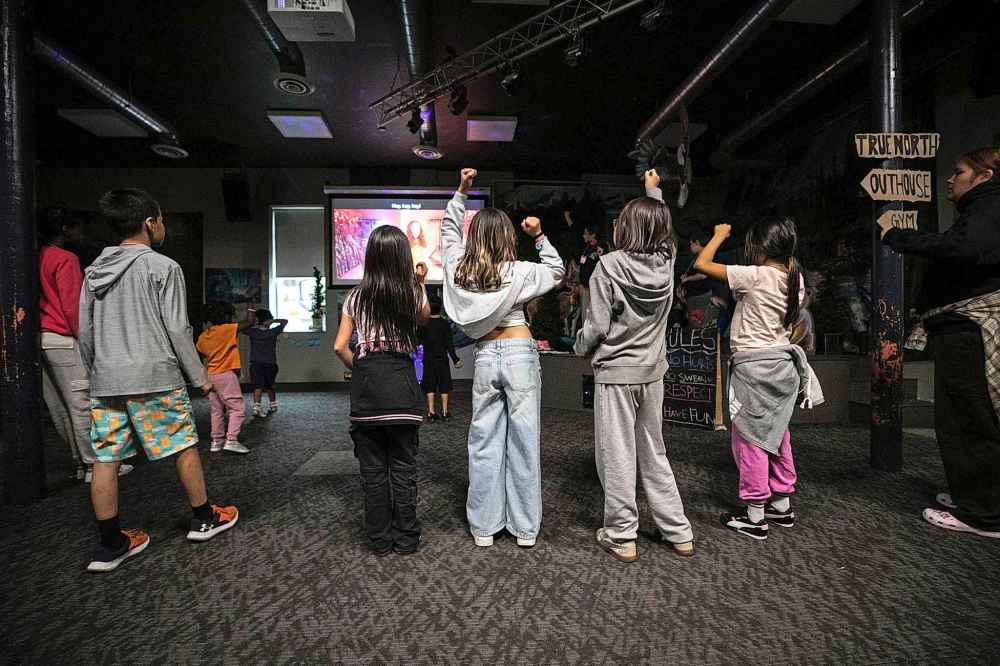
Many of the kids who are part of the camp also attend the charity’s Bridge program — the drop‑in centre that has operated for about 25 years, which has a climbing wall, basketball court, video games and a family‑style dinner three nights a week for people ages five to 19. After the activities, staff members drive children home.
Community outreach worker Sam Ayigbe sees many of the same kids move between ICYA’s programs.
“You get to see a kid who — you’ve grown with this kid, from when they were like 12, and now this kid is 16, almost 17, and their life is completely different than when you first met them.”
MIKAELA MACKENZIE / FREE PRESS Sam Ayigbe, community education outreach worker, at Inner City Youth Alive vacation bible school day camp
He said outsiders often misunderstand the North End.
“People from the outside looking in — it’s just like this ghetto place, and it’s like dangerous, and you just never want to step foot in here. I think there are truths to like those things, where it’s like, ‘Hey, maybe it is a little bit more dangerous than your average place’, but it’s also like a really beautiful place at the exact same time”
“The kids, they’re sweet, they just also have really bad cards dealt to them.”
11:30 a.m.
It’s 30 minutes before the summer camp kids will head off to Morning Sound Farm in Sanford, southwest of Winnipeg.
Mya Balkissoon, the Bridge program lead at ICYA, doesn’t have long to chat before she helps round up the Vacation Bible School kids onto a bus for their farm adventure.
“Working with them, it’s so amazing,” Balkissoon said. “I think they are the strongest kids ever because they’ve been through so much and they just keep being resilient.”
MIKAELA MACKENZIE / FREE PRESS Mya Balkissoon, bridge program lead, leads activities.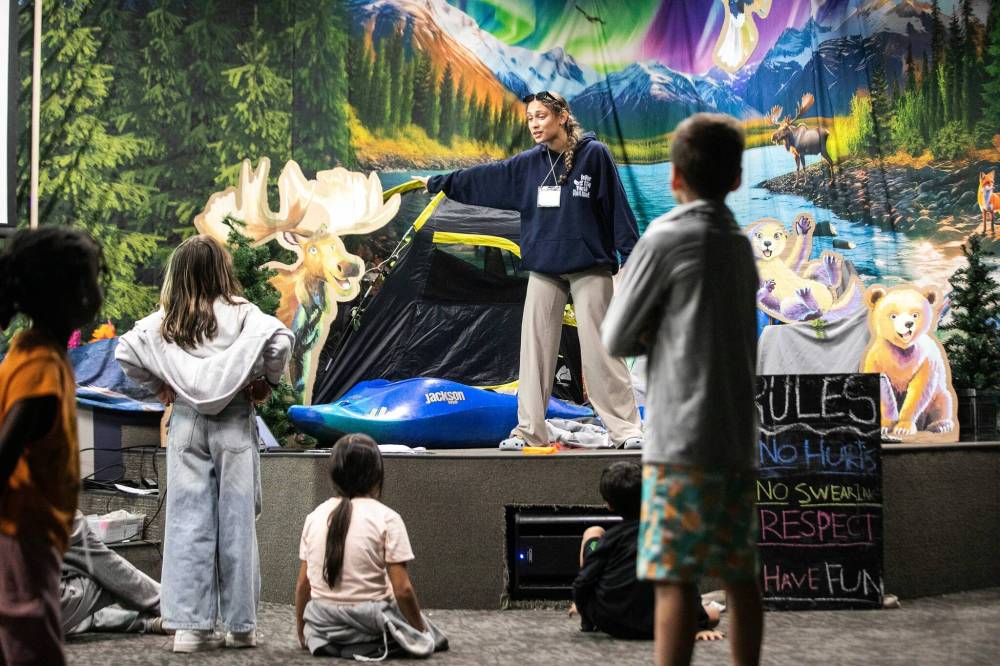
The 2025 documentary Absent, which was made by the charity, reported that school absenteeism in the North End is around 70 per cent, which especially affects Indigenous youth.
The documentary pointed to deep poverty, unstable housing, child welfare involvement, addiction in families and a historical mistrust of the education system. During the school year, staff often pick up children and take them to class.
“You need to be willing to sit at the feet of kids and be taught,” said Dueck. “You don’t come like a saviour or something.”
Noon
In the kitchen, Meals 4 Kids co-ordinator Lindsay Feduniw sorts paperwork. She’s already handed out packed lunches for the farm trip.
Summer camp kids come here for breakfast, lunch and snacks; during the school year, drop‑in dinner is often the first activity of the evening.
Feduniw says her understanding of the kids’ needs shifted once she got to know them. When she started, she assumed many weren’t getting food at home.
Over time, she noticed something different: younger kids skipping dinner and going straight for candy, energy drinks or other sugary snacks. Dental issues were common.
“That was a really big challenge,” she said. “I’ve pivoted everything I do to focus on that now.”
MIKAELA MACKENZIE / FREE PRESS Meals 4 Kids coordinator Lindsay Feduniw shows a packed field trip lunch.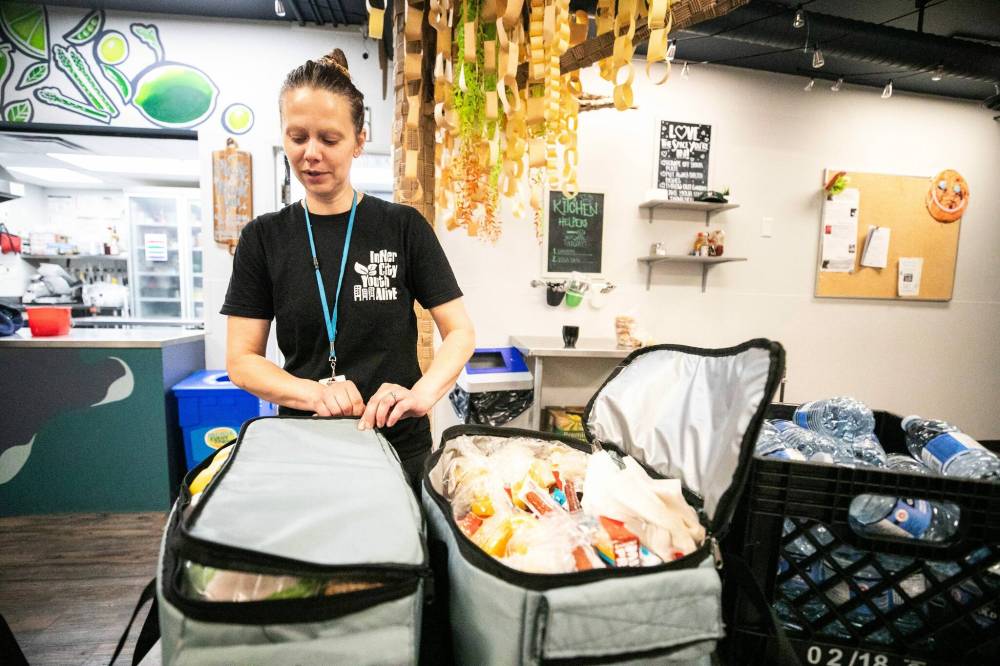
Older kids sometimes help with cooking or cleaning up.
“Food’s the centre of everything we do, right?” Feduniw said.
“Sometimes you’re just present with them, and other days you have to be really mindful and intentional with everything you do.”
1:45 p.m.
After lunch, community minister Harvey Rempel stops by. He has been with the organization since 2006, often walking alongside gang‑involved youth and their families.
Every day looks different for Harvey, whether it’s helping a kid get to school, taking someone to a doctor’s appointment, or visiting somebody in hospital or jail.
“It’s walking with people in day-to-day stuff of life,” he said. “I’ve had lots of conversations with people here that are like, why is it only in our community that people are struggling with addictions? And I’m like, this happens everywhere. It’s just some places it’s easier to hide.”
MIKAELA MACKENZIE / FREE PRESS Inner City Youth Alive community minister Harvey Rempel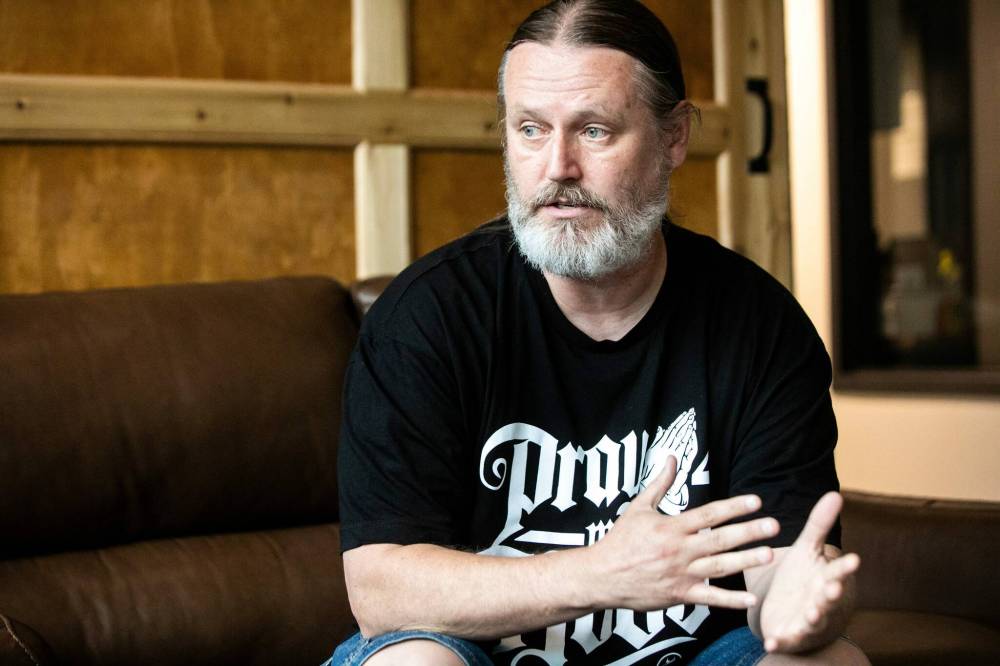
He describes the programs as a community setting.
“The kids are learning to cook, learning to serve. They’re serving each other,” he said. “Creating a family kind of community atmosphere where we’re all in this together.”
3 p.m.
Later in the afternoon, a group of young people returns from Gem Lake — the non-profit’s wilderness camp northeast of Winnipeg near the Manitoba-Ontario border — where they’d spent four nights and five days.
As staff unpack bags from the van, the kids enter the building; some tell Dueck about the activities, a couple hug Ayigbe.
ICYA runs eight weeks of Gem Lake trips in the summer and five in the winter. Staff say the change in campers is often visible. From arriving with arms crossed, wanting to go home, after a few days, they’re jumping off the dock or asking to go fishing.
“After a few days of just this safety of this place, they can just be themselves, where they can know that they’re loved and cared for,” said Andrew Braun, executive director of ICYA.
MIKAELA MACKENZIE / FREE PRESS Kids run through the rain to a bus for an afternoon field trip at the Inner City Youth Alive vacation bible school day camp.
Most of its programs end up tying together one way or another, says Braun, recalling a Tuesday night drop-in about a month ago.
“The staff that were leading that night, I remember them when I first started. They were youth that were just starting to come to the drop-in, and now they’re leading the program.”
MIKAELA MACKENZIE / FREE PRESS Kids who used to attend the drop-in now lead the program, says executive director Andrew Braun.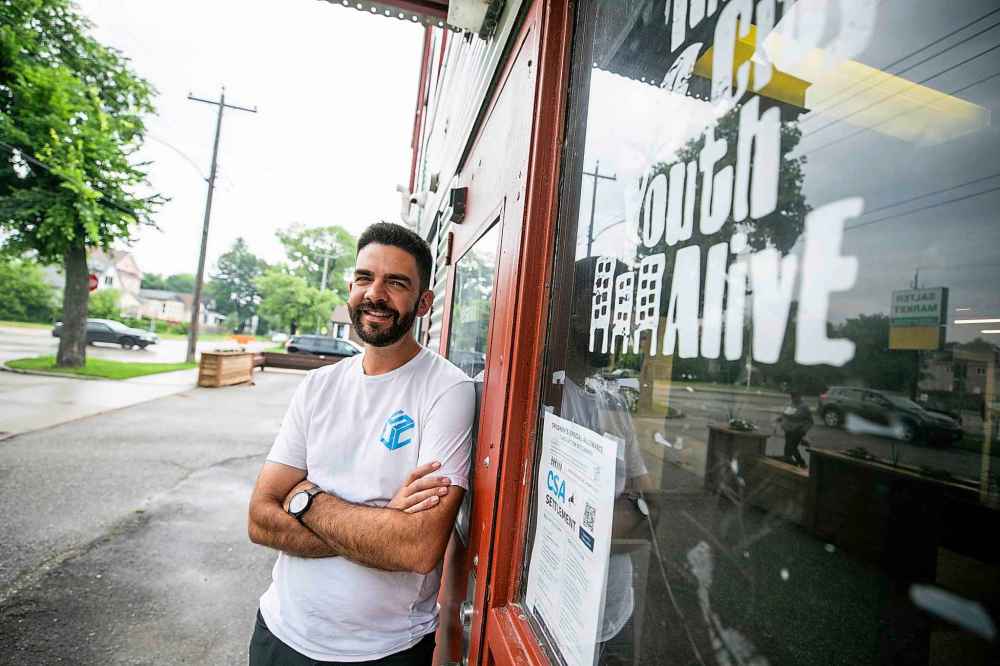
For Braun, those moments show how the programs can come full circle.
“There’s a stigma that people in the North End, as soon as they have stability, want to move out of the North End,” he said. “And that’s reality for a lot of people.”
But he said some, especially Step Up workers, want to remain connected to the community that supported them.
“They want to be able to buy a house in the community and then help serve and be a neighbour to others in the community.”
zoe.pierce@freepress.mb.ca