

Not every dog has its day
Advocates say rehab benefits animals with behavioural issues, but more resources are needed
Advertisement
Read this article for free:
or
Already have an account? Log in here »
To continue reading, please subscribe:

Digital Subscription
One year of digital access for only $205*
- Enjoy unlimited reading on winnipegfreepress.com
- Read the E-Edition, our digital replica newspaper
- Access News Break, our award-winning app
- Play interactive puzzles
*First annual payment billed as $205.00 + GST for one year. This annual subscription will automatically renew at $233.00 + GST every 52 weeks (10% off the regular annual price of $259.35). Offer available to new and qualified returning subscribers only. Cancel any time.
To continue reading, please subscribe:
Add Free Press access to your Brandon Sun subscription for only an additional
$1 for the first 4 weeks*
- Enjoy unlimited reading on winnipegfreepress.com
- Read the E-Edition, our digital replica newspaper
- Access News Break, our award-winning app
- Play interactive puzzles
*Your next Brandon Sun subscription payment will increase by $1.00 and you will be charged $17.95 plus GST for four weeks. After four weeks, your payment will increase to $24.95 plus GST every four weeks.
Read unlimited articles for free today:
or
Already have an account? Log in here »
After two years at the Winnipeg Humane Society’s shelter, it seemed iffy that Benny would ever find a forever home.
The German shepherd had behavioural issues and was not great at socializing with other dogs, but after one month of rehabilitation with Back to Pack Rescue Shelter, he was able to be adopted.
Benny was fortunate enough to be given another chance, but the lack of resources for rehabilitating dogs means some aren’t as lucky, said Andrew Din, co-founder of Back to Pack.
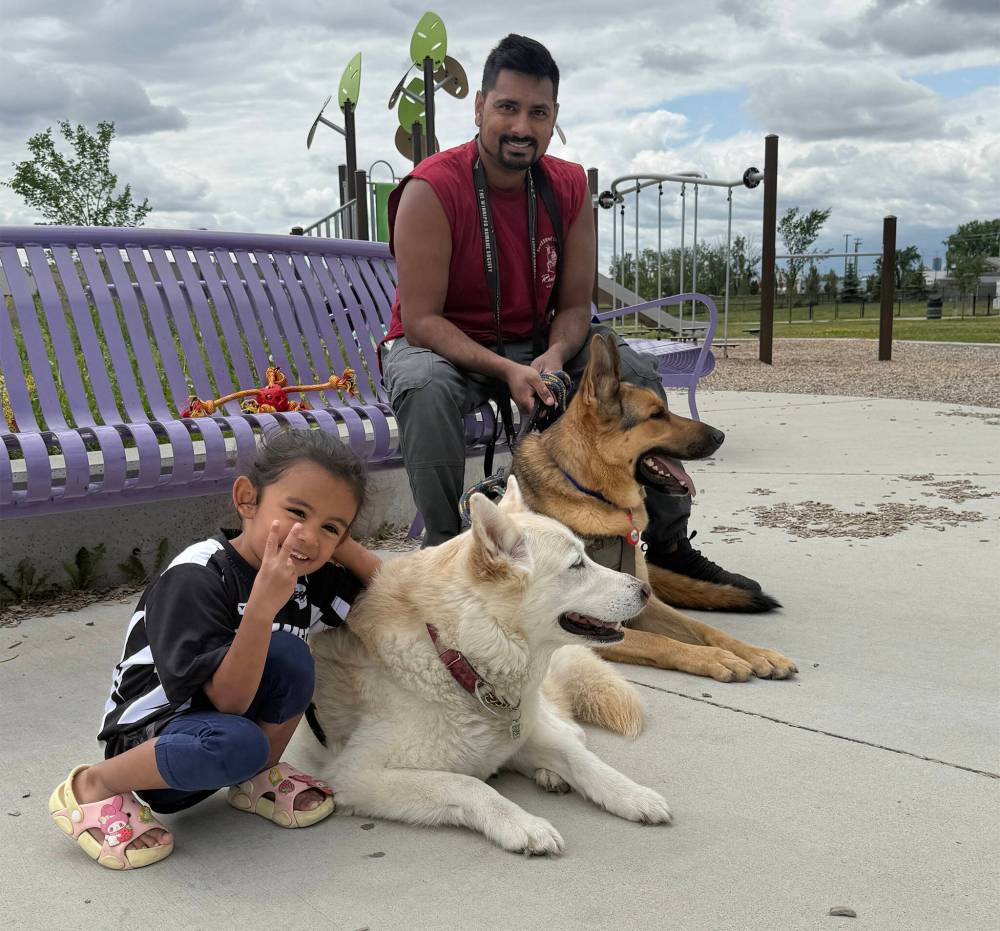
SUPPLIED
Andrew Din, co-founder of Back to Pack Rescue, with his daughter and Benny, who he rehabilitated after the dog spent two years in the Winnipeg Humane Society shelter because of behavioural issues. Din is holding Benny, and his daughter is holding their other dog Luna.
Din and other animal advocates say more resources and education are needed to retrain dogs and give them a fair shot before they are euthanized or designated as dangerous.
“It’s just so difficult to rehabilitate a dog, and there’s so much knowledge needed,” he said.
Din said his organization is run by four members of his family, and they can only take in one dog at a time.
They provide free training classes on how to deal with behavioural issues in animals, but due to a lack of funding, they haven’t been able to hold a class in a year.
He thinks the city needs to establish an advisory committee to hold more in-depth discussions before pets are euthanized or designated as dangerous.
“This is something that should already be a right for dogs and for people, to have the proper assessments for these dogs and give them a fair chance and give the public a fair chance, too,” he said.
Din said the city will sometimes come to them to rehabilitate dogs in extreme cases, but more consultation with experts is needed.
Paul Karnafel, founder of The DogFather Rescue shelter, agrees.
“There is just not enough resources to work with them. It’s sad, because the two that I took from (animal services) are just the sweetest dogs,” he said.
He has a bull mastiff and a Weimaraner that were turned over to him by the city. They were about to be put down after demonstrating continuously aggressive behaviour. While the dogs still have some challenges, they are now deemed safe to be adopted and are looking for homes.
Karnafel said he doesn’t know many other places in the city that focus on rehabilitating dogs. He thinks a shelter specifically for animals with behavioural issues would help if there were enough people properly trained to staff the facility.
Zoe Austin, general manager of Winnipeg Animal Services, said they help socialize animals but do not have trainers who can fully rehabilitate them.
“As a municipal governmental shelter, resources are always limited. Animal Services does a lot of work with a little,” she said.
Austin said some people bring in their pets as strays or submit turnover requests because of concerning behaviour, which shows that more education is needed for the public.
Dogs brought in with severe issues may be sent to other shelters for support, but it varies on a case-by-case basis.
“It really depends on what the history is with the dog,” she said.

Austin said the decision to euthanize an animal rests with her, but she consults with other workers who have interacted with the dog and considers its risk and history of aggression.
“Our euthanasia protocol is pretty robust — there’s a lot of research and consideration that goes into it, but it’s never easy,” she said.
She said the same goes for assigning the dangerous dog designation, which follows provincial legislation requiring them to consider if the dog was provoked, its history of aggression and the risk of it causing more harm.
She said they do not take into account the animal’s past trauma but focus more on its risk to the community and holding owners accountable.
tiago.resko@freepress.mb.ca