

Environment Canada upgrade expected to improve dangerous weather warnings after June storm alert barrage

Advertisement
Read this article for free:
or
Already have an account? Log in here »
To continue reading, please subscribe:

Digital Subscription
One year of digital access for only $205*
- Enjoy unlimited reading on winnipegfreepress.com
- Read the E-Edition, our digital replica newspaper
- Access News Break, our award-winning app
- Play interactive puzzles
*First annual payment billed as $205.00 + GST for one year. This annual subscription will automatically renew at $233.00 + GST every 52 weeks (10% off the regular annual price of $259.35). Offer available to new and qualified returning subscribers only. Cancel any time.
To continue reading, please subscribe:
Add Free Press access to your Brandon Sun subscription for only an additional
$1 for the first 4 weeks*
- Enjoy unlimited reading on winnipegfreepress.com
- Read the E-Edition, our digital replica newspaper
- Access News Break, our award-winning app
- Play interactive puzzles
*Your next Brandon Sun subscription payment will increase by $1.00 and you will be charged $17.95 plus GST for four weeks. After four weeks, your payment will increase to $24.95 plus GST every four weeks.
Read unlimited articles for free today:
or
Already have an account? Log in here »
A new Environment Canada system that will better pinpoint who receives warnings about dangerous incoming weather is coming just weeks after some Manitobans received more than 20 alerts in a matter of hours before and during a massive storm.
The upgraded system, set to launch Tuesday, will focus on targeting areas most affected by severe thunderstorms or tornadoes instead of sending region-wide alerts, using a model based on “free-form polygons,” which allows meteorologists to specifically outline the area where a storm is headed.
“People in Canada will receive more precise severe thunderstorm and tornado warnings faster,” Samantha Bayard, a spokesperson for Environment and Climate Change Canada, said in an email Thursday.

“This will give everyone the information they need to act quickly and stay safe.”
Only targeted alert areas will receive the alert warnings.
The system Environment Canada currently uses sends out its alerts based on fixed regions, meaning all of Winnipeg may get an alert related to an event happening in a much smaller area, said John Hanesiak, a professor of atmospheric science at the University of Manitoba.
“For a long time, we’ve known that the current system is really not very good. Too many people get the alerts, and it’s not very targeted,” he said.
“Environment Canada has been planning this for years, it’s been in the works for quite a long time. It’s just taken them a long time to get it developed and actually working in a good enough condition where they can actually start using it in practice now.”
This summer, Environment Canada said it would be investigating after some Manitobans received 20-plus tornado and thunderstorm alerts in one night leading up to and during a massive storm that impacted thousands across the province June 9.
While the polygon alert system would have been “helpful” during the storm and torrent of alerts, Hanesiak said, the issue at that time was with Canada’s Alert Ready system, which works with Environment Canada, emergency management organizations, broadcasters, provinces and territories, and Pelmorex, the Weather Network’s parent company.
Bayard said Alert Ready will still be used for tornado warnings and some severe thunderstorm warnings. While wireless network alerts, such as those sent to cellphones, will be more precise after the upgrade, alerts sent out on TV and radio broadcasts will not be.
Overall, it’s a good news story, Hanesiak said.
“It should have happened a long time ago, but at least it’s happening.”
“I’m just glad it’s actually happening now,” he said. “It should have happened a long time ago, but at least it’s happening.”
Bernadine Brown, a Rossburn resident who survived a tornado that destroyed her heritage home in late June, said a more targeted warning system would give greater significance to extreme weather alerts.
Regular alerts could become tedious and counterproductive, Brown said.
“Sometimes you get bombarded when they keep sending those alerts — like that beep beep beep beep. It kind of cuts out your whole system. It gets annoying. So after a while, you don’t care what it says anymore,” she said.
“The warning system, it sounds like an alert. It sounds very serious. But when you try to put everything into place and it blows over in half an hour or an hour, and nothing really happens, then you just get used to the fact that it’s probably not going to affect us anyway.”
Brown said she and her husband, Brian, would have acted differently had they known that the warnings they received in June were targeted to a smaller area. She said the couple received general alerts before their home was ripped apart by a tornado.
“(The alert just said) that there were tornadoes in the area, or possible tornadoes (and) high winds in the area. But it didn’t specifically say Rossburn. I mean, our area is pretty wide when you look at it.
“We didn’t take it as seriously as it was because it’s never really happened that way.”
Scott Kehler, president and co-founder of Winnipeg’s Weatherlogics, said the polygon model has been used by the National Weather Service in the U.S. for nearly 20 years, and there have been negative consequences from Canada’s lack of speed in adopting it.
“This is something that the meteorologist community in Canada has been calling for for many years,” Kehler said. “We’re happy it’s finally taking place, but we really think that Environment Canada needs to move more quickly on new innovations in the future. They’re so far behind on this…
“We’ve talked about a lot of over-alerting that’s happened in the past, and people maybe not taking these alerts seriously because of the fact that they get them when they’re not relevant.”
“We’ve talked about a lot of over-alerting that’s happened in the past, and people maybe not taking these alerts seriously because of the fact that they get them when they’re not relevant.”
Both Hanesiak and Kehler pointed to a tornado that hit southwest Winnipeg in June. Some residents said they had not received a warning in advance, despite being alerted to events happening far away from their homes.
Despite the federal government spending $180 million on 33 highly advanced weather radar systems across Canada 10 years ago, Environment and Climate Change Canada’s funding cuts to radar research this year, including the disbandment of its radar research team, mean forecasters may be stuck using outdated software to interpret data for the foreseeable future, said Hanesiak.
It means forecasters can’t use the high-end radar fully; if they can’t see the rotations in the storms showing up on those systems, they may not issue a warning, he said.

“What’s happening now sometimes is, if they’re uncertain (about) what they’re seeing, they’ll issue a warning, just because they don’t want to miss something. It can be a life or death situation,” he said.
“Pulling the trigger to put a tornado warning out for a major city is not an easy decision. We have to make sure we give the forecasters as good as tools we can give them to be able to decide whether to pull the trigger or not. It can be a pretty serious situation.”
According to the Northern Tornadoes Project, 10 twisters have been confirmed in Manitoba this year.
With Brandon Sun file
malak.abas@freepress.mb.ca
Malak Abas is a city reporter at the Free Press. Born and raised in Winnipeg’s North End, she led the campus paper at the University of Manitoba before joining the Free Press in 2020. Read more about Malak.
Every piece of reporting Malak produces is reviewed by an editing team before it is posted online or published in print — part of the Free Press‘s tradition, since 1872, of producing reliable independent journalism. Read more about Free Press’s history and mandate, and learn how our newsroom operates.
Our newsroom depends on a growing audience of readers to power our journalism. If you are not a paid reader, please consider becoming a subscriber.
Our newsroom depends on its audience of readers to power our journalism. Thank you for your support.
Malak Abas is a city reporter at the Free Press. Born and raised in Winnipeg’s North End, she led the campus paper at the University of Manitoba before joining the Free Press in 2020. Read more about Malak.
Every piece of reporting Malak produces is reviewed by an editing team before it is posted online or published in print — part of the Free Press‘s tradition, since 1872, of producing reliable independent journalism. Read more about Free Press’s history and mandate, and learn how our newsroom operates.
Our newsroom depends on a growing audience of readers to power our journalism. If you are not a paid reader, please consider becoming a subscriber.
Our newsroom depends on its audience of readers to power our journalism. Thank you for your support.
Related Articles
Alerts aplenty: probe underway after barrage of messages during storm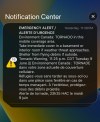

Advertisement Advertise With Us
Advertisement Advertise With Us
History
Updated on Thursday, August 6, 2026 6:16 PM CDT: Adds quotes