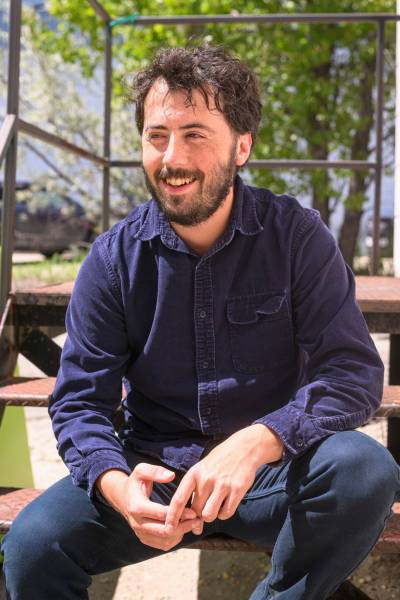
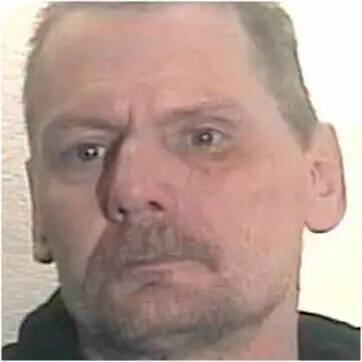
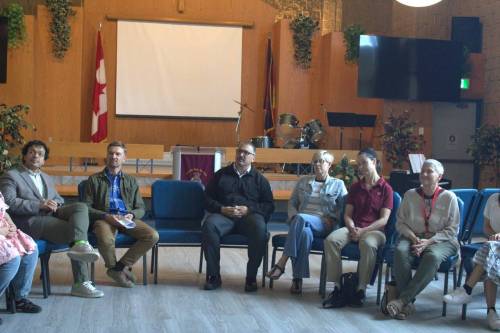
The home began with Hall Morberg House is the place Winnipeg’s ‘homeless hero’ wanted to help him and his friends living on the riverbank overcome their addictions, St. Boniface Street Links founder Marion Willis believes
Read this article for free:
or
Already have an account? Log in here »
To continue reading, please subscribe:

Digital Subscription
One year of digital access for only $205*
- Enjoy unlimited reading on winnipegfreepress.com
- Read the E-Edition, our digital replica newspaper
- Access News Break, our award-winning app
- Play interactive puzzles
*First annual payment billed as $205.00 + GST for one year. This annual subscription will automatically renew at $233.00 + GST every 52 weeks (10% off the regular annual price of $259.35). Offer available to new and qualified returning subscribers only. Cancel any time.
To continue reading, please subscribe:
Add Free Press access to your Brandon Sun subscription for only an additional
$1 for the first 4 weeks*
- Enjoy unlimited reading on winnipegfreepress.com
- Read the E-Edition, our digital replica newspaper
- Access News Break, our award-winning app
- Play interactive puzzles
*Your next Brandon Sun subscription payment will increase by $1.00 and you will be charged $17.95 plus GST for four weeks. After four weeks, your payment will increase to $24.95 plus GST every four weeks.
Read unlimited articles for free today:
or
Already have an account? Log in here »
Faron Hall never got the chance to begin recovery.

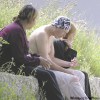
Once heralded as Winnipeg’s “homeless hero” after twice plunging into the Red River to save strangers from drowning, Hall told St. Boniface Street Links executive director Marion Willis shortly before his death in 2014 that he wanted help for his alcoholism.
Within hours, Hall drowned in the same river.
Two years later, Willis opened Morberg House, a men’s recovery home dedicated to Hall’s memory and to the idea he believed in: that recovery isn’t something people achieve alone, but through community.
A plaque outside the house bears Hall’s name.
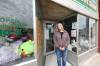
Willis likes to say all she had when she opened Morberg House was a wing and a prayer. But the truth, she says, is she also had a vision — one driven by the belief that men leaving treatment need more than sobriety to succeed. They need a place to belong.
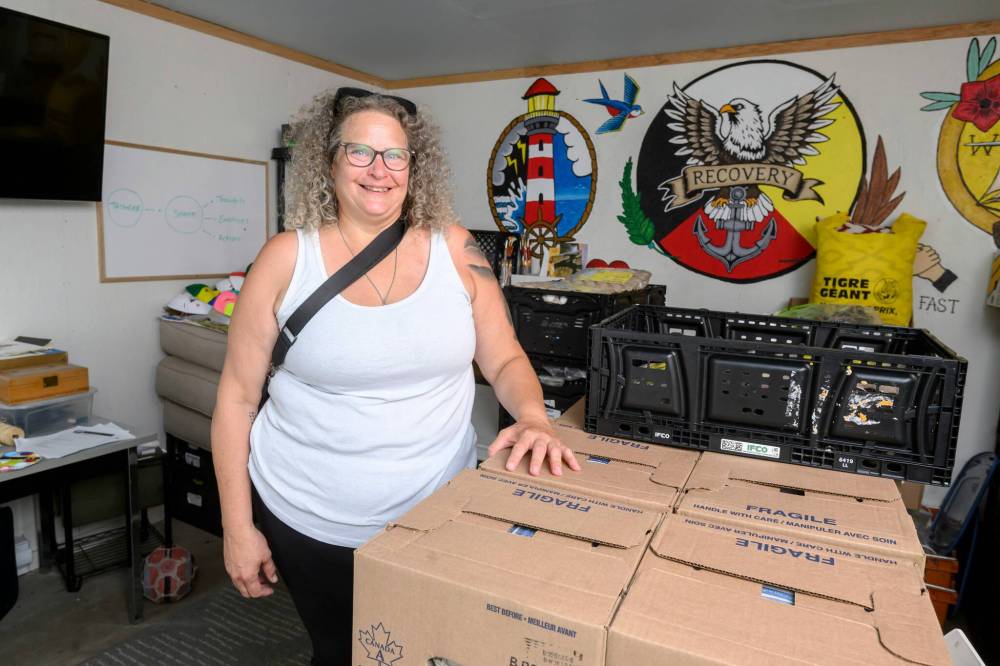
On Aug. 16, Morberg House celebrates its 10th anniversary. Gifted by the late philanthropist Gail Morberg, who was a champion for some of the province’s most marginalized people, the home at 311 Provencher Blvd. welcomes about 80 people each year. The house accommodates 15 residents at a time and boasts a 63 per cent recovery rate for men dealing with addictions.
Residents typically stay four to six months, though many remain longer. Morberg House also works closely with Manitoba Corrections by taking in men who are on bail.
The house is staffed by seven peer supports, one RE/ACT (trauma recovery) instructor and one clinician delivering cognitive behavioural therapy, one retired psychiatric nurse who delivers art therapy and external counsellors at a master’s level, along with Willis.

It’s not unusual to spot an ankle monitor at Morberg House. Far more noticeable, though, are the smiles.
Even on a sweltering summer afternoon, few residents are camped out in front of the dozens of fans scattered throughout the century-old house. Instead, most are gathered together — talking, laughing and checking in on one another, cooking meals and tending to the backyard garden.
It’s everything Hall wanted, Willis says.
Morberg House began as an idea. But, as Willis likes to say, “an idea isn’t a plan.”
When the organization was unexpectedly gifted the house in 2016, she admits there wasn’t much to go on, beyond determination.
“(The board) should have been horrified that we were gifted a house,” Willis says. “We had no money and no plan. And a house meant taxes and utilities and a big responsibility.”
Willis received the keys on Aug. 1; the first tenants moved in 15 days later.

Willis describes those initial days as “sheer panic.”
Those first residents weren’t strangers.
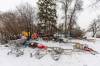
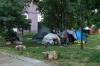
Willis had visited a nearby riverbank encampment and invited several men she knew and had built relationships with through Hall to help shape what Morberg House could become.
“I brought them back here and I said, ‘OK, look. We’ve got a house, but I can’t do this by myself.’ So we all talked together about what we felt we needed.”
Those conversations produced two early concepts: a “warm zone,” where people could check in and receive help away from their current lifestyle, access phone services, talk to someone about treatment and housing and, maybe, watch a movie.
The other was a “comfort zone,” where people discharged from hospital could continue their recovery, the rationale being that a discharge didn’t always mean fully recovered, and without a safe place to live, often medications would be lost, stolen, frozen or spilled due to the weather.
“According to Hall, people too often were discharged back into homelessness only to die soon after on the street,” Willis says.

To help make it happen, Centre Flavie, a St. Boniface organization that provides furniture and household goods to people living in poverty, furnished the home.
“There was still no staff, and we had nothing still other than a promise kept,” Willis says.
That promise was to the eight men from the riverbank, who became Morberg’s first residents.
Willis also negotiated room-and-board funding of $703 per occupied bed through Employment and Income Assistance — the same amount she receives 10 years on.
“I can’t remember their name, but if she is still alive and around, she ought to know she’s an angel,” Willis says of the senior employee at EIA who signed off on the funding.

It was enough to keep the lights on, feed residents and buy time while the home’s future took shape.
“What I’ve always understood is that addictions recovery programs of yesterday were absolutely no match for the challenges that we have today,” she says.
By December 2016, the first tenants had moved on. But a different population was arriving at the front door — people in the grips of severe psychosis and an addiction to a new synthetic street drug.
“I remember saying to my husband that there were sure a lot of people with schizophrenia around here,” she says.
That was Willis’s introduction to methamphetamine. She quickly realized Morberg House would need to evolve into a recovery home equipped to serve people facing a new and far more complex addiction crisis.
The next challenge arrived almost immediately.
Someone experiencing psychosis lit a small fire inside the house. It was quickly extinguished and caused only minor damage, but it prompted a visit from a city bylaw officer, who determined the building wasn’t up to code.
An assessment pegged the necessary renovations at roughly $250,000 — a staggering sum for an organization surviving on $703 per occupied bed.
Help arrived from an unlikely place.

After a news story highlighted Morberg House’s struggles, Willis received a phone call from the Dominican Republic. On the other end was Brad Mason, a veteran of Winnipeg’s construction industry.
“He told me not to worry about it,” she says, adding that he’d come by when he got back to Winnipeg.
“It sounded like the cliché, it sounded too good to be true.”
It wasn’t. A week later, Mason was standing on the front step with an engineer and an architect.
The three-storey home, complete with a full basement, required extensive work. Mason organized the project from start to finish, assembling the contractors and trades needed to bring the building up to code, including installing a custom-built fire escape.
“They did this knowing full well they were never going to get paid for it,” she said. “It was just all community.”
It wouldn’t be the last time the community stepped in.
Willis recalls one of the organization’s darkest moments in 2019, when Morberg House was on the brink of closing under mounting financial pressure.
“It was close to Christmas, and I was going to have to lay off everybody,” she says.
After another story about their challenges was published, an out-of-province reader reached out and asked to review the organization’s financial records. Willis, who has chosen to keep the donor anonymous, said the person walked her through what needed to be done.
A few days later, a cheque for $400,000 arrived — enough to pay off the mortgage and keep the house operating through the end of the year.
“That saved us,” Willis says, adding the same donor returned on Christmas Eve with buckets of KFC to feed everyone staying at the house.
“This person also struggled growing up and had challenges.”

For Willis, moments like that have defined the past decade.
“Morberg House, and what we’ve been able to accomplish here, is a real demonstration of what’s possible when the community all come together just to support and do something.”
The community support that has sustained Morberg House through its toughest moments continues today.
For the past seven years, Trevor and Hayley Williams, owners of three Winnipeg No Frills stores, have donated food three times a week, supplying staples such as meat, potatoes, vegetables, eggs and coffee.
Hayley Williams says supporting Morberg House has come full circle for her and the family business. Over the years, they’ve hired several of the house’s clients — people she says are no different than anyone else, but who made mistakes that could happen to anyone.
“There isn’t a single person that has gone through Morberg House that I don’t know personally,” she says. “Straight up, Morberg is queen in this community. I don’t see any other programs making waves like it is.”
When Matt Murray-Reske first walked through the doors of Morberg House, he was fighting for his life.
“I was a heavy user in pills, mostly opiates (including oxycontin and hydromorphone), methamphetamine, and I was an IV user,” he says. “I would shoot a gram of meth almost every couple of days. And then I turned to fentanyl.”
There wasn’t much he wouldn’t use.
He swallowed, smoked and injected whatever drugs he could get his hands on.
Only later, after entering Morberg House’s RE/ACT recovery program, did he realize what he had really been doing.
“I didn’t want to live anymore,” he said. “But I didn’t have the heart to go get a gun and shoot myself, because there was a little part of me that wanted to stay alive, for my daughter, who is nine years old.”

He overdosed repeatedly, waking up in hospital five different times. The last time was nearly fatal. Doctors kept him longer than usual, fearing the naloxone opioid OD reversal drug would wear off and he would slip into another overdose.
At the same time, meth-induced psychosis consumed him with paranoia and voices he couldn’t escape.
“I was going to jump in front of a car because I couldn’t deal with all of (the voices) inside my head,” he said.
Rock-bottom came in a north Winnipeg park. Sitting alone with nothing but a backpack holding his belongings, Murray-Reske realized addiction had driven away nearly everyone he cared about.
On Sept. 9, 2018, he checked himself into detox.
He stayed sober for about a year but admits he never fully left the life behind. Over the next few years, he relapsed several times. By 2022, he was earning $26 an hour driving a truck for a sewer-cleaning company and living in an apartment on Furby Street — enough money, he says, to fuel his addiction.
Then came another choice.
“I remember having $40 in my wallet and Marion’s number on my phone,” he says. “And I was like, ‘I could go downstairs and buy (drugs) right now, because my dealer lived right under me, or I could call Marion and get the help I needed.’”

He made the call.
Morberg House became the home he’d been searching for.
Murray-Reske isn’t the only one who describes it that way.
Patrick Mandelin arrived in 2018 after dropping out of hairstyling school and cycling through recovery programs that hadn’t worked.
“More of a vacation than anything,” Mandelin says.
At the time, he was living in a truck yard and self-medicating to cope with undiagnosed mental illness and ADHD. A friend encouraged him to meet with Willis.
“It was getting colder out, and she was encouraging me to come to the house and be admitted into their treatment program,” Mandelin says. “The time I spent with Marion, I felt like it was the quality time I needed to re-establish my values.”
A skilled pianist, Mandelin spent time playing the piano at a nearby community centre across the street.
“I felt encouraged,” he says.
Morberg House also forced Murray-Reske to confront trauma he hadn’t fully understood. He describes his childhood as normal but says his parents’ divorce affected him more deeply than he realized. By 15, he was using cocaine. By 18, his drug use had escalated into full-blown addiction.
“When I came here, I still had that teenager mentality,” he says. “This place gave me a home. It gave me connection. Connection is the opposite of addiction.”

Today, Murray-Reske runs the day-to-day operations at Morberg House, helping others find the same path out that he did.
“I’ve been sober now for several years,” he says. “Today, I have a full-time job, a great relationship with my family, living a healthy lifestyle. I feel good about myself. I don’t hate the person I am. I even went through a breakup and didn’t turn back to drugs.”
His work is also driven by the memory of a friend who died from an overdose in his apartment in 2019 after introducing him to “down,” a street opioid mixture that often contains fentanyl and heroin.
“I really need to repay the world somehow,” he says.
Mandelin, too, says the lessons he learned at Morberg House continued long after he left. After spending eight months in the program — and returning briefly between jobs — he moved to Jasper, Alta., to open a piano studio.
Then, in 2024, wildfire swept through the town.
The fires damaged or destroyed roughly 30 per cent of Jasper’s structures, including his studio.
“I essentially lost my way of life. These last couple of years have been a test,” Mandelin says.
Instead of turning back to drugs, he leaned on the values he says he developed at Morberg House.
“I have to figure it out myself, (what) works on the values I established with people like Marion and Morberg House, learning to become a responsible adult.”
Willis still tears up when she talks about Hall.
She believes Morberg House is the place he wanted — not just for himself, but for the friends he lived alongside on Winnipeg’s riverbanks.
She recalls the day Hall was selected for an assessment under the province’s Housing First model, which prioritizes getting people into permanent housing before connecting them with other supports.
Hall sat down with a social worker and a psychologist to answer a lengthy survey. Willis said a computer would use the answers to determine who would immediately qualify for housing and who would remain where they were.
“I remember him looking at the guy administering the survey, then me, and said, ‘Are you guys crazy?’” Willis says. “He said, ‘I need a f—-ing treatment centre. That’s what I need.’”

Hall believed that when someone reached the point where they wanted treatment, a bed should be waiting.
Instead, he saw barrier after barrier.
As someone living beneath a bridge, Hall told them he didn’t have money for a pay phone. If he wanted to call for treatment, he’d first have to find money to make the call — likely by stealing something. Then he’d need to remember an appointment while living with addiction and somehow find transportation across the city to get there.
“He eventually said, ‘It’s just easier to stay here under the bridge,’” Willis says.
Standing inside Morberg House, Willis can’t help but think of him.
“He wanted a comfort zone, a warm zone,” she says. “We have that now.”
More than a decade after his death, Willis believes people are finally beginning to understand what he had been trying to tell them all along: that homelessness and addiction aren’t defined by a lack of will, but by a maze of barriers that can make recovery feel impossible, even for those desperate to change.
scott.billeck@freepress.mb.ca

Scott Billeck is a general assignment reporter for the Free Press. A Creative Communications graduate from Red River College, Scott has more than a decade’s worth of experience covering hockey, football and global pandemics. He joined the Free Press in 2024. Read more about Scott.
Every piece of reporting Scott produces is reviewed by an editing team before it is posted online or published in print — part of the Free Press‘s tradition, since 1872, of producing reliable independent journalism. Read more about Free Press’s history and mandate, and learn how our newsroom operates.
Our newsroom depends on a growing audience of readers to power our journalism. If you are not a paid reader, please consider becoming a subscriber.
Our newsroom depends on its audience of readers to power our journalism. Thank you for your support.
Related Articles
Encampment clearing strains agency beyond its limits: Street Links director