

Doctor speaks out, raises alarm over gas plant expansion plans
Advertisement
Read this article for free:
or
Already have an account? Log in here »
To continue reading, please subscribe:

Digital Subscription
One year of digital access for only $205*
- Enjoy unlimited reading on winnipegfreepress.com
- Read the E-Edition, our digital replica newspaper
- Access News Break, our award-winning app
- Play interactive puzzles
*First annual payment billed as $205.00 + GST for one year. This annual subscription will automatically renew at $233.00 + GST every 52 weeks (10% off the regular annual price of $259.35). Offer available to new and qualified returning subscribers only. Cancel any time.
To continue reading, please subscribe:
Add Free Press access to your Brandon Sun subscription for only an additional
$1 for the first 4 weeks*
- Enjoy unlimited reading on winnipegfreepress.com
- Read the E-Edition, our digital replica newspaper
- Access News Break, our award-winning app
- Play interactive puzzles
*Your next Brandon Sun subscription payment will increase by $1.00 and you will be charged $17.95 plus GST for four weeks. After four weeks, your payment will increase to $24.95 plus GST every four weeks.
Read unlimited articles for free today:
or
Already have an account? Log in here »
BRANDON — A retired doctor is raising red flags on Manitoba Hydro’s proposed gas plant expansion in Brandon and the health-related consequences of climate change.
Dr. Scott Blyth, a former family physician who practised medicine for more than 40 years, said there are health risks associated with long-term exposure to gas.
“A simple answer, the plant should not be built because of the potential health risks,” Blyth said Thursday.
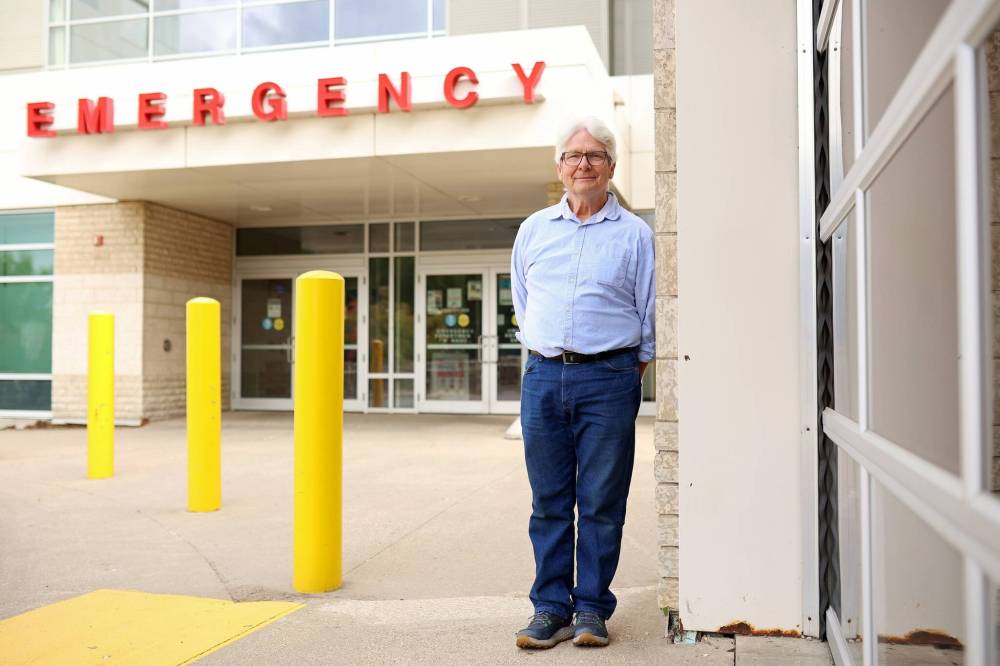
20082026 Dr. Scott Blyth outside the emergency department at the Brandon Regional Health Centre on Thursday. Blyth is a member of the Canadian Association of Physicians for the Environment (CAPE) and has studied the health impacts of air pollution and climate change, including health impacts from the Manitoba Hydro Generating Station in Brandon. (Tim Smith/The Brandon Sun) **Please cross reference details with Rylee story***
Blyth is a member of the Canadian Association of Physicians for the Environment — a doctor-led organization with 80 members in Manitoba that works on the intersection between health and the environment.
The association is calling on the province to invest in wind, solar and battery storage instead of the natural gas expansion, which the group says could expose the population of Brandon — more than 50,000 people — to harmful pollution.
The $3-billion project, announced in November, includes new combustion turbines, upgrades to electrical transmission and distribution equipment, and a new natural gas pipeline in the area — all to be added to the existing generating station in Brandon’s east end.
Manitoba Hydro says the expansion is necessary to meet the growing demand for power in the province. The Crown corporation estimates the demand for electricity could exceed capacity as early as 2029.
The combustion turbine units to be added will initially be fuelled by natural gas.
“Natural gas is 95 per cent methane, but it also has a number of noxious chemicals that are released when it’s burned, including nitrogen dioxide (and) sulfur dioxides,” Blyth said. “If you’re exposed to nitrous dioxides, your risk of developing certain health issues goes way up.”
Blyth cited inflammatory responses that can increase the risk of heart attacks and strokes, respiratory conditions such as asthma, chronic bronchitis, chronic obstructive lung disease and cryptogenic organizing pneumonia as reasons for concern. He also identified cancer-causing carcinogens and evidence linking exposure to cognitive disorders, such as dementia, as other risk factors.
“Certainly, in my practice, more so towards the end of the time I was practising, you definitely could see that there was an increase in especially respiratory issues, problems with folks and patients in Brandon,” Blyth said.
“You could scratch your head say, ‘Could that be related to our climate and climate change problems?’ and I think the answer to that is most likely it is,” he added. “This certainly is very much something that I feel strongly that Brandonites need to be aware of.”
In addition to the plant proposal, Blyth says climate change as a “big picture” can bring a slew of health concerns.
Methane is a greenhouse gas with 80 times more potency than carbon dioxide and contributes to climate change, which has been linked to health issues caused by extreme wildfire seasons and an increase in Lyme disease, the association said. It says Manitoba is behind other provinces when it comes to scaling up clean renewable energy and storage.
A spokesperson for Manitoba Hydro said in a written statement that the gas-powered turbines would operate “on average, five per cent of the time, similar to the two natural gas turbines that have been in service at Brandon Generating Station for more than 20 years.”

“Even with three additional combustion turbines in Brandon, 99.8 per cent of Manitoba Hydro’s electricity generations would continue to come from non-fossil fuel sources,”
Blyth argued that despite the messages of electrical reliability, affordability and “not freezing on a cold winter night,” he wants the public to know this project can still be rejected.
Environment and Climate Change Minister Mike Moyes said the province has identified the project as a Class 3 development under the Environment Act, which means it will generate more than 100 megawatts of electricity and is subject to a more in-depth review process than other projects.
“Large developments, such as the proposed dual-fuel combustion turbines in Brandon, are subject to Manitoba’s rigorous environment assessment and licensing process,” Moyes said in a statement.
— Brandon Sun