

Conservation officials investigate after polar bear shot near Churchill
Advertisement
Read this article for free:
or
Already have an account? Log in here »
To continue reading, please subscribe:

Digital Subscription
One year of digital access for only $205*
- Enjoy unlimited reading on winnipegfreepress.com
- Read the E-Edition, our digital replica newspaper
- Access News Break, our award-winning app
- Play interactive puzzles
*First annual payment billed as $205.00 + GST for one year. This annual subscription will automatically renew at $233.00 + GST every 52 weeks (10% off the regular annual price of $259.35). Offer available to new and qualified returning subscribers only. Cancel any time.
To continue reading, please subscribe:
Add Free Press access to your Brandon Sun subscription for only an additional
$1 for the first 4 weeks*
- Enjoy unlimited reading on winnipegfreepress.com
- Read the E-Edition, our digital replica newspaper
- Access News Break, our award-winning app
- Play interactive puzzles
*Your next Brandon Sun subscription payment will increase by $1.00 and you will be charged $17.95 plus GST for four weeks. After four weeks, your payment will increase to $24.95 plus GST every four weeks.
Read unlimited articles for free today:
or
Already have an account? Log in here »
Manitoba wildlife officials are investigating after a polar bear was shot and killed near the mouth of the Seal River on Friday by a paddler.
The province confirmed Tuesday the incident occurred along the Hudson Bay coast, roughly 50 kilometres west of Churchill.
Few details about the shooting have been released. Officials have not publicly identified the paddler involved or provided information about the circumstances leading up to the encounter.
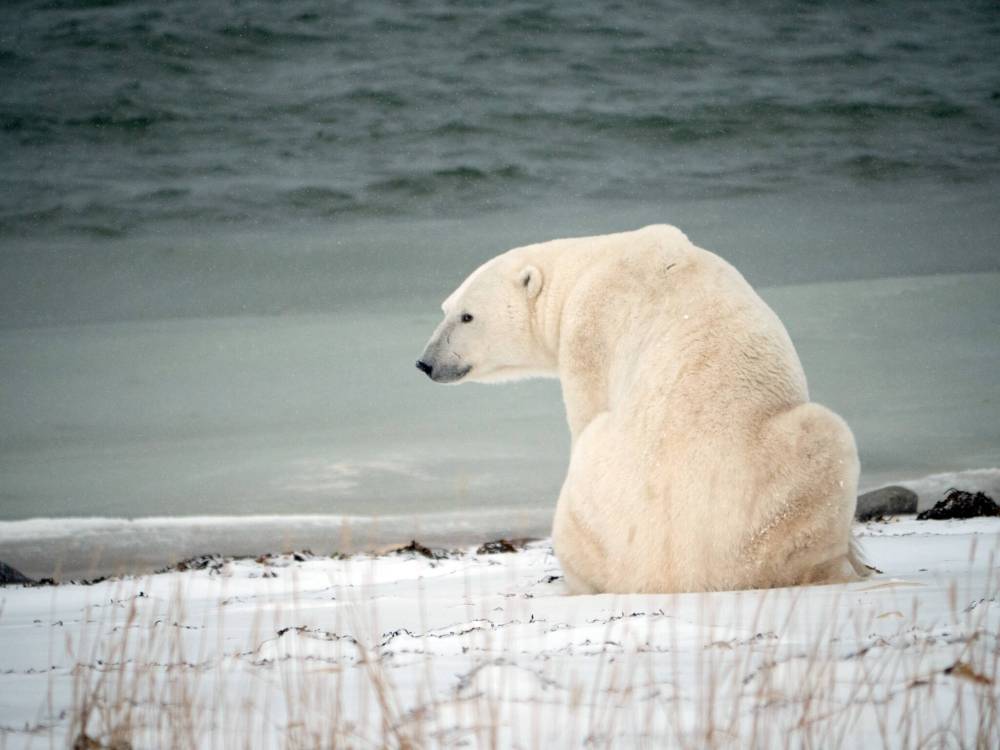
KT MILLER / POLAR BEARS INTERNATIONAL FILE PHOTO
Polar bears are designated as a threatened species in Manitoba and are protected under provincial legislation.
Polar bears are designated as a threatened species in Manitoba and are protected under provincial legislation. It is illegal to hunt the bears in Manitoba.
Douglas Clark, a University of Saskatchewan professor who studies human interactions with polar bears, said he was not aware of a paddler or hiker being forced to shoot one of them in Manitoba in recent history.
“Defence kills of polar bears are pretty rare (in Manitoba),” Clark said, adding they are more common in Nunavut.
While attacks on people are uncommon, predatory actions toward humans is a recognized part of their behaviour, Clark said.
He said the animals are highly curious, which can make it difficult for people to determine whether a bear approaching them is simply investigating or becoming dangerous.
“If you lived in an environment that was entirely ice and snow, anything that isn’t ice or snow would be worth checking out to see if it’s edible,” Clark said. “Because of that curiosity, they will approach people and human infrastructure much, much more often and more closely than a black or a grizzly bear would under normal circumstances, and that proximity raises the risk.
“If you’re a paddler and you’re camping on shore, you’re potentially in a fairly high-risk situation in the Arctic.”
A senior staffer at a non-profit conservation organization also said defensive killings involving polar bears are uncommon across the Arctic.
“We definitely have more interactions, but most of those don’t end in people being injured, or bears being injured or killed,” said Geoff York, vice-president of research and policy at Polar Bears International.
York said there are two broad circumstances in which encounters between people and bears can quickly become dangerous: a surprise, close-range meeting and a situation in which a bear becomes predatory toward a person.
Rather than trying to determine whether a bear is “friendly” or aggressive, York said people should focus on creating distance and being prepared to respond if the animal approaches.
For paddlers travelling in remote areas, that preparation is particularly important because there may be nowhere nearby to retreat to, he said.
Clark said shotguns are commonly carried by paddlers travelling in areas with polar bears because they can be used as both non-lethal deterrents and lethal ammunition, if necessary.
Researchers are still trying to understand what happens between a bear approaching people and an encounter escalating into an attack, Clark said.
Using 11 years of remote-camera data from Wapusk National Park and the Churchill Northern Studies Centre, Clark and his colleagues found polar bears were more likely to approach human infrastructure the longer they spent off the sea ice.
“The more time they’re off the ice, the more all polar bears are likely to come around,” Clark said.
The researcher said that challenges the assumption that bears are coming closer to people simply because they are hungry.
That does not mean “nutritional stress” is irrelevant when encounters turn dangerous. Clark said cases in which polar bears have injured or killed people predominantly involve visibly thin adult males.
But why are polar bears spending more time on land in the first place?
Jean-Pierre Desforges, a University of Winnipeg researcher studying polar bears and ringed seals in western Hudson Bay, said changing sea-ice conditions linked to climate change are an important factor.
Desforges said longer periods without sea ice are a major concern for polar bears because they rely on the ice to access food.
His research examines polar bear and ringed seal populations using growth layers in teeth, which can provide information about what the animals have eaten over time.
The western Hudson Bay polar bear population is generally considered to be declining, Desforges said, although researchers are still working to understand long-term population trends.

“It’s just a numbers game,” Desforges said. “Regardless if they’re starting stressed, just being more on land, there’s just an increased likelihood of interactions with people.”
Desforges said encounters between people and polar bears remain rare, but they occur in northern communities across Canada and elsewhere.
“It’s not the first, and it certainly won’t be the last encounter like this,” he said.
Resources to handle an encounter can be found at: wfp.to/polarbear
zoe.pierce@freepress.mb.ca