Holocaust tour helps Manitoba teachers tackle difficult subject
Read this article for free:
or
Already have an account? Log in here »
To continue reading, please subscribe:

Digital Subscription
One year of digital access for only $205*
- Enjoy unlimited reading on winnipegfreepress.com
- Read the E-Edition, our digital replica newspaper
- Access News Break, our award-winning app
- Play interactive puzzles
*First annual payment billed as $205.00 + GST for one year. This annual subscription will automatically renew at $233.00 + GST every 52 weeks (10% off the regular annual price of $259.35). Offer available to new and qualified returning subscribers only. Cancel any time.
To continue reading, please subscribe:
Add Free Press access to your Brandon Sun subscription for only an additional
$1 for the first 4 weeks*
- Enjoy unlimited reading on winnipegfreepress.com
- Read the E-Edition, our digital replica newspaper
- Access News Break, our award-winning app
- Play interactive puzzles
*Your next Brandon Sun subscription payment will increase by $1.00 and you will be charged $17.95 plus GST for four weeks. After four weeks, your payment will increase to $24.95 plus GST every four weeks.
Read unlimited articles for free today:
or
Already have an account? Log in here »
Casey Whitfield’s voice cracked and he began to cry as he recalled the children’s drawings — one of which depicts an adult being hanged — on display in Auschwitz-Birkenau.
The Winnipeg teacher took photos of the memorial he toured last month to share with his future history classes at St. Paul’s High School.
“I’m always very open and emotional with my students,” he said. “I have no problem wearing my heart on my sleeve.”
SUPPLIED - A child's drawing from a display at Auschwitz II-Birkenau Memorial and Museum German Concentration Camp.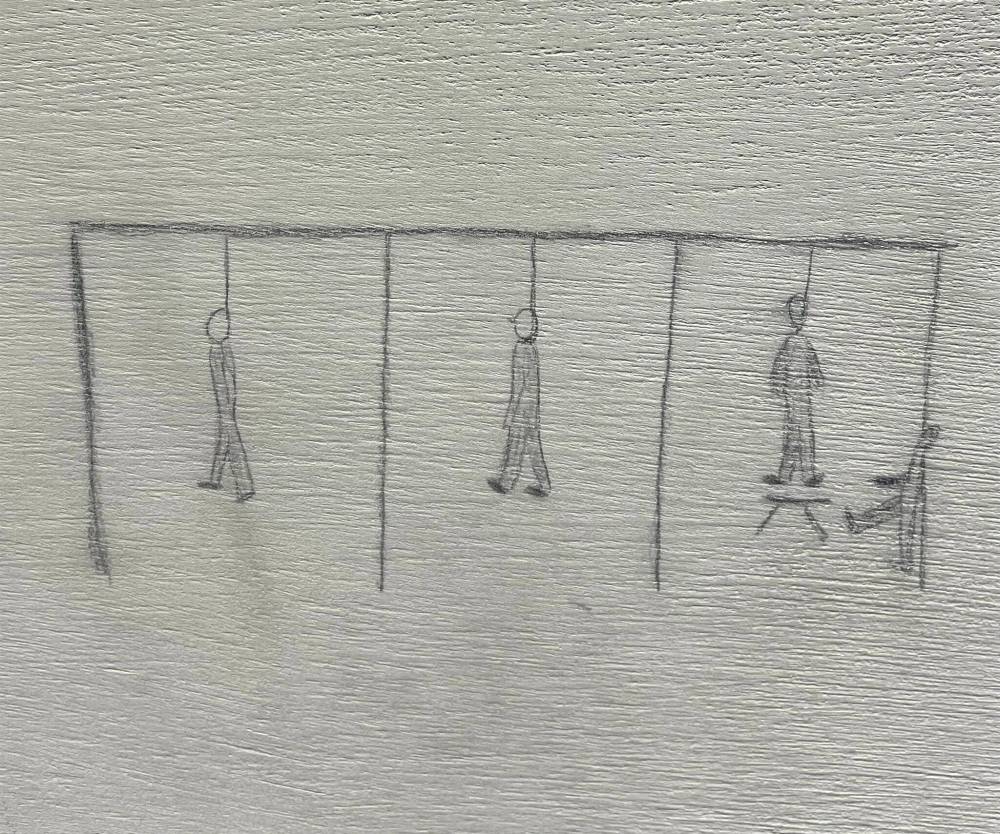
Whitfield is among 30 teachers who recently travelled to Europe to learn about Jewish life before the 1930s and the human rights atrocities that took place during the Holocaust.
This summer break, for the first time, the Holocaust Memorial Sites Study Tours for Educators organized a 15-day trip for aspiring and working teachers from Manitoba.
The non-profit designed the experiential learning initiative to help participants better understand the history of antisemitism and build confidence to tackle Holocaust denial, distortion and hate.
The group left Winnipeg for Warsaw on July 13, about eight months after Manitoba published its new mandatory Holocaust education curriculum for grades 6, 9 and 11.
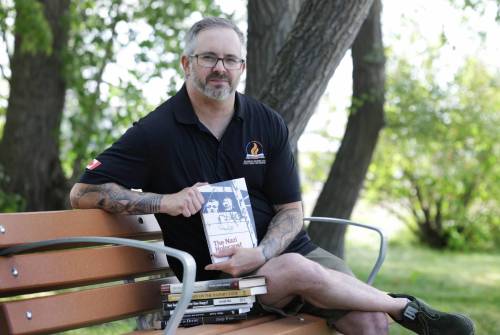
Curriculum developer Kelly Hiebert, who is one of the non-profit’s co-founders, said planning the trip for colleagues was a longtime dream come true.
RUTH BONNEVILLE / FREE PRESS Kelly Hiebert collaborated on the itinerary with a historian who teaches university courses on the Holocaust and antisemitism.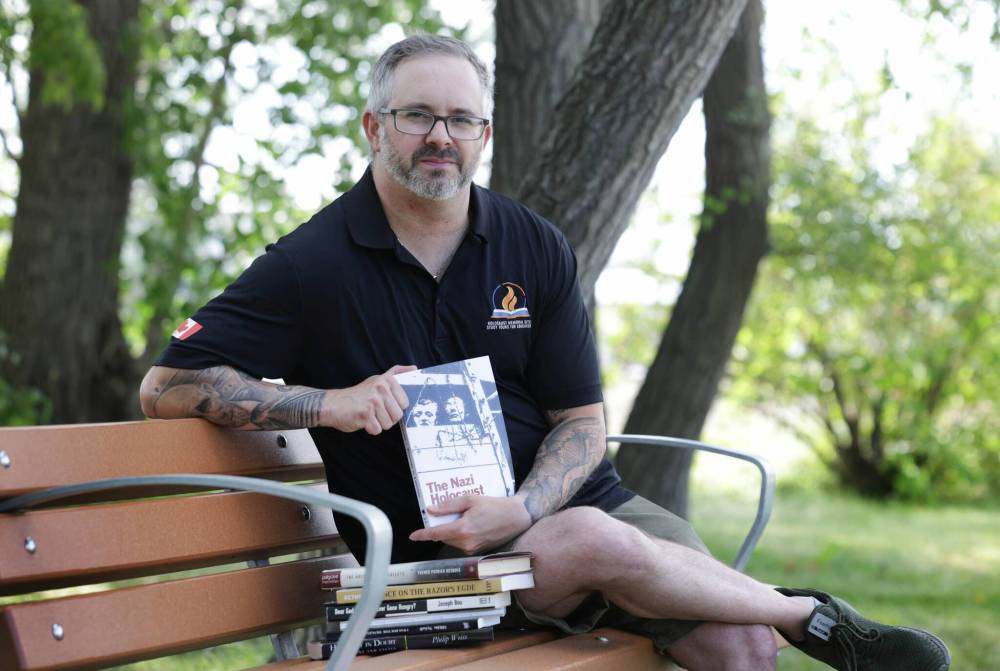
Hiebert has led numerous student trips to former Nazi concentration camps overseas, but he said there was a gap in “higher-level professional development” on the topic.
The Westwood Collegiate history teacher and Jody Perrun, a historian who teaches university courses on the Holocaust and antisemitism, collaborated on the itinerary.
Ahead of takeoff, attendees were invited to a series of lectures and discussion sessions to develop their understanding about the systematic killing of six million Jews from 1933 to 1945.
Their July trip began with tours of Warsaw Old Town, Treblinka, an extermination camp where upwards of 800,000 people were murdered in German-occupied eastern Poland, and the State Museum at Majdanek.
Hiebert said he broke out in goosebumps when he read “Let our fate be a warning,” which is engraved in the Polish mausoleum that holds ashes belonging to nearly 80,000 people, mainly Jews, Poles, Belarusians, Ukrainians and Russians.
SUPPLIED Rail tracks leading to Auschwitz II-Birkenau.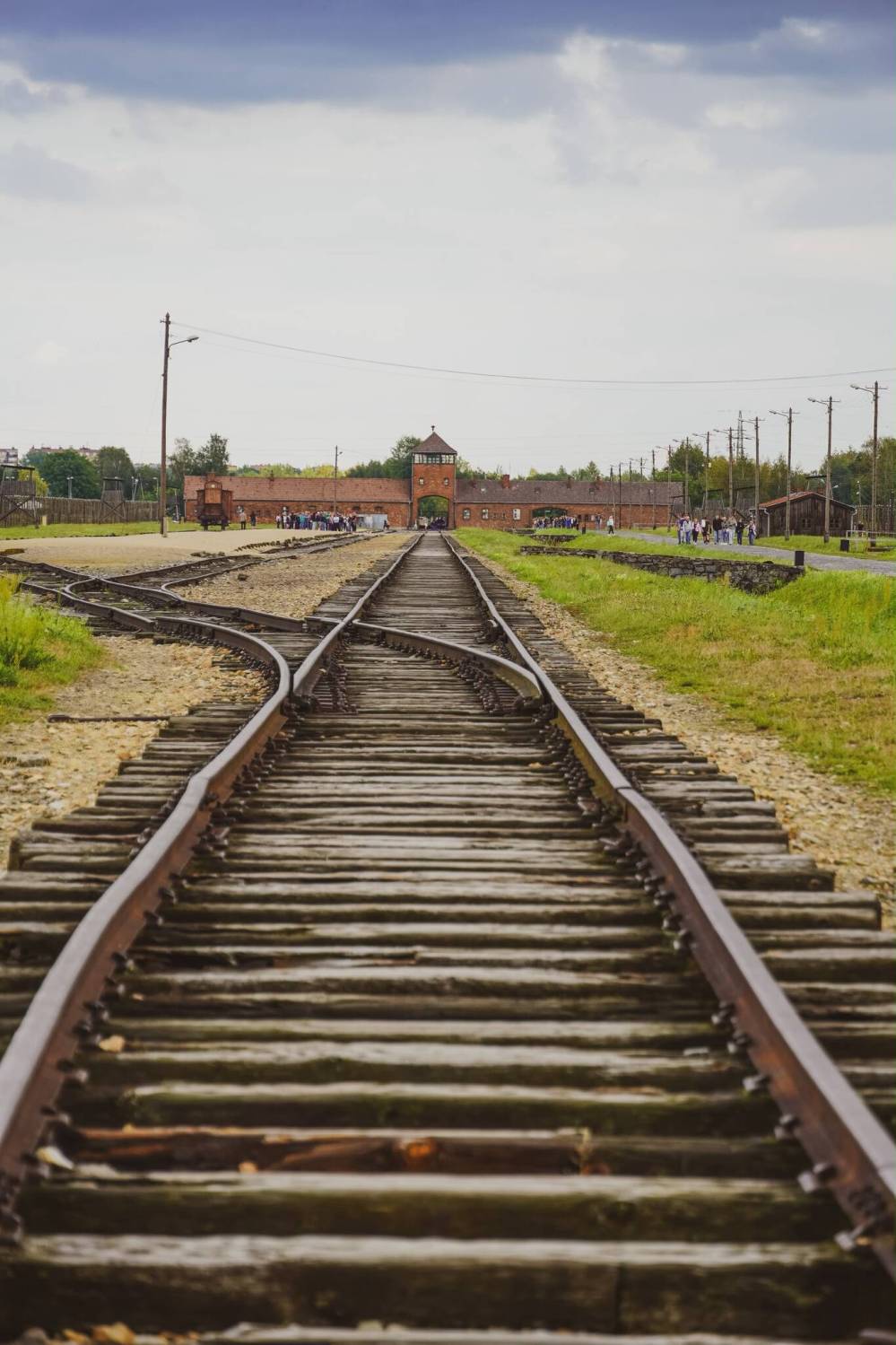
Hartheim Castle was another particularly memorable stop for him because he has a son who has autism. Nazi authorities set up a killing facility outfitted with gas chambers and ovens to systematically kill tens of thousands of people with disabilities on the grounds in Austria.
“It’s hard to comprehend that humans can do this to other human beings. We have to understand that — these were not monsters,” Hiebert said, adding that “anybody is capable” of carrying out the horrific acts committed by the Nazis and their allies.
The schedule included the deadliest Holocaust extermination camp, Auschwitz, and Berghof, the site of Adolf Hitler’s holiday residence in the Bavarian Alps. There were other sightseeing activities built into it so it wasn’t solely “doom and gloom,” Hiebert said.
“I’m hoping this extraordinary opportunity will make them more comfortable in teaching this very, very difficult subject,” said Belle Jarniewski, a daughter of Holocaust survivors who runs the Jewish Heritage Centre of Western Canada.
Since the rollout of Manitoba’s new curriculum, which was drafted in partnership with her centre, Jarniewski has hosted training for roughly 250 teachers from Winnipeg and Brandon.
She said the strength of the 46-page syllabus lies in requiring schools to explore the history of Judaism in Manitoba and its inclusion of Holocaust survivor memoirs.
The Grade 11 History of Canada course now includes an in-depth exploration of local fascist and Nazi movements during the Second World War and the federal government’s strict immigration policies towards Jewish refugees.
Whitfield, head of the social studies department at St. Paul’s, described the guide as a straightforward and easy-to-use toolkit with lots of helpful external resources.
SUPPLIED A child's drawing from a display at Auschwitz II-Birkenau.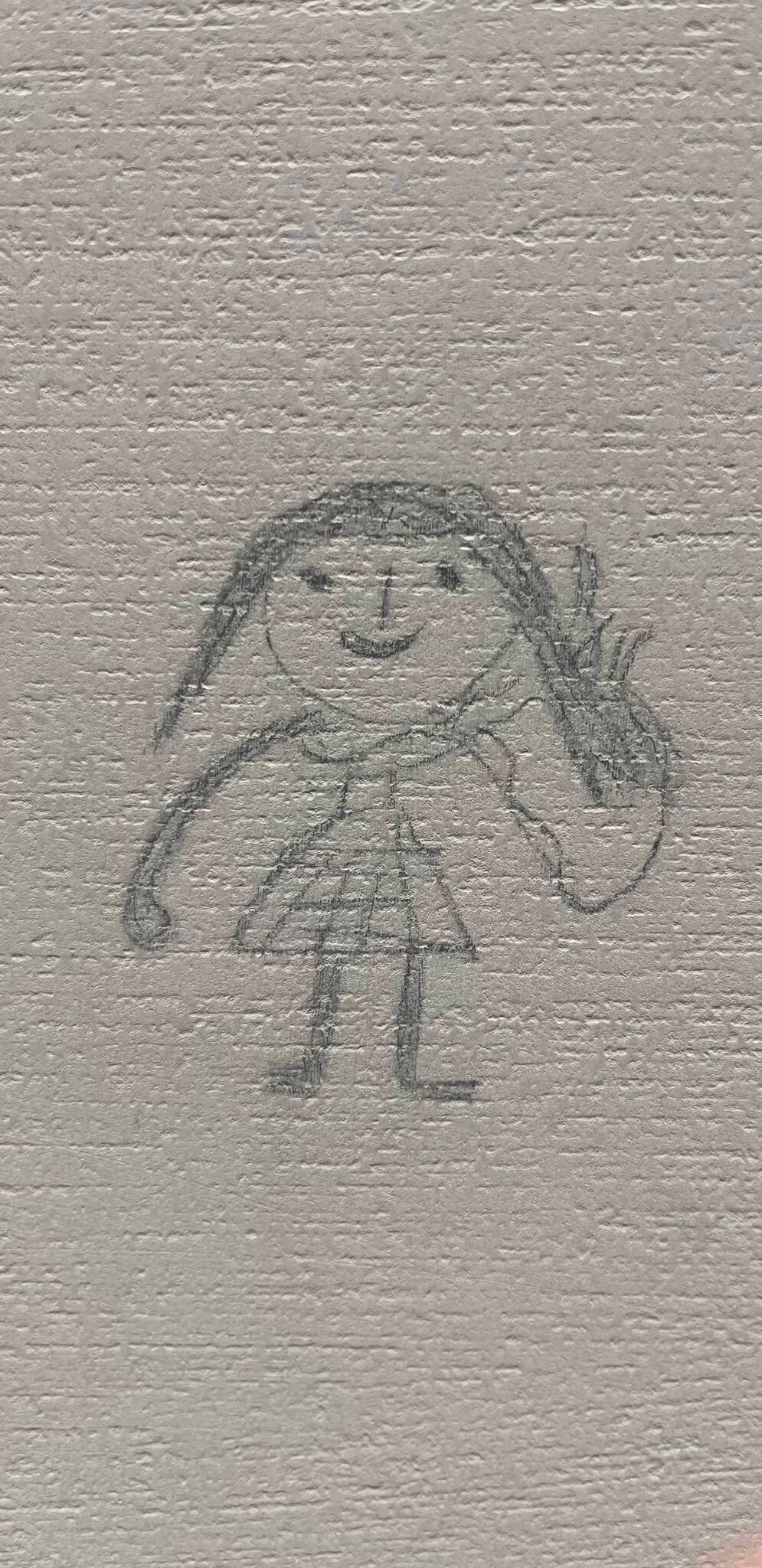
He said the content will have more of an impact in his classroom this fall because of his newfound knowledge about what it’s like to be on the grounds of a former concentration camp.
“It was a feeling of emotion and overwhelming dread. It was almost like this feeling of, ‘why am I still able to be here and why did all these people have to die?” he said. “It’s still something I’m processing through myself.”
More than 25 years into his teaching career, the teacher said he is keen to mentor others and plans to share takeaways and photos from his recent trip with colleagues.
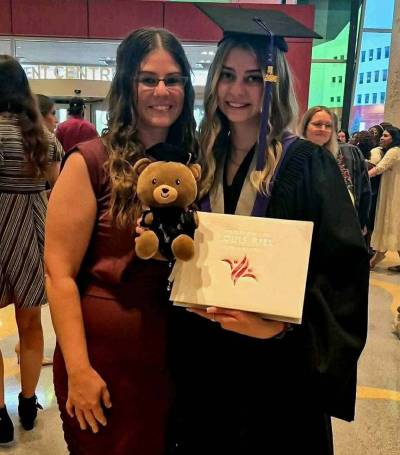
Whitfield went on the memorial tour with one of his stepdaughters, a teacher-in-training at the University of Winnipeg.
The inaugural trip attracted a mix of Jewish and non-Jewish teachers who teach English Language Arts, social studies and other similar subjects. Participants work in Gladstone, Riverton and Seven Oaks, among other communities.
Holocaust Memorial Sites Study Tours for Educators is planning its next edition for 2028.
The organization did some fundraising to subsidize costs, but each teacher paid about $5,000 for flights, accommodations and excursions.
maggie.macintosh@freepress.mb.ca

Maggie Macintosh
Education reporter
Maggie Macintosh reports on education for the Free Press. Originally from Hamilton, Ont., she first reported for the Free Press in 2017. Read more about Maggie.
Funding for the Free Press education reporter comes from the Government of Canada through the Local Journalism Initiative.
Every piece of reporting Maggie produces is reviewed by an editing team before it is posted online or published in print — part of the Free Press‘s tradition, since 1872, of producing reliable independent journalism. Read more about Free Press’s history and mandate, and learn how our newsroom operates.
Our newsroom depends on a growing audience of readers to power our journalism. If you are not a paid reader, please consider becoming a subscriber.
Our newsroom depends on its audience of readers to power our journalism. Thank you for your support.