

U of M research role expands after $79-M federal injection
Five international researchers recruited by university
Advertisement
Read this article for free:
or
Already have an account? Log in here »
To continue reading, please subscribe:

Digital Subscription
One year of digital access for only $205*
- Enjoy unlimited reading on winnipegfreepress.com
- Read the E-Edition, our digital replica newspaper
- Access News Break, our award-winning app
- Play interactive puzzles
*First annual payment billed as $205.00 + GST for one year. This annual subscription will automatically renew at $233.00 + GST every 52 weeks (10% off the regular annual price of $259.35). Offer available to new and qualified returning subscribers only. Cancel any time.
To continue reading, please subscribe:
Add Free Press access to your Brandon Sun subscription for only an additional
$1 for the first 4 weeks*
- Enjoy unlimited reading on winnipegfreepress.com
- Read the E-Edition, our digital replica newspaper
- Access News Break, our award-winning app
- Play interactive puzzles
*Your next Brandon Sun subscription payment will increase by $1.00 and you will be charged $17.95 plus GST for four weeks. After four weeks, your payment will increase to $24.95 plus GST every four weeks.
Read unlimited articles for free today:
or
Already have an account? Log in here »
The University of Manitoba is playing in a new league.
A $79-million investment will bring five internationally recruited researchers to Manitoba to build “ambitious,” long-term research programs in areas of strategic national importance.
The five researchers will join the U of M thanks to the federal government’s $1.7-billion research talent initiative that’s designed to help Canadian universities compete globally for leading researchers.
SUPPLIED
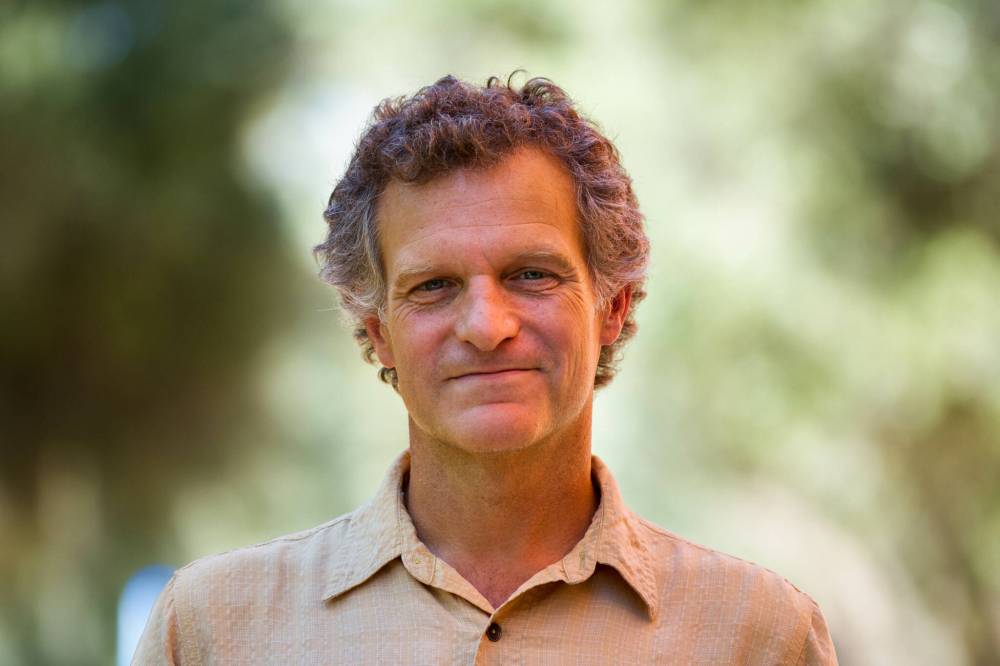
Dr. Peter Reiners, a newly appointed Eddie Goldenberg Research Chair in Geoscience of Subsurface Fluid-Rock Systems for Solutions in Sustainability and Security at University of Manitoba
The initiative’s flagship program, the Eddie Goldenberg Research Chairs of Canada, provides universities with the funding and resources to recruit world-class researchers, build research teams and pursue large-scale projects in fields considered important to Canada — from Arctic navigation and defence to sustainable mining, health equity and environmental law.
In the first intake, universities across Canada competed for 64 available chairs by putting forward researchers they had hoped to recruit. The applications were reviewed through a national competition, and the federal government decided which proposals would receive funding.
The U of M ranked fifth among 21 Canadian institutions based on the number of chairs awarded. The university put forward seven applications to the federal competition and five were selected for funding.
Mario Pinto, the university’s vice-president (research and international), said the result puts the U of M in company with some of Canada’s largest research-intensive universities.
“We are finally playing in the league with universities such as U of T, McGill, UBC and Ottawa,” Pinto said. “It feels very good to be No. 5 in the country. We’ve never been in that league before, especially with these research-intensive chairs.”
Each professor is set to receive either $500,000 or $1 million per year toward their research over eight years.
Pinto said the U of M’s application strategy was to build a team around each researcher. The university identified its research strengths and brought together experts from across faculties to support each application.
Pinto compared the chair holders to lead actors surrounded by a supporting cast.
“What is the supporting cast from the University of Manitoba that we can bring to the table to surround and fortify these chairs so that they would have a broader impact?” he said.
The approach appears to have paid off: in the first intake, the U of M received more chairs than any other university on the Prairies. The University of Alberta received one, while the University of Calgary received two and the University of Saskatchewan received none.
Each chair will sit at the centre of what Pinto described as a research “hub” that will bring together expertise from related fields.
Among the five incoming researchers is Peter Reiners, an American geoscientist who will become the Eddie Goldenberg Research Chair in geoscience of subsurface fluid-rock systems for solutions in sustainability and security.
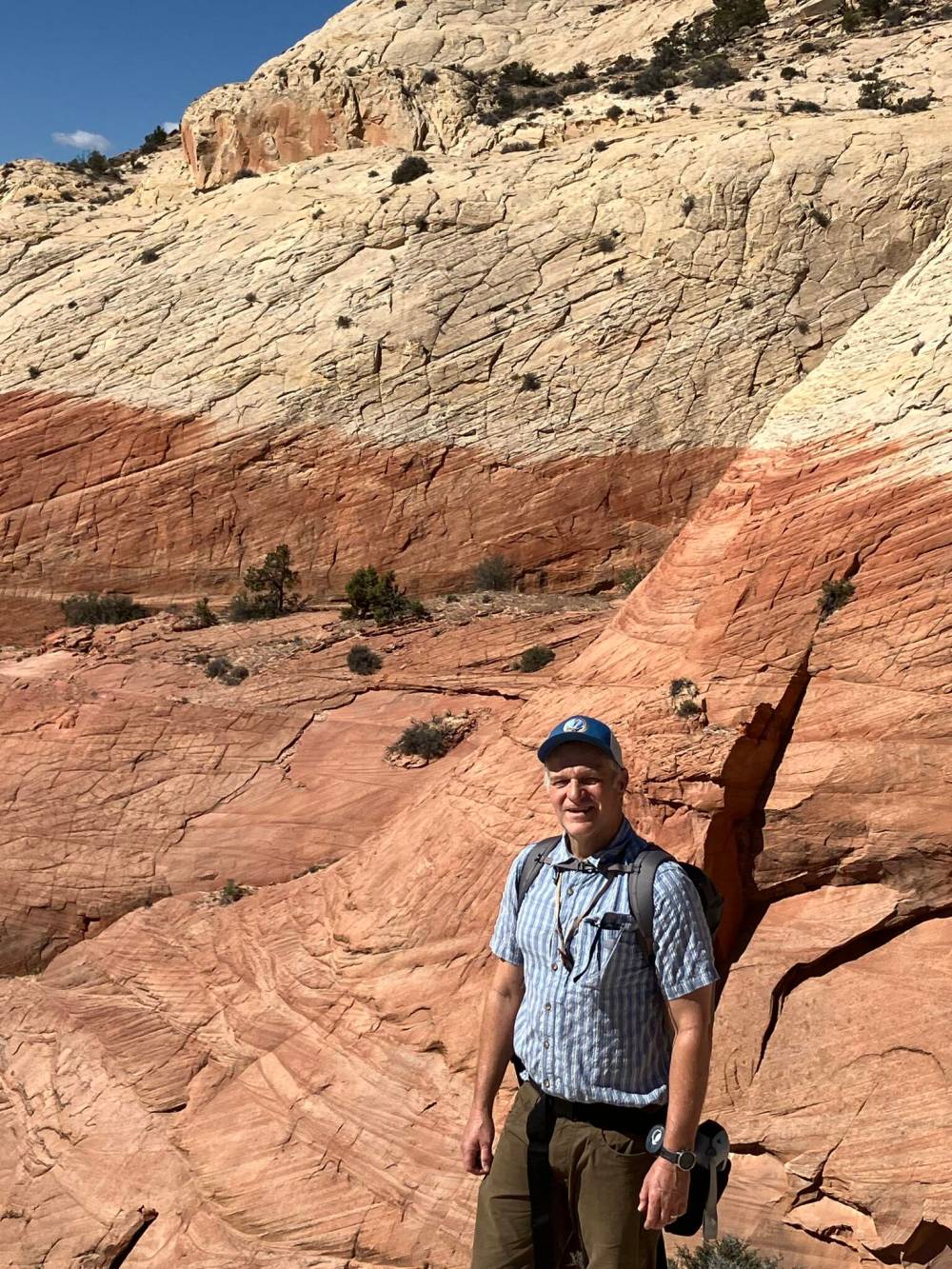
Reiners, who is currently at the University of Arizona, said he was attracted to the U of M by the strength of its Earth sciences and environmental sciences programs.
“I was definitely attracted to the people there and the work being done at the University of Manitoba,” he said.
Reiners studies fluid-rock systems beneath the Earth’s surface, including how fluids move through rocks, how those systems change over time and how underground resources can be used and managed.
More recently, Reiners has turned his attention to storing carbon dioxide underground as a way to tackle climate change.
SUPPLIED
Dr. Peter Reiners, who is currently at the University of Arizona, said he was attracted to the U of M by the strength of its Earth sciences and environmental sciences programs.
“We need to figure out ways of removing that carbon, and not only removing it but storing it someplace durably and safely,” he said.
Reiners said the subsurface is capable of storing billions of tonnes of carbon, but doing so at the scale required to address climate change will involve more than a technical solution.
“It’s also a huge social and policy and economic challenge,” he said.
Reiners said he plans to meet with industry, governments, communities and Indigenous groups in Manitoba to understand local priorities before deciding where his research can have the greatest effect.
“You can’t really do anything effective and impactful at the scale we’re talking about unless communities feel, you know, consulted and engaged and have buy-in, and we understand their concerns,” he said.
“I’m really excited about the opportunity to have the ability to work closely with the great scientists and community members in Winnipeg, at the University of Manitoba and throughout Manitoba and Canada to do something good.”
He will move from southern Arizona to Winnipeg in January.

“I have lived in many cold places, so I’m prepared,” Reiners said. “I’m actually really looking forward to it.”
The five chairs are a starting point rather than an endpoint for Pinto.
The university hopes the researchers will bring in new students and collaborators, generate new research and commercialization opportunities and help establish U of M as a stronger competitor for future national and international research funding.
“We are a university on the move,” Pinto said.
zoe.pierce@freepress.mb.ca