

‘God had a different plan for me’
Former abuser of alcohol, drugs who graduated from recovery program now helping others

Advertisement
Read this article for free:
or
Already have an account? Log in here »
To continue reading, please subscribe:

Digital Subscription
One year of digital access for only $205*
- Enjoy unlimited reading on winnipegfreepress.com
- Read the E-Edition, our digital replica newspaper
- Access News Break, our award-winning app
- Play interactive puzzles
*First annual payment billed as $205.00 + GST for one year. This annual subscription will automatically renew at $233.00 + GST every 52 weeks (10% off the regular annual price of $259.35). Offer available to new and qualified returning subscribers only. Cancel any time.
To continue reading, please subscribe:
Add Free Press access to your Brandon Sun subscription for only an additional
$1 for the first 4 weeks*
- Enjoy unlimited reading on winnipegfreepress.com
- Read the E-Edition, our digital replica newspaper
- Access News Break, our award-winning app
- Play interactive puzzles
*Your next Brandon Sun subscription payment will increase by $1.00 and you will be charged $17.95 plus GST for four weeks. After four weeks, your payment will increase to $24.95 plus GST every four weeks.
Read unlimited articles for free today:
or
Already have an account? Log in here »
The second time Ray Ducharme overdosed, he was in a Winnipeg hotel room, waiting for a spot in Adult and Teen Challenge Central Canada’s live-in recovery program.
It was Oct. 30, 2024 — not long after his first overdose had landed him in a Red Deer, Alta., hospital for eight days. Ducharme had gone west, trying to outrun the baggage he carried in Winnipeg, before eventually returning home at the behest of an ATCCC employee who assured him there would be a bed available in seven to 10 days.
Then came the second OD.
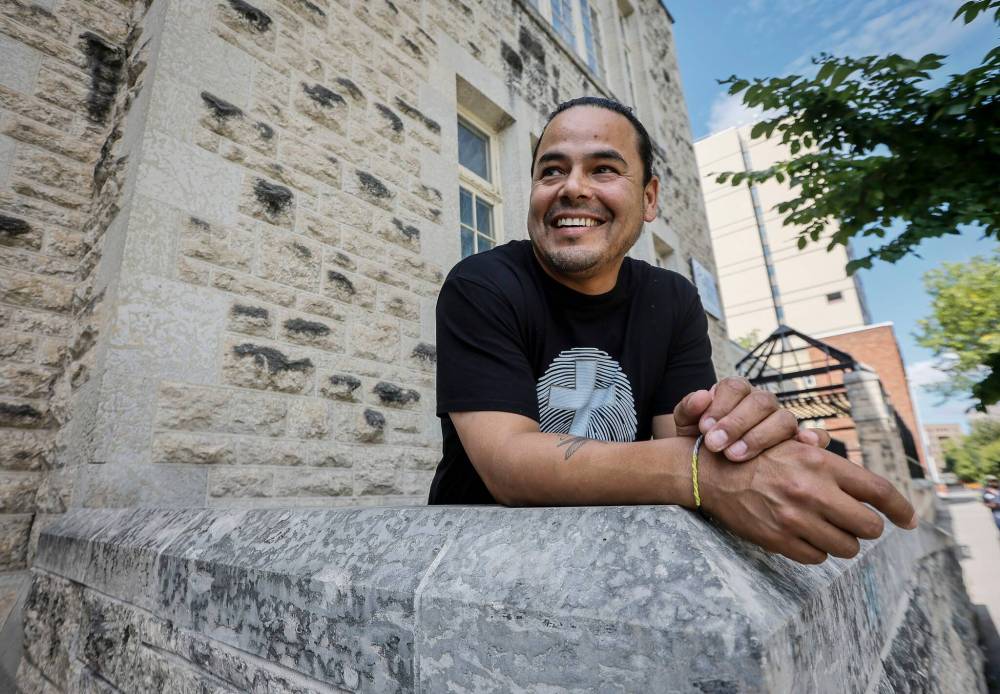
Three days later, in early November, Ducharme woke up in a Winnipeg hospital with his family around him. Doctors weren’t sure he’d survive.
“God had a different plan for me,” he said Friday while travelling back to Winnipeg from Brandon. “To this day, I don’t know how I got to the hospital from the hotel. Eight days later, I walked into ATCCC.”
For more than 20 years, beginning as a teenager, Ducharme abused alcohol and drugs, including cocaine, crack, meth and prescription medications.
“The drugs got harder, the drinking got harder, until it finally just took over, and being sober was a weird feeling, and being high and drunk was just normal,” he said.
Today, more than nine months after graduating from ATCCC’s live-in recovery program, Ducharme is working with people in the same situation he once found himself in.
He says his recovery has given him purpose.
Sunday marked Recovery Day Winnipeg and Monday is International Overdose Awareness Day. On Sept. 12, ATCCC will also celebrate the grand opening of its community services office at 1020 Main St., part of an effort to expand access to addiction support and meet growing demand for recovery services across central Canada.
“Both Recovery Day Winnipeg and International Overdose Awareness Day remind us that behind every statistic are families and communities affected by addiction,” ATCCC CEO Daniel Emond said.
“Both Recovery Day Winnipeg and International Overdose Awareness Day remind us that behind every statistic are families and communities affected by addiction.”
“Our new community services office will help us connect people with support earlier and provide clearer pathways to long-term recovery.”
Last year, the faith-based organization recorded more than 6,500 calls for service and helped 156 people transition out of homelessness. It completed 1,474 behavioural health assessments and welcomed 219 people into its 12-month live-in recovery program.
The Winnipeg location joins community offices in Brandon, Flin Flon, Steinbach, Swan River and Winkler.
The offices serve as an initial point of contact for people seeking help and provide space for clinical and pastoral counselling, family supports and outpatient small-group programs.
Peter McMullen, director of Lighthouse Mission and a graduate of both ATCCC’s live-in recovery program and its 18-month SURGE leadership training program, said the organization changed his life.
McMullen said he went from working as a financial adviser and having a family to living on the street after losing everything, eventually attempting suicide.
“It’s miraculous what’s happened in my life,” McMullen said.
He said the new community office gives people struggling with addiction a first point of connection “when they really don’t know where to go.”
Among the programs offered is Ready Now Recovery, an outpatient program designed to engage people who may not yet be ready to enter an intensive recovery program.
It addresses addictions involving substances, gambling and pornography, among others.
“You have to start somewhere.”
“You have to start somewhere, and not everyone wants to go into an intensive program immediately,” McMullen said. “(With Ready Now Recovery), you can get together for an hour, once a week with a group of other individuals facilitated by a trained facilitator and begin your journey into recovery. So now, all of a sudden, I have a place where I can go, that there’s not a huge commitment, but I can start exploring recovery. Then you start to connect with people who are equipped to help you through this journey in your life.
“And as they go through, maybe the Ready Now Recovery they see that this is something that is changing their life, and then they might either find a path to freedom from addiction through that outpatient program that they found at the community office, or they might say, ‘You know what? This is opening up some doors and opening up my eyes and I think I need to go into that longer-term program.”
The community-office model is also intended to build support networks for graduates returning home after treatment, connecting them with counselling, group programs and other services intended to support long-term recovery.
Ducharme knows how difficult those early stages can be.
“I’m training to be a leader, I actually work with the men now that are struggling like I was 21 months ago now.”
He said the first three months of his recovery were particularly hard. He wanted to leave the live-in program many times, but the people around him continually encouraged him to stay.
ATCCC is faith-based and emphasizes relying on God as part of the recovery process.
“Without God, I don’t think I would have stayed and I really don’t think I’ve be alive talking to you today,” he said.

During the program, Ducharme said he eventually began confronting the past traumas underlying his addiction.
In the months since graduating, he has taken another step, entering ATCCC’s 18-month SURGE program.
“I’m training to be a leader, I actually work with the men now that are struggling like I was 21 months ago now,” he said.
“My heart is with them because I know what they’re going through. I’ve been there. Having that kind of person is really big for support.”
scott.billeck@freepress.mb.ca
Scott Billeck is a general assignment reporter for the Free Press. A Creative Communications graduate from Red River College, Scott has more than a decade’s worth of experience covering hockey, football and global pandemics. He joined the Free Press in 2024. Read more about Scott.
Every piece of reporting Scott produces is reviewed by an editing team before it is posted online or published in print — part of the Free Press‘s tradition, since 1872, of producing reliable independent journalism. Read more about Free Press’s history and mandate, and learn how our newsroom operates.
Our newsroom depends on a growing audience of readers to power our journalism. If you are not a paid reader, please consider becoming a subscriber.
Our newsroom depends on its audience of readers to power our journalism. Thank you for your support.
Scott Billeck is a general assignment reporter for the Free Press. A Creative Communications graduate from Red River College, Scott has more than a decade’s worth of experience covering hockey, football and global pandemics. He joined the Free Press in 2024. Read more about Scott.
Every piece of reporting Scott produces is reviewed by an editing team before it is posted online or published in print — part of the Free Press‘s tradition, since 1872, of producing reliable independent journalism. Read more about Free Press’s history and mandate, and learn how our newsroom operates.
Our newsroom depends on a growing audience of readers to power our journalism. If you are not a paid reader, please consider becoming a subscriber.
Our newsroom depends on its audience of readers to power our journalism. Thank you for your support.
Related Articles
Adult and Teen Challenge seeks funds for recovery centre
Advertisement Advertise With Us
Advertisement Advertise With Us
History
Updated on Monday, August 31, 2026 9:05 AM CDT: Removes reference to 12-month time span