Road map to future City to use survey to determine transportation needs
Read this article for free:
or
Already have an account? Log in here »
To continue reading, please subscribe:

Digital Subscription
One year of digital access for only $205*
- Enjoy unlimited reading on winnipegfreepress.com
- Read the E-Edition, our digital replica newspaper
- Access News Break, our award-winning app
- Play interactive puzzles
*First annual payment billed as $205.00 + GST for one year. This annual subscription will automatically renew at $233.00 + GST every 52 weeks (10% off the regular annual price of $259.35). Offer available to new and qualified returning subscribers only. Cancel any time.
To continue reading, please subscribe:
Add Free Press access to your Brandon Sun subscription for only an additional
$1 for the first 4 weeks*
- Enjoy unlimited reading on winnipegfreepress.com
- Read the E-Edition, our digital replica newspaper
- Access News Break, our award-winning app
- Play interactive puzzles
*Your next Brandon Sun subscription payment will increase by $1.00 and you will be charged $17.95 plus GST for four weeks. After four weeks, your payment will increase to $24.95 plus GST every four weeks.
Read unlimited articles for free today:
or
Already have an account? Log in here »
The city wants to know how Winnipeggers get around.
It plans to hire a consultant to conduct a household travel survey next year to provide data deemed critical to planning roads and active transportation routes.
“This (will) help … when it comes to prioritizing road renewal investments because our city is growing, travel patterns are changing. A lot has happened in our city in 20 years. And, especially when we’re a city without freeways, I know there’s some major intersections and major corridors that need refinement,” said Coun. Janice Lukes (Waverley West), council’s public works chairwoman.
MIKAELA MACKENZIE / FREE PRESS FILES 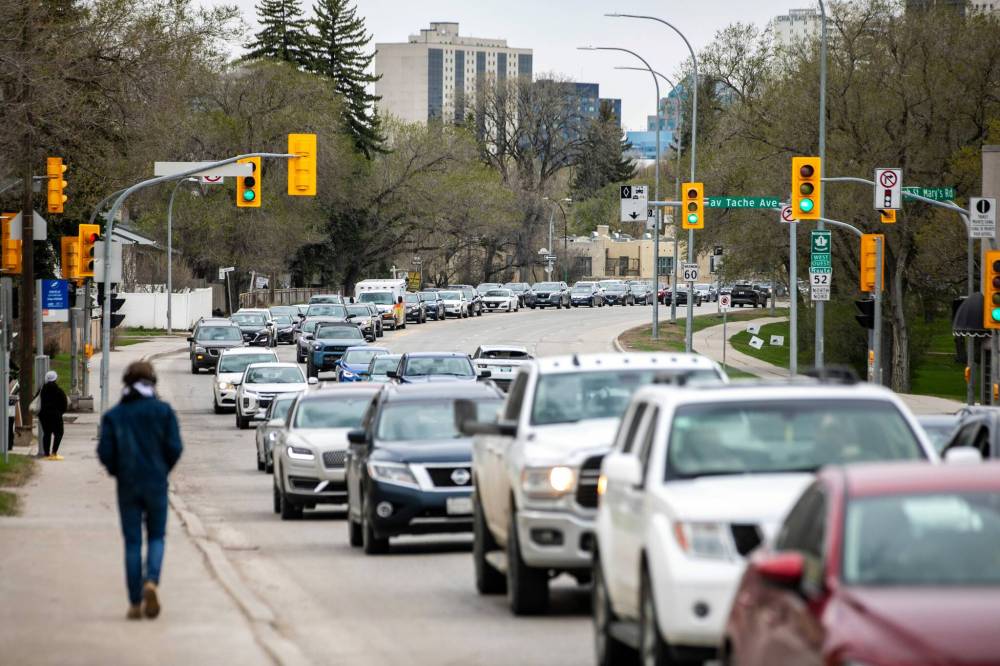
The survey will delve into everything from the number of vehicles owned by residents to where they go and how they get there, providing the city’s first such fine-tuned poll since 2007. It will involve a representative sample of households in Winnipeg and surrounding communities.
“It provides critical information for planning the region’s pedestrian, cycling, road, and transit infrastructure. It is also the main data source for Winnipeg’s travel demand model,” says the request for proposals.
The survey results are expected to break down specific responses by household, including number/demographic details of residents, work/school locations, trips taken (with time, purpose, origin, destination and mode of travel) and transfer points that note when people switched from one mode of transportation to another.
“It’s a good way to find out where Winnipeggers are going.”
The city has budgeted $800,000 for the contract, which council’s finance chairman said will help guide many future investments.
“It’s a good way to find out where Winnipeggers are going, how they’re moving around the city and where the stress points potentially are. Is there particular movements that (show) we need to perhaps further refine the (primary) Transit network with additional services to areas? Is it time to move forward with the Chief Peguis Trail extension or replacement of the Arlington Bridge?” said Coun. Jeff Browaty (North Kildonan).
He noted the city has grown substantially since 2007, while transportation options have also changed, including the addition of ride-hailing services such as Uber and Lyft.
Winnipeg’s 2007 travel survey found 80 per cent of trips were made by car, with 20 per cent completed through Transit or active transportation.
A local cycling advocate said active transportation use has increased over the past two decades.
“There are more people walking and biking (though) that isn’t distributed uniformly across the city … Some of those further flung areas, we might see some indicators of where barriers are really kind of forcing choices on people,” said Mark Cohoe, executive director of Bike Winnipeg.
“This counts things like going grocery shopping, picking up the kids, all the little different things we do.”
Cohoe said the city’s survey will be valuable because it will gather details of all trips people take, not just commutes to and from work.
“It’s important, when we’re planning our transportation, to get a sense of where people are coming from and where they’re going to … This counts things like going grocery shopping, picking up the kids, all the little different things we do,” he said.
However, he said it may not be clear why each mode of travel was chosen or ruled out.
“It’s one thing to see where the people are riding (bikes) but it’s also important to see where they’re not riding and to try to figure out if there is something substantially different (about those areas) … If they don’t have a safe link, they’re not going to travel by bike,” said Cohoe.
The company that conducts the survey will collect web and telephone answers. Questions will be asked in the fall of 2027, with a deadline to complete a report on the project in fall 2028.
“If they don’t have a safe link, they’re not going to travel by bike.”
New questions added to the 2007 survey will aim to gauge Winnipeggers’ use of electric-powered vehicles (such as e-bikes), the effect of work-from-home on travel and car-sharing programs.
Since the survey is meant to highlight normal travel conditions, it could be delayed or postponed if major storms, labour strikes or other unexpected events occur, the RFP notes.
joyanne.pursaga@freepress.mb.ca
X: @joyanne_pursaga

Joyanne is city hall reporter for the Winnipeg Free Press. A reporter since 2004, she began covering politics exclusively in 2012, writing on city hall and the Manitoba Legislature for the Winnipeg Sun before joining the Free Press in early 2020. Read more about Joyanne.
Every piece of reporting Joyanne produces is reviewed by an editing team before it is posted online or published in print — part of the Free Press‘s tradition, since 1872, of producing reliable independent journalism. Read more about Free Press’s history and mandate, and learn how our newsroom operates.
Our newsroom depends on a growing audience of readers to power our journalism. If you are not a paid reader, please consider becoming a subscriber.
Our newsroom depends on its audience of readers to power our journalism. Thank you for your support.