

Siloam Mission, WFPS discussing on-site paramedic to reduce staggering number of emergency calls

Advertisement
Read this article for free:
or
Already have an account? Log in here »
To continue reading, please subscribe:

Digital Subscription
One year of digital access for only $205*
- Enjoy unlimited reading on winnipegfreepress.com
- Read the E-Edition, our digital replica newspaper
- Access News Break, our award-winning app
- Play interactive puzzles
*First annual payment billed as $205.00 + GST for one year. This annual subscription will automatically renew at $233.00 + GST every 52 weeks (10% off the regular annual price of $259.35). Offer available to new and qualified returning subscribers only. Cancel any time.
To continue reading, please subscribe:
Add Free Press access to your Brandon Sun subscription for only an additional
$1 for the first 4 weeks*
- Enjoy unlimited reading on winnipegfreepress.com
- Read the E-Edition, our digital replica newspaper
- Access News Break, our award-winning app
- Play interactive puzzles
*Your next Brandon Sun subscription payment will increase by $1.00 and you will be charged $17.95 plus GST for four weeks. After four weeks, your payment will increase to $24.95 plus GST every four weeks.
Read unlimited articles for free today:
or
Already have an account? Log in here »
Winnipeg’s fire-paramedic service and its largest homeless-serving organization are discussing what it would look like to station at least one paramedic at Siloam Mission, as emergency calls to the downtown facility surge.
The ongoing discussions come as Winnipeg Fire Paramedic Service crews were dispatched 1,771 times during the first eight months of the year to the two adjacent Siloam properties at 303 Stanley St. and 300 Princess St.
WFPS said most of the calls were related to overdoses or other consequences of substance use, with the total nearly double the 854 calls recorded over the same period last year. By comparison, there were 831 calls during the same span in 2024, and 591 in 2023.
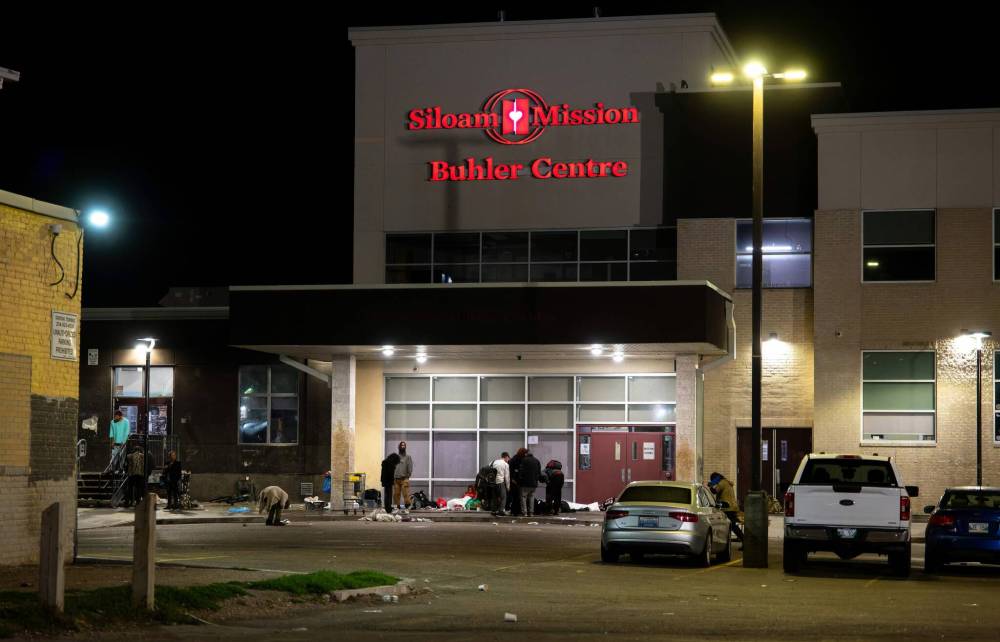
ROBERT LEE / FREE PRESS FILES
During the first eight months of 2026 Winnipeg Fire Paramedic Service crews were dispatched a combined 1,771 times to the two Siloam Mission properties at 303 Stanley St. and 300 Princess St.
“The number of emergency calls isn’t sustainable for us as a service, but it’s certainly not sustainable for them as an agency trying to provide services,” WFPS chief Ryan Sneath told the Free Press. “And they recognize that they’re impacting emergency services, not them specifically, but the site in a significant way.”
Under such a plan, Siloam would advertise for and hire one or more paramedics who don’t work for the WFPS.
Lisa Cefali, Siloam’s interim CEO, said Thursday discussions have been productive with the WFPS and several options are on the table, though she did not want to get ahead of any potential announcements.
She said more details are expected and will be announced in due course.
The arrangement could echo a WFPS pilot launched nearly two decades ago at Main Street Project, where two paramedics were stationed to provide on-site care and reduce demand on emergency crews.
Sneath knows the model first-hand — he became the first WFPS paramedic stationed at Main Street Project in 2009 and said the model’s effectiveness came from providing consistent care on site and connecting patients with services appropriate to their needs.
“The downside with us responding to those calls is the patient actually never gets to definitive care,” he said. “They’re not actually receiving definitive treatment or referral pathways to, say, addictions treatment or withdrawal treatment.
“But we have real examples of having a clinical person in an environment where there’s vulnerable patients,” he said, adding that it also “helps get them connected to care rather than just using emergency care.”
The WFPS began stationing paramedics at Main Street Project in January of that year, following a provincial inquest into a death in custody, with the program intended to fill a gap in medical care for intoxicated people being detained at the shelter.
The goal was to see if a paramedic or a nurse — Sneath has training in both professions — would be more appropriate to station at MSP.
At the time, about 600 ambulances were being dispatched to Main Street Project annually, with roughly the same number of patients transported to hospital. Having paramedics on site allowed them to medically clear intoxicated people, provide primary and emergency care, and connect patients with more appropriate services without automatically sending them to hospital.
In Sneath’s subsequent report, he recommended a paramedic, given the number of acute, emergent cases at the shelter. Paramedics arrived full time in 2011, with two being added around the clock in 2013.
Sneath said ambulance transports from the facility dropped by roughly 50 to 60 per cent soon after the program began, freeing ambulances to respond to emergencies elsewhere in Winnipeg.

By 2019, the program operated around the clock and its paramedics were seeing about 15,000 patients annually. Services had also expanded to include HIV and tuberculosis screening, immunizations and IV antibiotics.
Those paramedics moved to a location on Disraeli when MSP’s protection care unit moved last year.
Meanwhile, the WFPS and Siloam have also discussed additional training for Siloam staff, including the first responder training level, which covers patient assessment, basic life support, airway management, trauma and medical illnesses.
The organization said it hopes to appoint a permanent CEO — which would be its fifth since 2021 — installed by the end of the year.
scott.billeck@freepress.mb.ca
Scott Billeck is a general assignment reporter for the Free Press. A Creative Communications graduate from Red River College, Scott has more than a decade’s worth of experience covering hockey, football and global pandemics. He joined the Free Press in 2024. Read more about Scott.
Every piece of reporting Scott produces is reviewed by an editing team before it is posted online or published in print — part of the Free Press‘s tradition, since 1872, of producing reliable independent journalism. Read more about Free Press’s history and mandate, and learn how our newsroom operates.
Our newsroom depends on a growing audience of readers to power our journalism. If you are not a paid reader, please consider becoming a subscriber.
Our newsroom depends on its audience of readers to power our journalism. Thank you for your support.
Scott Billeck is a general assignment reporter for the Free Press. A Creative Communications graduate from Red River College, Scott has more than a decade’s worth of experience covering hockey, football and global pandemics. He joined the Free Press in 2024. Read more about Scott.
Every piece of reporting Scott produces is reviewed by an editing team before it is posted online or published in print — part of the Free Press‘s tradition, since 1872, of producing reliable independent journalism. Read more about Free Press’s history and mandate, and learn how our newsroom operates.
Our newsroom depends on a growing audience of readers to power our journalism. If you are not a paid reader, please consider becoming a subscriber.
Our newsroom depends on its audience of readers to power our journalism. Thank you for your support.
Related Articles
Safety review calls for improved security at Siloam Mission


Advertisement Advertise With Us
Advertisement Advertise With Us