Province takes aim at ER wait times by adding community-care capacity to free up hospital beds
Read this article for free:
or
Already have an account? Log in here »
To continue reading, please subscribe:

Digital Subscription
One year of digital access for only $205*
- Enjoy unlimited reading on winnipegfreepress.com
- Read the E-Edition, our digital replica newspaper
- Access News Break, our award-winning app
- Play interactive puzzles
*First annual payment billed as $205.00 + GST for one year. This annual subscription will automatically renew at $233.00 + GST every 52 weeks (10% off the regular annual price of $259.35). Offer available to new and qualified returning subscribers only. Cancel any time.
To continue reading, please subscribe:
Add Free Press access to your Brandon Sun subscription for only an additional
$1 for the first 4 weeks*
- Enjoy unlimited reading on winnipegfreepress.com
- Read the E-Edition, our digital replica newspaper
- Access News Break, our award-winning app
- Play interactive puzzles
*Your next Brandon Sun subscription payment will increase by $1.00 and you will be charged $17.95 plus GST for four weeks. After four weeks, your payment will increase to $24.95 plus GST every four weeks.
Read unlimited articles for free today:
or
Already have an account? Log in here »
The province is aiming to free up hospital beds and cut wait times by adding 103 community-based care spaces in Winnipeg for patients who need shelter or specialized supports in order to be discharged.
Health Minister Uzoma Asagwara told reporters the system will gain almost 40,000 hospital “bed days” a year, and patients will receive the “right care in the right place” when all of the spaces are up and running.
“We’re talking about, in some cases, some Manitobans, some patients who have been waiting in (hospital) beds for the right place to go in communities for hundreds, if not thousands of days,” Asagwara said at a news conference at Deer Lodge Centre in St. James. “Some folks with very complex needs are now going to get the care they need in community.”

“Some folks with very complex needs are now going to get the care they need in community,” Health Minister Uzoma Asagwara said.
Asagwara said the “vast majority” of the 103 spaces are net new, and all will be fully staffed. The spaces — for people who are homeless or require mental-health or other supports — will cost more than $7 million.
About 600 hospital patients are designated as requiring an alternate level of care while waiting for a long-term care spot, a housing unit or other community supports on an average day, the province said.
The 103 community spaces will be used by people who no longer require acute care in a hospital. That will free up beds for other patients, including those who wait in emergency rooms until a bed or a space elsewhere is available, officials said. That type of congestion is known as “access block.”
Asagwara said better co-ordination between hospital, acute and community care will improve patient flow. Premier Wab Kinew said the quality of care will improve.
The spaces include 32 beds at Siloam Mission for patients who are homeless and do not have a safe place to go to when released from hospital.
The province will have 15 beds at an Indigenous-run wellness centre at 1400 Notre Dame Ave. for patients who require ongoing mental-health supports when they leave a hospital or Selkirk Mental Health Centre.
Ten Ten Sinclair Housing Inc. will have 15 spaces and a support team for patients who enter accessible housing units.
N’Dinawemak will have eight beds with the intent of creating more accessible supported-housing options for patients.
“It’s about supporting residents to live with dignity and as much quality of life as possible.”
Deer Lodge Centre’s special-needs unit is expanding from 10 to 18 beds for residents who have complex cognitive, psychological or behavioural needs that require specialized care and a secure environment.
“Most importantly, however, this is about people. It’s about supporting residents to live with dignity and as much quality of life as possible,” Deer Lodge Centre chief operating officer Arle Jones told reporters.
The province also said a mobile support team will help 25 patients who require six to 12 months of additional support to return home from hospital.
The team, which will be up and running by Dec. 1, will provide “wraparound” services in a model that is different from home care, Asagwara said.
Some of the 103 spaces are already in use, and some will be open next week. A full breakdown of staffing of each site or service was not available Tuesday.
Kristyn Ball, provincial flow lead for Shared Health, said most people recover and do better when they receive care or supports in the most appropriate setting closer to home.
She said the community spaces were added after officials identified very specific gaps where they had a hard time discharging some hospital patients.
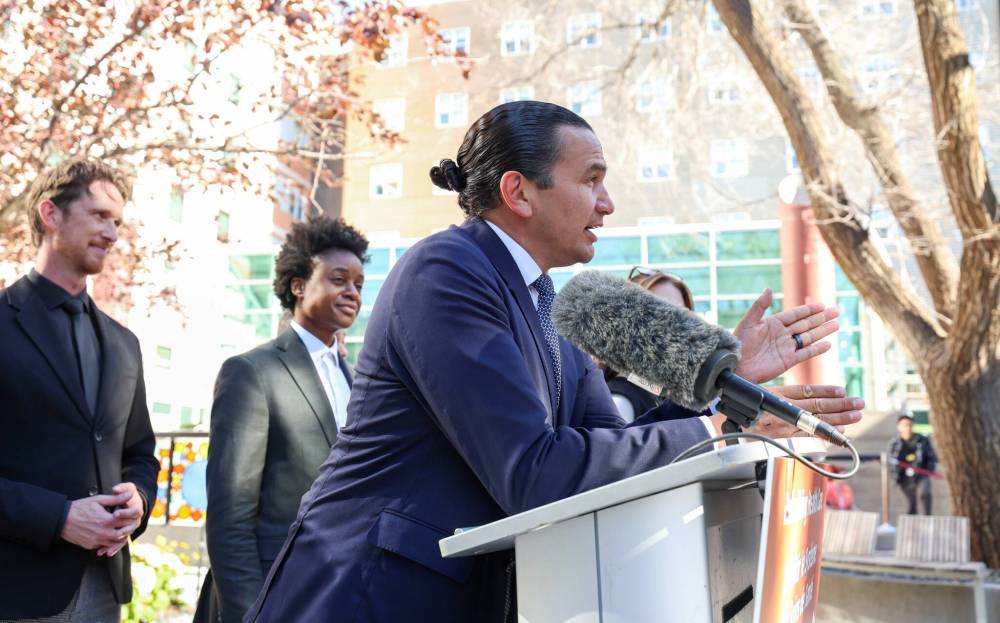
Premier Wab Kinew said some areas, such as ER wait times, still need work.
Jason Linklater, president of the Manitoba Association of Health Care Professionals, said he is hopeful the funding will build capacity in community-based care, including additional allied health staff to provide wraparound supports for patients with complex needs.
“Longer ER wait times have meant increasing pressure on social workers, physiotherapists, occupational therapists and other allied health professionals to discharge patients and free up beds, but they can’t do that without a safe place for those patients to go,” he said.
Progressive Conservative health critic Kathleen Cook said she’s cautiously optimistic the community spaces will be “somewhat helpful.”
“I think it’s probably a good step, but is it going to be enough? No. Nowhere near enough,” Cook said. “We’re going to need more of that. We’re going to need a sustained focus on home care as well, and on reducing that bed block that is blocking hospitals and ERs.”
The NDP government — in the final year of a four-year term — and Opposition Tories painted different pictures of the state of health care.
Kinew and Asagwara said the New Democrats are making progress while undoing damage caused by the former PC government. Cook said health care is “objectively worse” under the NDP by almost every metric, including median ER wait times, which have increased.
Kinew described the system as having a “jagged” recovery under the NDP. Some areas, such as an online appointment booking system, have “taken off,” and other areas, such as ER wait times, need more attention, he said.
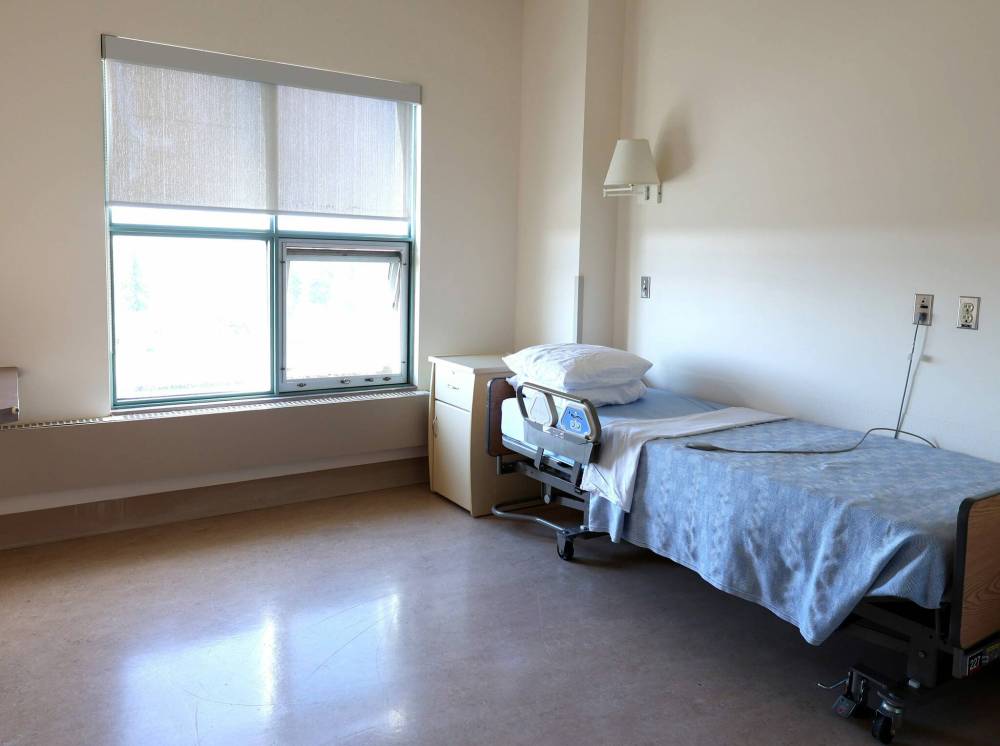
103 community-based care spaces will be added in Winnipeg for patients who need shelter or specialized supports.
The premier said his government has added more than 400 beds and more than 4,500 net new health-care workers to the system.
— With files from Carol Sanders
chris.kitching@winnipegfreepress.com


Chris Kitching is a general assignment reporter at the Free Press. He began his newspaper career in 2001, with stops in Winnipeg, Toronto and London, England, along the way. After returning to Winnipeg, he joined the Free Press in 2021, and now covers a little bit of everything for the newspaper. Read more about Chris.
Every piece of reporting Chris produces is reviewed by an editing team before it is posted online or published in print — part of the Free Press‘s tradition, since 1872, of producing reliable independent journalism. Read more about Free Press’s history and mandate, and learn how our newsroom operates.
Our newsroom depends on a growing audience of readers to power our journalism. If you are not a paid reader, please consider becoming a subscriber.
Our newsroom depends on its audience of readers to power our journalism. Thank you for your support.
Related Articles
U of M adds capacity to emergency medicine program for family doctors