Let the chips fall
Former host/VJ revisits his gambling addiction in new memoir

Advertisement
Read this article for free:
or
Already have an account? Log in here »
To continue reading, please subscribe:

Digital Subscription
One year of digital access for only $205*
- Enjoy unlimited reading on winnipegfreepress.com
- Read the E-Edition, our digital replica newspaper
- Access News Break, our award-winning app
- Play interactive puzzles
*First annual payment billed as $205.00 + GST for one year. This annual subscription will automatically renew at $233.00 + GST every 52 weeks (10% off the regular annual price of $259.35). Offer available to new and qualified returning subscribers only. Cancel any time.
To continue reading, please subscribe:
Add Free Press access to your Brandon Sun subscription for only an additional
$1 for the first 4 weeks*
- Enjoy unlimited reading on winnipegfreepress.com
- Read the E-Edition, our digital replica newspaper
- Access News Break, our award-winning app
- Play interactive puzzles
*Your next Brandon Sun subscription payment will increase by $1.00 and you will be charged $17.95 plus GST for four weeks. After four weeks, your payment will increase to $24.95 plus GST every four weeks.
Read unlimited articles for free today:
or
Already have an account? Log in here »
To many Canadians, veteran media personality Rick Campanelli is better known as Rick the Temp, the energetic, baby-faced intern-turned-VJ on MuchMusic in the 1990s and early 2000s.
But behind that winning smile was a much darker reality.
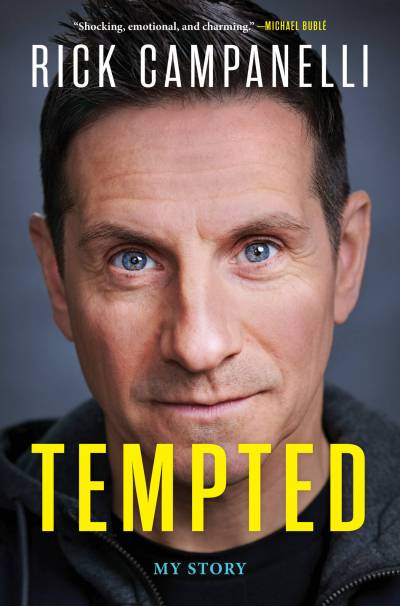
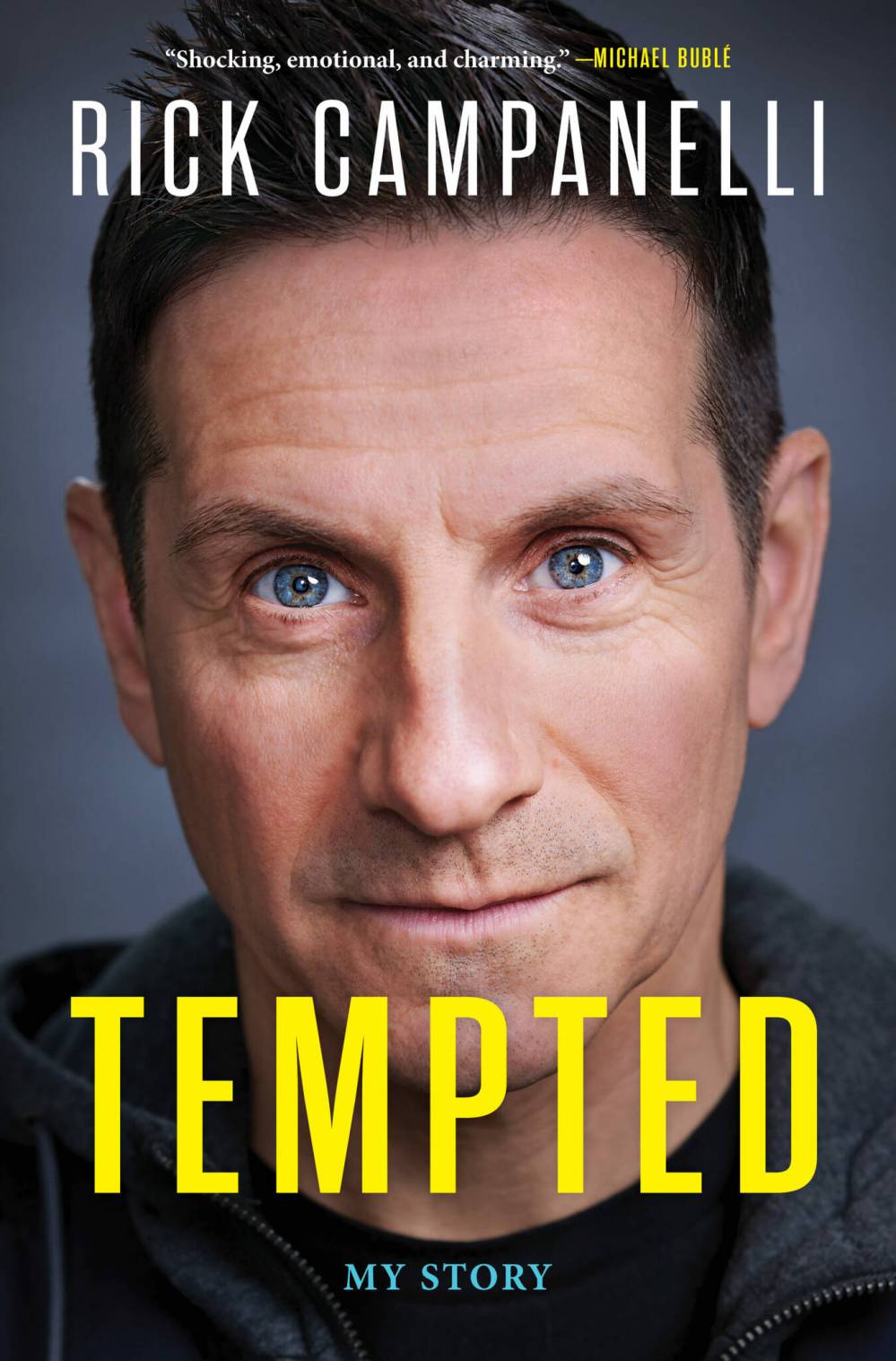
In his new memoir, Tempted: My Story, released last month via HarperCollins Canada and co-written with John Meyer, Campanelli, 56, opens up for the first time about his struggles with a serious — and secret — gambling addiction, which reached its nadir in 2008 when the then-host of Entertainment Tonight Canada was detained by U.S. Homeland Security for unpaid casino debts on a flight back from Las Vegas.
The Free Press caught up with Campanelli in advance of his Winnipeg launch Monday evening at McNally Robinson Grant Park. This interview has been lightly edited for length and clarity.
Free Press: Why this book, and why now?
Rick Campanelli: I was never going to share the majority of the stories that are in this book. I was going to go to my grave with them. I would have naturally just spoken about the good old days at Much or ET, and the stories that came along with those two places that we all watched back in the day.
But online gambling is becoming a huge problem. It’s so normalized now with the younger generation, with it being so accessible on our devices. So I think I needed to tell my cautionary tale of what can happen to you as a gambler if you’re not going into it with a good head on your shoulders. I was out of control for many years.
FP: And nobody knew.
RC: Nobody knew. I didn’t admit to myself that I had a problem until my wife came along. I hid it. I hid it from the public. I hid it from my family. And I don’t think it’s healthy to hide problems because we go through life and we all make mistakes and we delve into these worlds and sometimes — most times — we need help to get out of these situations and back to reality.
I have a 21-year-old now who may be delving into that same world that I was delving into when I was 21, and I think now is the right time (for the book) because this industry of online sports gambling, online gambling, it’s a big, billion-dollar business and these apps aren’t going anywhere.
FP: I was going to ask you about the changed gambling landscape, because obviously it’s a lot different now.
RC: When I was getting deep in it, I had a bookie. It was a little more inconvenient. I had to drive to the bookie to either pay or receive the cash; I had to call the bookie to put the bets in. There was a little bit of work, a little bit of effort. But now, everyone has a cellphone. Everyone has a device. You insert your credit card number or your bank account number, and within minutes it can be drained to zero. It’s a scary world.
FP: What was it like for you to confront these parts of your past and see them in black and white on the page?
RC: Revisiting the darker moments was tough. Angie, my wife, knew about the dark, dark times, but nobody else really knew. So to open up to my co-writer John, it took a lot. It was very personal, it was very emotional, but it was cathartic at the same time because I had lived those moments many, many years ago. It was so far in the past. But it still brought up feelings, you know, about how stupid I was — like how stupid I was to even act that way back then, or try to think I could get away with that stuff back in the day. Like how invincible I was.
But I knew I needed to share my story, my true, real, full story with people, because hopefully I could put the scare into someone that’s going down those roads themselves.
FP: When I think about Rick the Temp or Rick Campanelli on ET, I think high energy, I think megawatt smile. Was it ever hard to reconcile your sunny TV presence with Rick Campanelli, the person dealing with all this stuff?

BRANDON ALLEN PHOTO
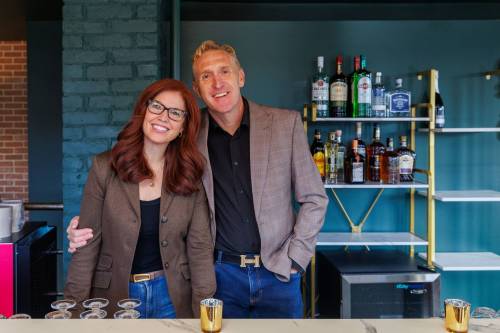
Rick Campanelli says online gambling makes it much easier for people to get in over their heads.
RC: I’ve always been a positive person in life. I’ve gone through life with a pretty good attitude. If something bad happens, well, something good is bound to happen.
Once I got really wrapped up in this world of gambling, I was the same way. Sure, I’m going to take some losses, but I told myself, well, I’m gonna have some wins, too. But I never got too down or depressed or serious about the losses. And the losses could really change a person. They could become really depressed, and they could have some really bad thoughts. That never occurred to me. I just thought, OK, I’ve lost today. I’ve lost a lot of money. I’m still smiling. I still have my health.
And even when it came time for me to be on live television, I always put 100 per cent into my job and what I was doing. I never let the gambling interfere with my on-air presence, any time I was on air.
FP: Unlike a lot of memoirs, I was surprised to see yours doesn’t have a photo section.
RC: Yes, everyone is surprised (laughs). Because I do so much social media and I post clips and videos and pictures, I think (HarperCollins Canada) thought that that was going to be enough. So I’ve been doing that, and I’ve got more to come.

Like, everyone wants to see the mug shot from the Las Vegas jail. I’m gonna be posting that eventually as well.
FP: Earlier in our conversation, you were talking about some of the feelings brought up by reflecting on your past, and I get the impression you are quite hard on yourself. Have you been able to find more compassion for yourself through this process?
RC: Yes. I’ve gone through my career as a perfectionist. I don’t want to let anyone down. I do put a lot of pressure on myself, and I think that’s the wrong approach … Yeah, I was hard on myself earlier, but again, I’m human and I’m gonna make more mistakes — I am — not as serious as the ones that I’ve made in the past, because I’ve learned my lesson, but I’ve sort of taken my foot off the brake a bit in terms of being better to myself and and having a little more compassion for myself and what I’ve done …
Everyone you meet, you want them to walk away with a smile on their face, and I still want that. But there was a lot of pressure put on me to be that guy back in the day. Now I go into my job like, I’m not perfect. I’m gonna go in, I’m gonna have fun, and if I upset people with what I do, well, that’s out of my control.
jen.zoratti@winnipegfreepress.com
Jen Zoratti is a columnist and feature writer working in the Arts & Life department, as well as the author of the weekly newsletter NEXT. A National Newspaper Award finalist for arts and entertainment writing, Jen is a graduate of the Creative Communications program at RRC Polytech and was a music writer before joining the Free Press in 2013. Read more about Jen.
Every piece of reporting Jen produces is reviewed by an editing team before it is posted online or published in print – part of the Free Press‘s tradition, since 1872, of producing reliable independent journalism. Read more about Free Press’s history and mandate, and learn how our newsroom operates.
Our newsroom depends on a growing audience of readers to power our journalism. If you are not a paid reader, please consider becoming a subscriber.
Our newsroom depends on its audience of readers to power our journalism. Thank you for your support.
Book event preview
Rick Campanelli launches Tempted:
My Story
Hosted by Ace Burpee
● McNally Robinson Grant Park
● Monday, Oct. 5, 7 p.m.
● Free
Jen Zoratti is a columnist and feature writer working in the Arts & Life department, as well as the author of the weekly newsletter NEXT. A National Newspaper Award finalist for arts and entertainment writing, Jen is a graduate of the Creative Communications program at RRC Polytech and was a music writer before joining the Free Press in 2013. Read more about Jen.
Every piece of reporting Jen produces is reviewed by an editing team before it is posted online or published in print – part of the Free Press‘s tradition, since 1872, of producing reliable independent journalism. Read more about Free Press’s history and mandate, and learn how our newsroom operates.
Our newsroom depends on a growing audience of readers to power our journalism. If you are not a paid reader, please consider becoming a subscriber.
Our newsroom depends on its audience of readers to power our journalism. Thank you for your support.
Advertisement Advertise With Us
Advertisement Advertise With Us