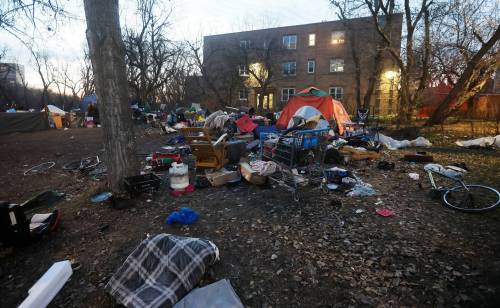
In plain sight, but out of mind Those on the front lines of coping with the city’s deepening homelessness and drug crises express concern at civic election candidates’ lack of attention to the issues
Read this article for free:
or
Already have an account? Log in here »
To continue reading, please subscribe:

Digital Subscription
One year of digital access for only $205*
- Enjoy unlimited reading on winnipegfreepress.com
- Read the E-Edition, our digital replica newspaper
- Access News Break, our award-winning app
- Play interactive puzzles
*First annual payment billed as $205.00 + GST for one year. This annual subscription will automatically renew at $233.00 + GST every 52 weeks (10% off the regular annual price of $259.35). Offer available to new and qualified returning subscribers only. Cancel any time.
To continue reading, please subscribe:
Add Free Press access to your Brandon Sun subscription for only an additional
$1 for the first 4 weeks*
- Enjoy unlimited reading on winnipegfreepress.com
- Read the E-Edition, our digital replica newspaper
- Access News Break, our award-winning app
- Play interactive puzzles
*Your next Brandon Sun subscription payment will increase by $1.00 and you will be charged $17.95 plus GST for four weeks. After four weeks, your payment will increase to $24.95 plus GST every four weeks.
Read unlimited articles for free today:
or
Already have an account? Log in here »
Just steps from city hall, two significant challenges facing Winnipeg play out every day.
But despite the proximity to the ongoing homelessness and toxic drug crises that have become woven into the fabric of Main Street, front-line service organizations worry civic leaders have lost sight of what needs to be done.
Marion Willis, executive director of St. Boniface Street Links, says the situation has deteriorated under current Mayor Scott Gillingham and council, with inadequate support for outreach services and an unwillingness by the city to take greater responsibility for addressing homelessness.
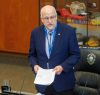
JOHN WOODS/THE CANADIAN PRESS FILES Marion Willis, executive director of Street Links, hopes fresh faces on city council will help push for more progress on the homelessness file. 
“If you look at the last four years, I haven’t seen things get better in our sector. I’ve seen things become amplified in the most negative of ways,” Willis says.
Despite the high-visibility of the overlapping crises on city streets, they have received little attention on the civic election campaign trail. The Free Press interviewed five key stakeholders: Willis; Jamil Mahmood, executive director of Main Street Project; Lisa Cefali, interim chief executive officer at Siloam Mission; Kate Sjoberg, executive director of Resource Assistance for Youth, Inc.; and Jennifer Rattray, executive director of End Homelessness Winnipeg, to find out what they want to see take place over the next four years with a new city council. The Free Press also interviewed Gillingham and his leading mayoral challenger, Kevin Klein.
While their views differ on some issues, the front-line organizations are united in pressing candidates for more than promises of additional housing. They want meaningful investments in outreach, a rethink of the city’s enforcement approach to encampments and public drug use, and a greater municipal role in tackling crises that have shown little sign of easing.
“If you look at the last four years, I haven’t seen things get better in our sector. I’ve seen things become amplified in the most negative of ways.”
When Winnipeg voters elect a new mayor and council on Oct. 28, Willis hopes new voices will challenge the status quo and push for a more co-ordinated response to the crises. There will be at least six new councillors since several incumbents are not running again.
Willis and others say the city can no longer treat the issue as primarily a provincial responsibility.
While Gillingham stresses addressing homelessness requires provincial and federal partnerships because many of the required services fall outside municipal jurisdiction, he disputes suggestions the city has failed to take sufficient responsibility.
Gillingham says Winnipeg is doing more to address homelessness than at any point in recent memory, citing municipal funding for four 24-hour safe spaces, mobile outreach, public washrooms and affordable housing, while quadrupling investment in safe spaces since 2022.
He says his administration’s investments reflect ongoing discussions with organizations that work directly with people experiencing homelessness, such as Street Links, Main Street Project and Siloam Mission, even if they don’t always agree on policy.
“We recognized that the city, we couldn’t just simply stand on the sidelines and call the province to address the problem while people were struggling on the streets, and neighbourhoods are feeling the impacts,” Gillingham says.
Mahmood worries the political conversation has shifted away from evidence-based solutions toward enforcement measures — such as restrictions on temporary encampments and police crackdowns on open drug use and trafficking — that may be more politically appealing but do little to address the underlying causes of homelessness.
MIKE DEAL / FREE PRESS Main Street Project executive director Jamil Mahmood worries candidates are more focused on enforcement measures for “the best political win” while ignoring underlying causes of homelessness.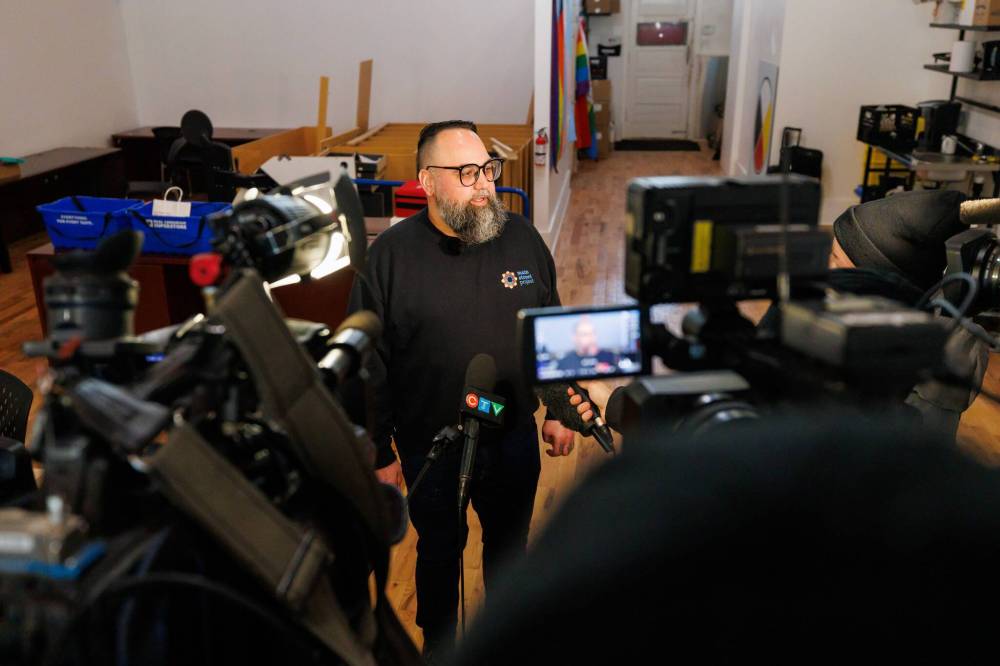
“Rather than actually understanding the issues and what could solve them, it seems to be more what will get you the best political win or whatever, right?” he says. “That’s kind of frustrating because these are people’s lives.”
A Winnipeg Police Service enforcement campaign on open drug use is currently ongoing, in co-ordination with service agencies. It’s the second sweep this year. The initial crackdown was criticized for a lack of collaboration, with front-line organizations warning increased enforcement can push people into more isolated locations, where overdoses may go unnoticed and prove fatal.
Klein says he would continue enforcement against open drug use and trafficking, arguing public safety must extend to transit, parks and community spaces.
He also pledges to eliminate what he described as police “no-go zones” around certain encampments.
Other municipal steps:
At the emergency inner-city shelter Siloam Mission, Cefali sees opportunities for the next mayor and council to make better use of existing municipal resources, including publicly owned land and emergency services.
Siloam, which already has a city-supported housing project proposed for Princess Street, wants to expand its second-stage recovery programming from 22 beds to 66. Cefali says access to city-owned land could help make that possible, while freeing up space at its existing facility.
Free Press Files Emergency inner-city shelter Siloam Mission wants to expand its second-stage recovery programming from 22 beds to 66.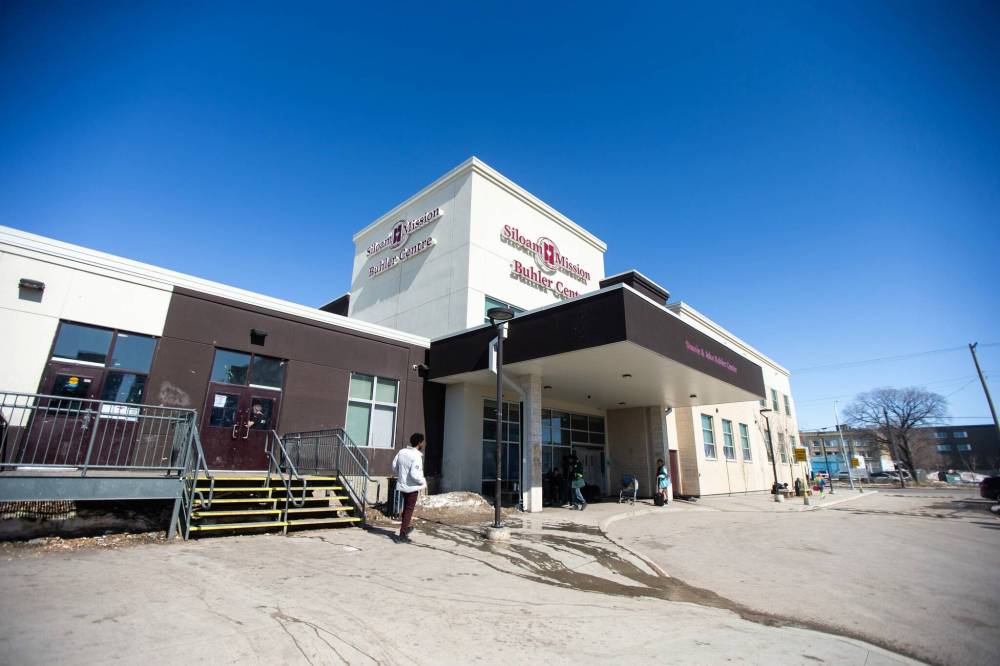
She also wants closer partnerships with police and other emergency services, including a permanent paramedic presence at Siloam and better co-ordination around the approximately $1 million the organization spends annually on security.
Cefali says those partnerships could help address drug trafficking near the shelter, reduce unnecessary emergency responses and improve safety without targeting the people accessing its services.
But she cautions against treating homelessness as a problem with a single solution.
“One of the biggest things that I’ve seen is people speaking of the unhoused as one homogeneous group, and it’s not,” she says. “Each individual has their story, but I think each individual has their solution, much like you would treat patients at a hospital.”
“Each individual has their story, but I think each individual has their solution, much like you would treat patients at a hospital.”
Her most immediate concern is the approaching winter and the lack of adequate places for people to seek shelter when temperatures plunge.
“It’s our front-line staff who are the ones at 3 a.m. who have to say, ‘no, you can’t come in,’” she says.
Cefali suggests vacant downtown storefronts and other buildings could be used as temporary warming spaces, with city hall helping co-ordinate property owners, service providers and emergency responders rather than expecting existing shelters to absorb more people.
Sjoberg says the city’s responsibility extends beyond funding housing and outreach services. Municipal decisions about public transit, libraries, recreation facilities and community centres can directly affect whether people living in poverty can access employment, education and other supports, she says.
With transit becoming more expensive and access to some public spaces increasingly restricted, Sjoberg says the city must recognize how its existing services can either help people escape poverty or create additional barriers.
“So it’s (the city) already in the game, and maybe it’s more about treating that role more seriously,” she says.
Designated encampments:
The topic is a divisive one, both politically and among the front-line organizations.
For Willis, establishing designated encampment areas to better support the homeless while reducing their impact on surrounding neighbourhoods is a more immediate priority. The province’s unwillingness to fund sites shouldn’t prevent the city from pursuing them, she says.
Sjoberg opposes the idea, arguing the city’s existing restrictions on where people can shelter, combined with police enforcement, could make managed sites more restrictive than supportive.
“I’m not in favour of designated encampment because our collective policy environment is so punishing that I think it’ll lead to people being less safe rather than more safe,” she says.
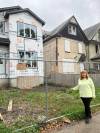
MIKAELA MACKENZIE / FREE PRESS Kate Sjoberg, executive director at Resource Assistance for Youth Inc., says decisions, such as increasing transit fares or restricting access to public spaces, are creating more barriers.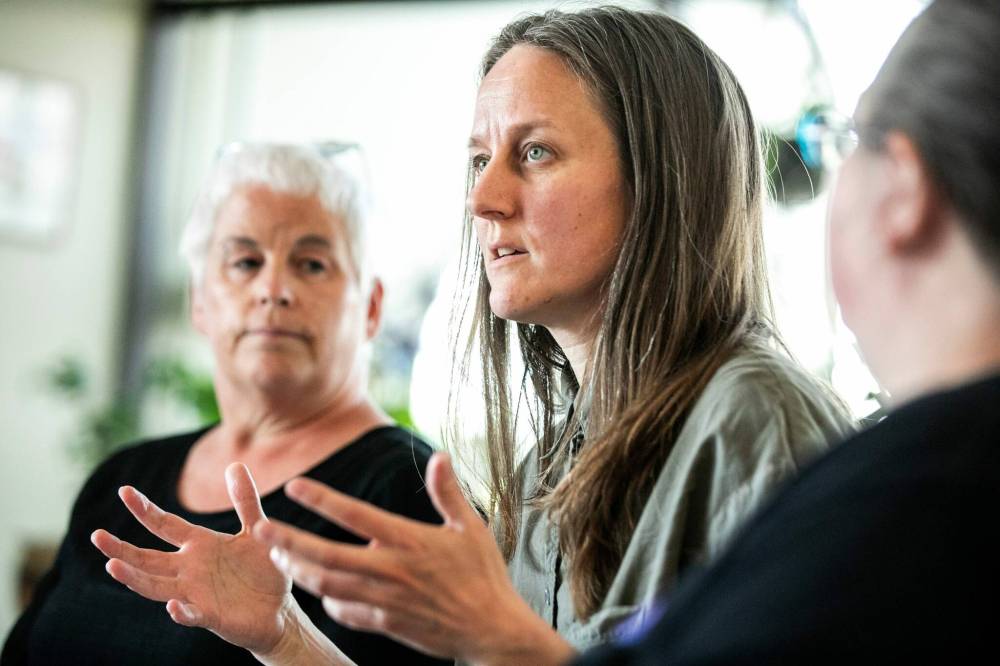
Klein, however, is proposing a supervised encampment site with washrooms, garbage facilities, around-the-clock management and access to support services, citing similar approaches in other Canadian cities, including Halifax and Thunder Bay. He has yet to determine where a site would be located or cost it out, saying those decisions would be made in consultation with front-line organizations. However, he acknowledges it would need the support of the province, which hasn’t been on side with the idea.
“I don’t think you could go on your own,” he says.
Gillingham remains opposed to established encampment sites, saying his position aligns with the province, which is focusing on getting more permanent housing built. He also questions where a site could be located and how many people it could realistically accommodate.
“I’m not supportive of managed encampment. I’d rather focus our time and energy on trying to get more housing built, or renovated, so we can expedite getting people out of encampments and into housing,” he says.
Encampment crackdown:
Last November, the city began enforcing a new bylaw that established restrictions on where temporary encampments could be located, with locations in parks or near schools and daycares ruled out.
Mahmood wants the next council to reconsider those restrictions, saying they fail to address individuals’ housing and support needs.
JOHN WOODS / FREE PRESS The city began enforcing encampment restrictions late last year.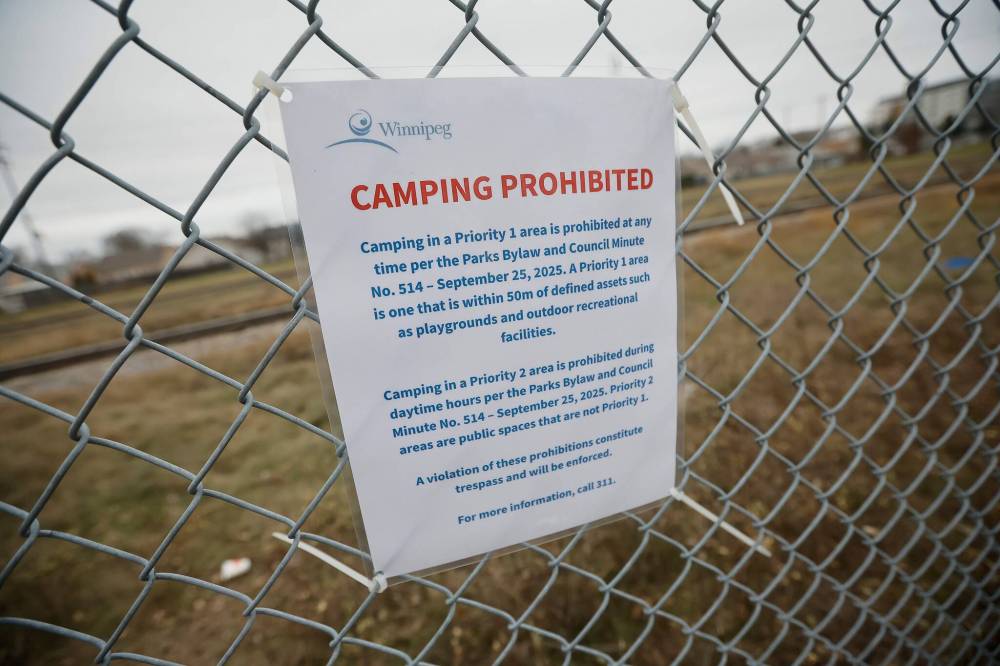
“It speaks to where they can’t be, and the rules that they’re enforcing,” he says, adding the restrictions resulted in displacing people into other parts of the city.
While Rattray supports reasonable restrictions, such as barring encampments near schools and daycares, the policy is too sweeping, leaving people with few places to go, she says.
“I think the encampment ban is too broad, and I think I would hope that the mayor and city council will look at the implications of the existing encampment ban and look at how it might be modified,” she says.
“If you really want to stop people from camping in parks, get them the housing they need.”
Gillingham defends the restrictions, arguing the city must balance the needs of people experiencing homelessness with those of families who want to use parks and other public spaces. He disputes suggestions the policy is intended to displace people, saying city staff work with outreach organizations to secure housing and supports before clearing encampments.
“The encampment protocol, is it perfect? No, probably not,” he says, adding, if re-elected, he would be open to adjustments if they can make the policy more effective.
Although Klein is critical of the city’s encampment restrictions — “that’s not compassion, that’s certainly not a strategy to deal with the issue” — he acknowledges they have a role to play if a permanent site is established.
“You need the bylaw so that people know they have to go to a managed camp,” Klein says.
Mahmood says 350 people living in encampments have completed housing applications through Main Street Project, evidence that many people want housing but have nowhere else to go.
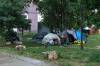
MIKE DEAL / FREE PRESS FILES Front-line organizations say restrictions on temporary encampments resulted in dispersing people into other areas of the city.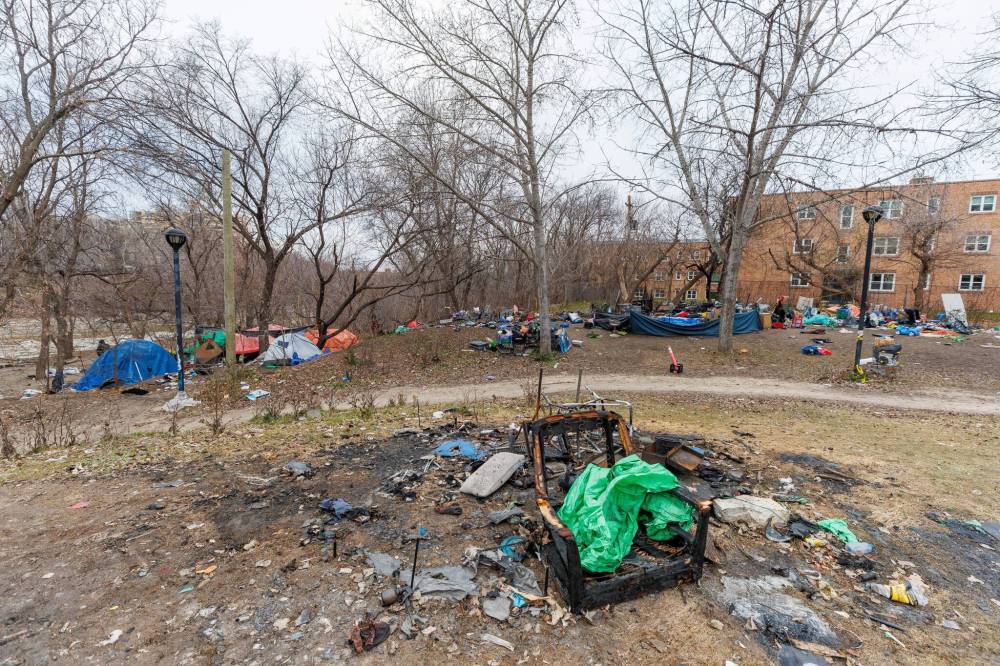
“If you really want to stop people from camping in parks, get them the housing they need,” he says.
The Kinew government’s Your Way Home strategy aims to move about 700 people into housing by 2031 as part of an effort to end chronic homelessness. Meanwhile, Gillingham says his administration since 2022 has helped fund more than 2,600 affordable homes, including nearly 1,000 deeply affordable units. He could not say how many have been completed and occupied, acknowledging getting housing built remains a significant challenge.
“We’re making progress collectively, but certainly we’re nowhere close to any victory lap because there’s so much work left to do,” he says.
Funding:
Mahmood wants the next council to reconsider how it funds outreach, arguing municipal budget decisions take precedence over the actual needs of people living on the streets.
In 2025, the province pumped $73 million into the Your Way Home strategy, while the city, during the same period, spent approximately $1.6 million, including $550,000 awarded to Main Street Project for the city’s sole outreach contract, and $1.05 million for 24-7 safe spaces. Additional costs were not readily available at publication, including enforcement, park cleanup and fire-paramedic response.
“We’re not funding outreach based on the need. We’re funding outreach based on what the city wants to allocate in their budget,” Mahmood says. “It’s a budget decision and not a what’s needed decision.”
He says the city should first determine how many outreach teams Winnipeg requires, including specialized teams serving women, youth and other populations, and then establish the funding needed to provide those services.
He suggests that could mean investing $2 million or more, with contributions from other levels of government, rather than starting with a fixed number and expecting organizations to make do.

“The conversation shouldn’t be, here is $550,000 a year. Fight,” he says.
Klein says he would establish a Mayor’s Office of Community Safety and Housing Outcomes within 30 days of taking office, appointing a paid staff member to bring front-line organizations together and develop a co-ordinated strategy.
He identifies Willis as someone he would approach for the position, which he says would be funded through the mayor’s existing staffing budget. Willis has not committed to such a role.
However, Klein acknowledges he has not examined the municipal budget closely enough to identify existing homelessness expenditures that could be redirected toward his proposals. He also declines to commit to specific first-year targets, saying those would be established after the office was created. He promises quarterly public reporting on the strategy’s progress and says unsuccessful programs would be changed.
Rattray also wants the next council to substantially increase its investment in community organizations, particularly Indigenous-led agencies providing front-line services in Winnipeg.
She points to a proposal in the Canadian Centre for Policy Alternatives’ alternative municipal budget calling for an initial investment equivalent to one per cent of the city’s budget in new funding for urban Indigenous organizations.
While she stops short of endorsing that specific figure, Rattray says the proposal offers a starting point for addressing what she considers inadequate municipal support.
“I think all orders of government have a responsibility to do so, including municipal governments,” she says.
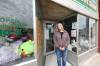
MIKAELA MACKENZIE / FREE PRESS “It’s an all-of-us issue,” says End Homelessness Winnipeg executive director Jennifer Rattray. 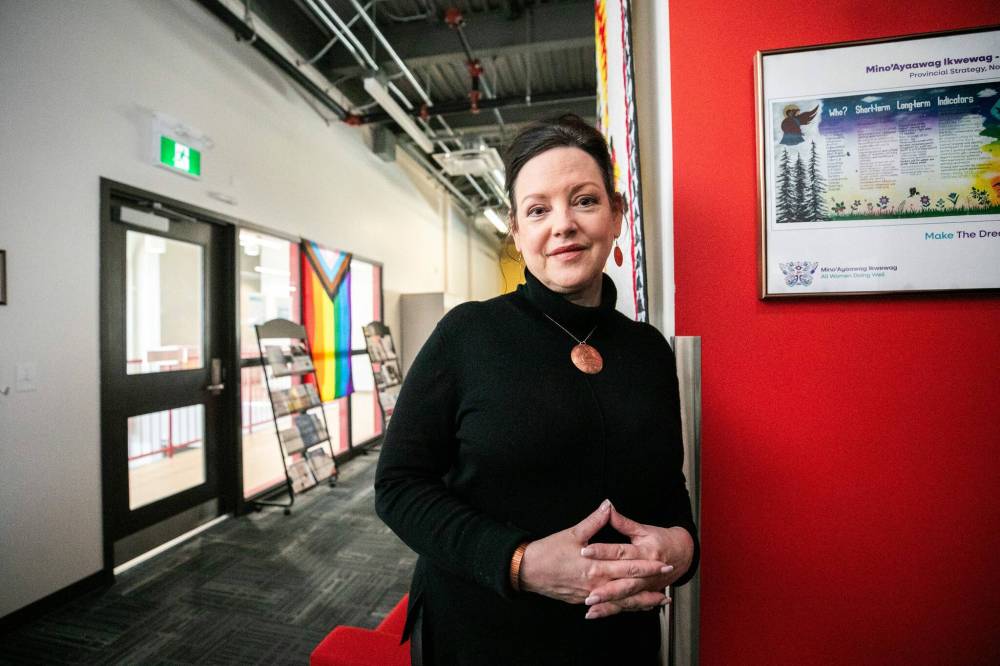
Gillingham says he remains open to discussions about outreach funding but points to investments his administration has already made, including the creation of a dedicated homelessness and addictions adviser in the mayor’s office.
He did not commit to a needs-based funding increase or the proposed allocation of one per cent of the municipal budget to Indigenous-led organizations.
Instead, he points to existing housing partnerships with First Nations and said Indigenous-led outreach agencies could play a role in his proposed fourth emergency response service, which would connect people in crisis with appropriate community supports.
Cefali says there are smaller, less costly ways to reduce barriers for people experiencing homelessness, including installing hundreds of “dignity lockers” where people could safely store their belongings while attending appointments, seeking employment or accessing services.
“If we can’t give everyone a house today, because there’s not enough inventory, could we provide them the dignity of having a place where they don’t have to worry about their stuff?” she says.
Final thoughts:
Despite differing priorities, the front-line leaders agree the next council needs to work more closely with organizations serving people experiencing homelessness.
Mahmood calls for an action-oriented table involving all levels of government and service providers, while Willis wants an independent, inclusive process that begins with an honest assessment of the scale of homelessness in Winnipeg.
“We need to get the politics out of this. We need to figure out what the real, truthful picture and portrait of homelessness looks like,” Willis says.
Mahmood says his central question for every candidate is how they would remove the politics and stigma surrounding homelessness, mental health and addiction, and prioritize the needs of vulnerable people.
Rattray says responsibility for addressing homelessness extends beyond any one level of government or organization, but elected officials have an obligation to take the crisis seriously.
“It’s an all-of-us issue. When people in our community are suffering, when people in our community do not have homes and safe places to live, that should hurt all of us,” she says.
For Willis, the next council’s priorities will ultimately be reflected in where it chooses to spend its money.
“Governments fund what they value,” she says. “It’ll be interesting to see what this new government actually does value.”
scott.billeck@winnipegfreepress.com

Scott Billeck is a general assignment reporter for the Free Press. A Creative Communications graduate from Red River College, Scott has more than a decade’s worth of experience covering hockey, football and global pandemics. He joined the Free Press in 2024. Read more about Scott.
Every piece of reporting Scott produces is reviewed by an editing team before it is posted online or published in print — part of the Free Press‘s tradition, since 1872, of producing reliable independent journalism. Read more about Free Press’s history and mandate, and learn how our newsroom operates.
Our newsroom depends on a growing audience of readers to power our journalism. If you are not a paid reader, please consider becoming a subscriber.
Our newsroom depends on its audience of readers to power our journalism. Thank you for your support.
Related Articles
Gillingham vows drug crackdowns would continue on his watch