

Multiple safety concerns in final report on fatal 2025 mid-air collision near Steinbach

Advertisement
Read this article for free:
or
Already have an account? Log in here »
To continue reading, please subscribe:
Digital Subscription
One year of digital access for only $1.44 a week*
- Enjoy unlimited reading on winnipegfreepress.com
- Read the E-Edition, our digital replica newspaper
- Access News Break, our award-winning app
- Play interactive puzzles
*Billed as $5.77 plus GST every four weeks. After 52 weeks, price increases to the regular rate of $19.95 plus GST every four weeks. Offer available to new and qualified returning subscribers only. Cancel any time.
To continue reading, please subscribe:
Add Free Press access to your Brandon Sun subscription for only an additional
$1 for the first 4 weeks*
- Enjoy unlimited reading on winnipegfreepress.com
- Read the E-Edition, our digital replica newspaper
- Access News Break, our award-winning app
- Play interactive puzzles
*Your next Brandon Sun subscription payment will increase by $1.00 and you will be charged $17.95 plus GST for four weeks. After four weeks, your payment will increase to $24.95 plus GST every four weeks.
Read unlimited articles for free today:
or
Already have an account? Log in here »
A federal investigation into a mid-air collision that killed two student pilots near Steinbach last year identified concerns about radio calls, situational awareness and visual detection methods.
The Transportation Safety Board of Canada’s final report, released Wednesday, said the two planes, belonging to Harv’s Air Service, became entangled and crashed while both pilots were on their final approach to Steinbach airport on the morning of July 8, 2025.
The victims were identified by their families as Savanna May Royes, 20, and Sreehari Sukesh, 23.
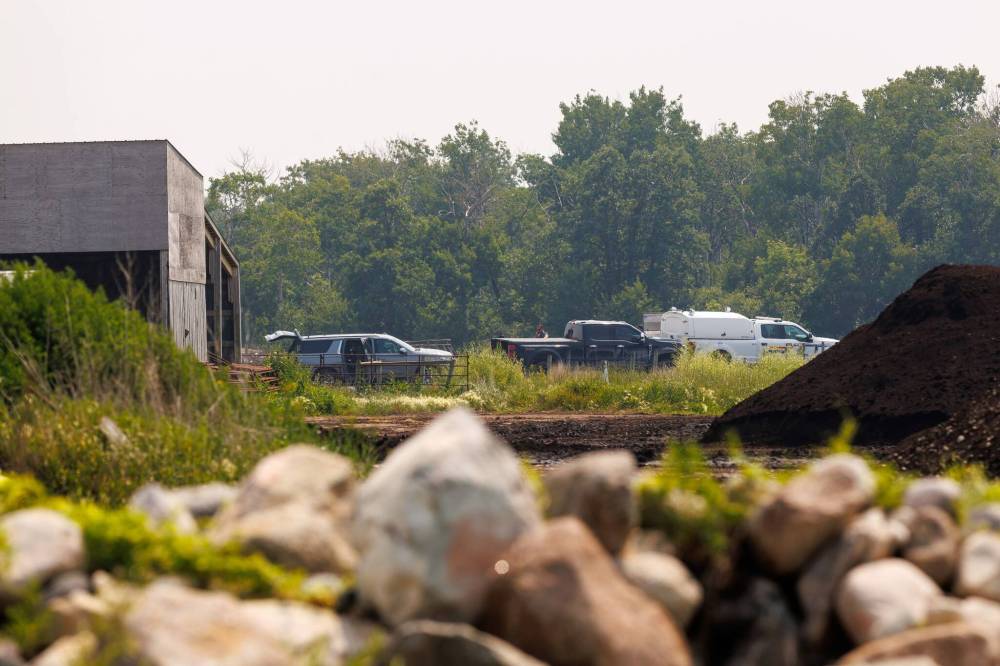
Investigators at the scene where two planes from Harv’s Air flight school crashed south of Steinbach in July 2025. (Mike Deal / Free Press files)
Investigators concluded the crash highlighted the limitations of the “see-and-avoid” principle (a basic method used by pilots for visual surveillance and collision avoidance), and why it is important for pilots to actively listen to radio calls from other planes to maintain situational awareness.
In a safety message, the TSB encouraged plane owners and pilots to install on-board systems that provide air traffic information to improve situational awareness.
Royes and Sukesh were piloting two of four planes that were involved in solo circuit training under visual flight rules when the collision occurred shortly after 8:40 a.m.
The pilot of a Cessna 172R announced via radio they were on their final approach to runway 36, while flying an extended circuit to create more space between their aircraft and traffic in front of them.
Eight seconds later, the pilot of a Cessna 152 announced via radio they were turning to make their final approach on the normal circuit route, the report said.
The single-engine planes were separated by about 800 metres (2,625 feet) horizontally and about 61 metres (200 feet) vertically at the time.
Less than 20 seconds later, the Cessna 172R was about 30 metres (100 feet) directly above the Cessna 152. After the planes made brief contact, the pilot of the Cessna 152 immediately applied full power, and the aircraft pitched up.
The planes collided again, became entangled and crashed into the ground. The aircraft came to rest about 400 metres south of the runway threshold. Both were destroyed by flames.
Both pilots were qualified for the flights.
About six months earlier, two Harv’s Air Service planes were at risk of collision on final approach to runway 18 at the airport. Both planes landed safely.
Afterward, the company implemented a new procedure which required all radio calls by pilots on final approach to include the distance from the runway threshold in a bid to improve situational awareness and make it easier for pilots to spot other aircraft.
On the day of the fatal crash, only one pilot in the circuit was heard stating their distance from the runway threshold when making their radio call on final approach.
Neither pilot who died stated their distance from the runway threshold on any of their radio calls, the investigation found.
The pilots were on a pattern that involved a left-hand circuit flown at about 490 metres (about 1,600 feet) above sea level.
The base leg of the circuit, where the Cessna 152 pilot made the turn to begin their final approach, pointed almost directly into the sun at the time of the collision. It was not determined if one or both pilots was wearing sunglasses, the TSB said.
The report said overall visibility was limited due to wind-blown smoke from wildfires in northern Manitoba, but meteorological conditions were suitable for visual flight rules.
It could not be confirmed whether one or both planes had any lights turned on, other than beacon lights. While not legally required, nor Harv’s Air Service policy, Transport Canada recommends aircraft show a landing light or lights during the takeoff and landing phases, and when flying below 2,000 feet (about 609 metres) above ground level within terminal areas and aerodrome — any location designated for takeoff, landing, and aircraft maintenance — traffic zones to be more visible.
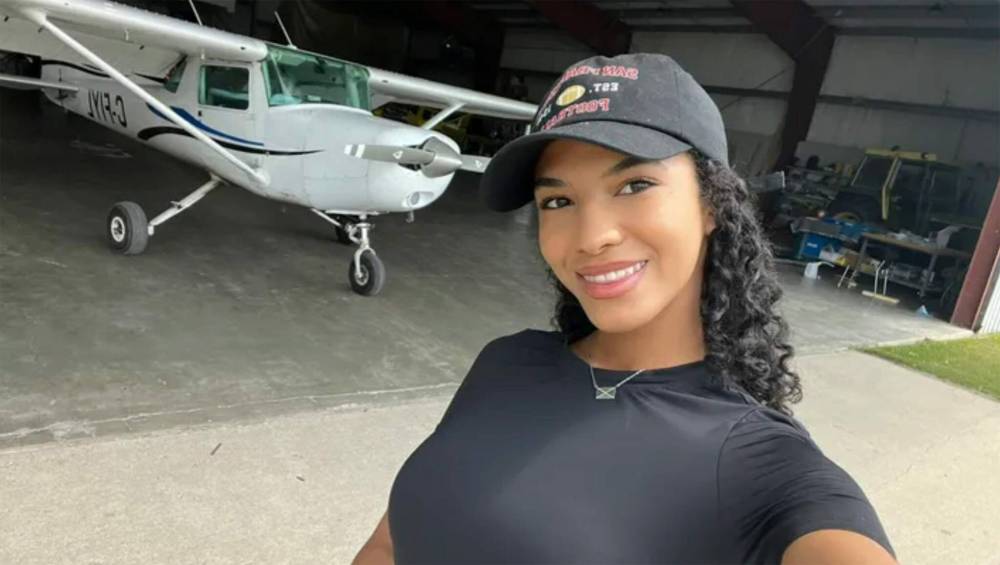
Savanna May Royes was one of two pilots killed in a mid-air collision near Steinbach in July 2025. (GoFundMe)
Neither plane was equipped with an airborne collision avoidance system, nor did regulations require them to be, the TSB said. The airport is situated in uncontrolled airspace. Pilots were using a specific radio frequency.
Transport Canada guidance advises pilots to report their position and intentions during circuit flights.
“By actively listening to these calls, pilots will have a better picture of what is going on in a circuit, which will enhance their situational awareness,” the report said.
Investigators highlighted concerns about the “see-and-avoid” principle during flights that use visual flight rules.
“It is based on active visual scanning, as well as on the ability to detect conflicting aircraft and take the necessary action to avoid them,” the report said.
Investigations into prior incidents concluded that, given the principle’s limitations, there is a greater risk of collision in uncontrolled airspace when relying solely on visual detection.
Officials in Australia previously found an aircraft on a collision course will usually appear to be a stationary object in the pilot’s visual field due to the geometry of collision flight paths, the report said.
Harv’s Air has since taken several steps to reduce the risk of a mid-air collision in the circuit, the report said. Among them, the maximum number of planes allowed in a circuit at a given time was reduced to three.
The company installed LED lights on its planes to increase visual conspicuity in flight, and equipped more of its aircraft with technology that automatically broadcasts GPS positions and other information to fellow pilots and ground stations.

All radio calls made on final approach must now include the plane’s distance from the runway threshold, and lights must be on at all times during flight.
Students and aircraft renters are required to attend safety briefings related to effective lookout techniques and maintaining situational and aircraft blind-spot awareness.
The TSB conducted a Class 4 investigation, which is limited in scope and does not produce findings or recommendations.
Transportation Safety Board of Canada’s final report
chris.kitching@winnipegfreepress.com
Chris Kitching is a general assignment reporter at the Free Press. He began his newspaper career in 2001, with stops in Winnipeg, Toronto and London, England, along the way. After returning to Winnipeg, he joined the Free Press in 2021, and now covers a little bit of everything for the newspaper. Read more about Chris.
Every piece of reporting Chris produces is reviewed by an editing team before it is posted online or published in print — part of the Free Press‘s tradition, since 1872, of producing reliable independent journalism. Read more about Free Press’s history and mandate, and learn how our newsroom operates.
Our newsroom depends on a growing audience of readers to power our journalism. If you are not a paid reader, please consider becoming a subscriber.
Our newsroom depends on its audience of readers to power our journalism. Thank you for your support.
Related Articles
Steinbach crash victim passionate about becoming pilot


Advertisement Advertise With Us
Advertisement Advertise With Us
History
Updated on Wednesday, October 21, 2026 1:55 PM CDT: Added report