

Report says ER death of Sinclair is example of ‘fatal racism’
Advertisement
Read this article for free:
or
Already have an account? Log in here »
To continue reading, please subscribe:

Digital Subscription
One year of digital access for only $205*
- Enjoy unlimited reading on winnipegfreepress.com
- Read the E-Edition, our digital replica newspaper
- Access News Break, our award-winning app
- Play interactive puzzles
*First annual payment billed as $205.00 + GST for one year. This annual subscription will automatically renew at $233.00 + GST every 52 weeks (10% off the regular annual price of $259.35). Offer available to new and qualified returning subscribers only. Cancel any time.
To continue reading, please subscribe:
Add Free Press access to your Brandon Sun subscription for only an additional
$1 for the first 4 weeks*
- Enjoy unlimited reading on winnipegfreepress.com
- Read the E-Edition, our digital replica newspaper
- Access News Break, our award-winning app
- Play interactive puzzles
*Your next Brandon Sun subscription payment will increase by $1.00 and you will be charged $17.95 plus GST for four weeks. After four weeks, your payment will increase to $24.95 plus GST every four weeks.
Read unlimited articles for free today:
or
Already have an account? Log in here »
Hey there, time traveller!
This article was published 03/02/2015 (4225 days ago), so information in it may no longer be current.
A Toronto health policy think-tank says in a new report the death of Brian Sinclair is a prime example of how racism leads to poor treatment of indigenous people in Canada’s health care system.
The Wellesley Institute report, First Peoples, Second Class Treatment, takes a broad look at the impact of racism and stereotyping on the health of indigenous people. It looks at the Brian Sinclair case in a section on racism and access to health care, under the heading “fatal racism.”
“Racism, the refusal of care and poor treatment of Indigenous peoples in the Canadian health care system are well documented in health research,” concludes the report. “For Mr. Sinclair, the impact of racism proved fatal.”
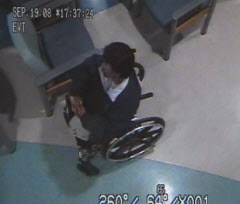
Sinclair was 45 when he died of a treatable bladder infection in the waiting area of the emergency room at the Health Sciences Centre in September 2008, after waiting 34 hours for care.
The inquest, which looked a this death specifically, excluded the issue of racism in its study.
The Wellesley report is the second time in less than a month, a Toronto-based organization is pointing at Winnipeg with accusations of racism. Last month, Maclean’s magazine had a front-page story declaring Winnipeg had the worst racism problem in Canada.
Emily Hill, a lawyer with aboriginal legal services Toronto, said Tuesday anyone reading the details of Sinclair’s final 34 hours could not help but come to the conclusion that racism and stereotyping played a role.
“There were false assumptions made,” said Hill. “That he was drunk. That he was just getting out of the cold. To read those and not come to the conclusion that racism played a role is unlikely.”
Hill and her agency participated in the Sinclair inquest until February 2014, when the judge determined racism would be excluded from the inquest.
Hill said she hopes the Wellesley report will shed some light on the fact the troubles in the Canadian health care system are not only about wait times and overcrowding.
“A lot of people in Winnipeg, and Manitoba and across the country connected to the story,” said Hill. “It illuminated, in a very tragic way, what they knew to be their own experience with the health care system.”
Grandmother Madeleine Keteskwew Dion Stout, from the Well Living House Grandparents Counsel, asked the Wellesley Institute to include the Sinclair case in their study. In the report, she says aboriginal people clearly “aren’t even looked at as human beings.”

“Of course the family is upset about his treatment and think it is a case of racism. That day, a hundred and fifty people had moved through emergency and Mr. Sinclair was ignored and didn’t receive any service.”
A spokeswoman for Manitoba Health Minister Sharon Blady, pointed to Blady’s comments when the inquest report was delivered. Although Blady would not specifically acknowledge race played a role in Sinclair’s death, she said she expects all Manitobans to get the same access to safe, quality and respectful care regardless of their race.
“This is a professional requirement and it is our expectation,” she said in December.
Overall the Wellesley Institute report concludes Canada has to acknowledge and accept the existence of racism in Canada as a whole, which will require “a departure from the cherished image of Canada as a well-meaning, international peacekeeper and the imagined harmony of the multicultural mosaic, and a long walk towards truth and reconciliation.”
mia.rabson@freepress.mb.ca