

Trail-blazing transgender judge
Lawyer-advocate appointed to provincial court
Advertisement
Read this article for free:
or
Already have an account? Log in here »
To continue reading, please subscribe:
Monthly Digital Subscription
$1 per week for 24 weeks*
- Enjoy unlimited reading on winnipegfreepress.com
- Read the E-Edition, our digital replica newspaper
- Access News Break, our award-winning app
- Play interactive puzzles
*Billed as $4.00 plus GST every four weeks. After 24 weeks, price increases to the regular rate of $19.95 plus GST every four weeks. Offer available to new and qualified returning subscribers only. Cancel any time.
Monthly Digital Subscription
$4.99/week*
- Enjoy unlimited reading on winnipegfreepress.com
- Read the E-Edition, our digital replica newspaper
- Access News Break, our award-winning app
- Play interactive puzzles
*Billed as $19.95 plus GST every four weeks. Cancel any time.
To continue reading, please subscribe:
Add Free Press access to your Brandon Sun subscription for only an additional
$1 for the first 4 weeks*
*Your next subscription payment will increase by $1.00 and you will be charged $16.99 plus GST for four weeks. After four weeks, your payment will increase to $23.99 plus GST every four weeks.
Read unlimited articles for free today:
or
Already have an account? Log in here »
Hey there, time traveller!
This article was published 18/12/2015 (3766 days ago), so information in it may no longer be current.
There are only two times in Kael McKenzie’s life he has spoken publicly about his gender transition.
Once at a Pride reception associated with the Manitoba Bar Association, and Friday, the day after he was appointed as a judge — making him the first self-identified transgender judge in Canada, according to the MBA.
Behind the trail-blazing title is also an advocate, a person with more than a decade in front of the bench as a defence lawyer and Crown prosecutor, almost exclusively dealing with youth.
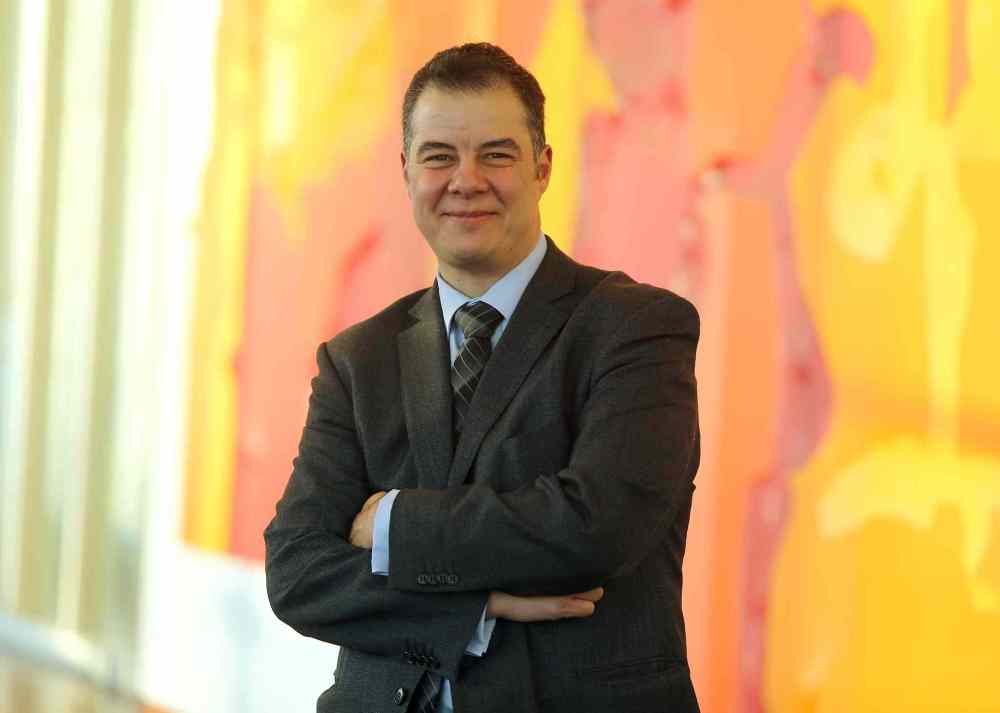
McKenzie is a Winnipegger who got his start in the Canadian Forces and hopes his long list of accomplishments will help at least one transgender person realize any job is within reach.
“If there is one person out there who can reach for their goals, or one person out there who sees my accomplishments as something that has given them hope, strength, then I have done my job,” McKenzie said by phone Friday.
The 44-year-old University of Manitoba graduate was appointed provincial court judge Thursday and will begin sitting in Winnipeg in the new year.
“I think the bench should be representative of Manitobans, and I think my legal qualifications are probably the biggest part of what has gotten me here today,” he said.
A well-known LGBTQ and community activist in the city, McKenzie has advocated for Bill 18, which gave students the right to establish gay-straight alliances in Manitoba schools, and he has spoken against the Senate’s amendment to Bill C-279, a transgender rights bill that effectively made it illegal for transgender people to use public washrooms.
McKenzie has also been heavily involved with the Canadian Bar Association, co-chairing the sexual-orientation and gender-identity conference — political activities and affiliations he admits he will no longer be able to participate in.
“It changes completely. I can’t have opinions on legislation, I can’t have opinions on political discourse, and I need to be independent and unbiased,” McKenzie said of his new position.
“But I think when you judge people, you have to have some background to base that on, experiences and lived experiences. For me, it is taking the premise that people are generally good people, I think is a good place to start with.”
Before his transition, McKenzie came out as lesbian at 17 and enlisted in the army a year later. It wasn’t until he enrolled in law school at the University of Manitoba almost a decade later that he realized he could no longer live as a woman.
“I’ve known about being transgender since I was a young person, but it wasn’t as much of an issue when I wore a uniform. I knew it was there, but I think when I went into law school and I had to conform more to female social norms, things changed for me there,” he said.
“I could no longer live with it, so I had to do something about it.”
He began his transition around 2011, when McKenzie was practising law at Chapman Goddard Kagan, a Winnipeg law firm he describes as being “unbelievably supportive,” at the time.
“They were like, ‘We don’t care if you’re green, we just want you to be a good lawyer,’ ” he said.
One of his 17-year-old clients facing serious criminal charges reacted by phoning him and exclaiming, “I’m so proud of you, I am so happy you did this, you are yourself.’”
The decision to appoint McKenzie was based on a combination of his skills, experiences and community involvement, but also criteria in the Provincial Court Act helped usher McKenzie into his new role, said provincial Justice Minister Gord Mackintosh.

The criteria laid out in the act state consideration should be given for the “diversity of Manitoba society,” which Mackintosh said helps create a provincial bench that “looks more like Manitoba.”
“It helps send a strong message that diversity is strength and not a barrier to advancement,” he said.
As for McKenzie, he hopes his appointment sends a strong message to employers in Manitoba.
“For people who are employing transgender people, I hope this is an example they can see here, we have a judge, we have politicians, we have community leaders, we have all these people, this is not something scary for my business, it’s one more step to true equality.”
kristin.annable@freepress.mb.ca