

Birth alerts have ended but babies still being apprehended in Manitoba: data
Advertisement
Read this article for free:
or
Already have an account? Log in here »
To continue reading, please subscribe:
Monthly Digital Subscription
$1 per week for 24 weeks*
- Enjoy unlimited reading on winnipegfreepress.com
- Read the E-Edition, our digital replica newspaper
- Access News Break, our award-winning app
- Play interactive puzzles
*Billed as $4.00 plus GST every four weeks. After 24 weeks, price increases to the regular rate of $19.95 plus GST every four weeks. Offer available to new and qualified returning subscribers only. Cancel any time.
Monthly Digital Subscription
$4.99/week*
- Enjoy unlimited reading on winnipegfreepress.com
- Read the E-Edition, our digital replica newspaper
- Access News Break, our award-winning app
- Play interactive puzzles
*Billed as $19.95 plus GST every four weeks. Cancel any time.
To continue reading, please subscribe:
Add Free Press access to your Brandon Sun subscription for only an additional
$1 for the first 4 weeks*
*Your next subscription payment will increase by $1.00 and you will be charged $16.99 plus GST for four weeks. After four weeks, your payment will increase to $23.99 plus GST every four weeks.
Read unlimited articles for free today:
or
Already have an account? Log in here »
Hey there, time traveller!
This article was published 04/06/2022 (1406 days ago), so information in it may no longer be current.
WINNIPEG – Manitoba’s families minister has touted a significant drop in the number of newborns seized by social services since the province ended the controversial practice of birth alerts, but government data shows hundreds of babies are still being taken into care every year.
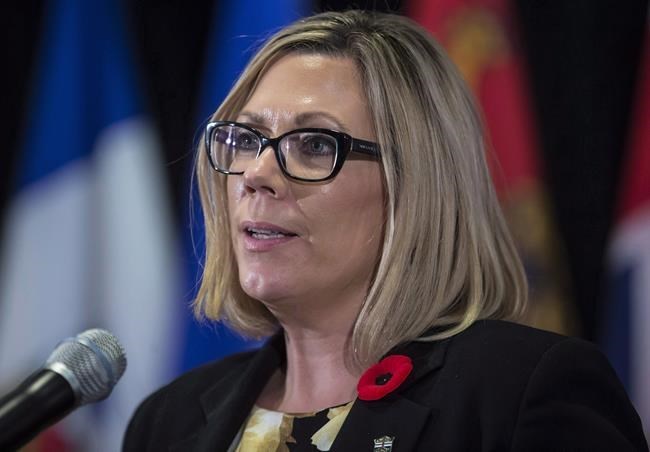
“We have reduced … childbirth apprehensions by 75 per cent since that policy was implemented,” Rochelle Squires said during question period on Tuesday.
Data obtained by The Canadian Press through freedom-of-information requests shows, on average, a baby is still seized in Manitoba nearly every day.
Birth alerts were used to notify hospitals and child-welfare agencies that a more thoroughassessment was needed before a newborn was discharged to a parent deemed high-risk.
The province stopped the practice in 2020 after a review found it discouraged pregnant women and their families from reaching out for prenatal support.
The province clarified the minister’s numbers later in the week. It said there had been a decrease in newborn apprehensions, but it was not what the minister reported. There were 101 babies up to three days oldseized in 2020-21, a 46 per cent decrease from 186 newborns the year before.
The province said the minister had been including children up to a year old who had been taken into care.
The data obtained by the news agency shows there has been a gradual decrease of apprehensions involving babies under a year old, but it doesn’t match what the minister said.
In 2019, 496 babies were apprehended. That dropped to 386 babies the following year when birth alerts ended. Last year, 339 were apprehended.
That’s a decrease of 32 per cent from the year before and after birth alerts stopped.
The minister’s office further clarified that newborn apprehensions decreased by 65 per cent since the Progressive Conservatives took office in 2016. And, it said in an email, a 75 per cent reduction is expected this year.
“Those are staggering numbers of babies being apprehended,” said Cora Morgan, First Nations family advocate for the Assembly of Manitoba Chiefs.
Morgan said ending birth alerts was the right move.
The practice has long been criticized by Indigenous leaders who say birth alerts are stacked against families. The final report of the National Inquiry into Missing and Murdered Indigenous Women and Girls said the alerts are “racist and discriminatory and are a gross violation of the rights of the child, the mother and the community.”
There are about 10,000 children in care in Manitoba and about 90 per cent are Indigenous.
Morgan said it’s clear ending birth alerts has not stopped babies from being seized. She said mothers are still telling her they are scared to get prenatal support and she hears of babies and children being apprehended regularly.
“I still believe that they are still flagging mothers.”
The province needs to do more to support women who are pregnant or who have just given birth to keep families together, Morgan said.
Squires said in the legislature that “there has been a lot of damage done stemming back decades” around child welfare. She said all levels of government must move forward together.
Bernadette Smith, a legislature member for the Opposition NDP, said babies should not be seized unless there’s a threat to the child.
“We do more harm than good by apprehending kids,” she said.
Smith agrees ending birth alerts was a good decision. But, she pointed out, it means the number of babies being taken into care should have been closer to zero.
A bill Smith introduced in 2018 amended the province’s apprehension laws so that no child could be seized solely because of poverty. Smith explained that when she was a teenager she was placed in care because her mom couldn’t afford the supports needed to help her.
With more than 300 babies seized a year, it’s clear there are other families who need help, she said.
“Moms should get the support before, during and after they have their children.”
This report by The Canadian Press was first published June 4, 2022.