

Lawsuit between Manitoba and Indigenous agencies over child welfare practice in court
Advertisement
Read this article for free:
or
Already have an account? Log in here »
To continue reading, please subscribe:

Digital Subscription
One year of digital access for only $205*
- Enjoy unlimited reading on winnipegfreepress.com
- Read the E-Edition, our digital replica newspaper
- Access News Break, our award-winning app
- Play interactive puzzles
*First annual payment billed as $205.00 + GST for one year. This annual subscription will automatically renew at $233.00 + GST every 52 weeks (10% off the regular annual price of $259.35). Offer available to new and qualified returning subscribers only. Cancel any time.
To continue reading, please subscribe:
Add Free Press access to your Brandon Sun subscription for only an additional
$1 for the first 4 weeks*
- Enjoy unlimited reading on winnipegfreepress.com
- Read the E-Edition, our digital replica newspaper
- Access News Break, our award-winning app
- Play interactive puzzles
*Your next Brandon Sun subscription payment will increase by $1.00 and you will be charged $17.95 plus GST for four weeks. After four weeks, your payment will increase to $24.95 plus GST every four weeks.
Read unlimited articles for free today:
or
Already have an account? Log in here »
Hey there, time traveller!
This article was published 26/10/2021 (1777 days ago), so information in it may no longer be current.
WINNIPEG – Lawyers for Indigenous child welfare agencies in Manitoba argued in court Tuesday that the provincial government misappropriated more than $250 million meant for vulnerable Indigenous children in care over a 13-year period.
A four-day civil trial is being held in Winnipeg this week after the agencies sued the government in 2018.
The lawsuit claims the province began clawing back money from agencies in 2006 when the NDP was in power.
The money was part of the federally run Children’s Special Allowance Act, which allows agencies to apply for a monthly payment from the federal government for children in care.
The practice of getting agencies to remit the funds continued when the Progressive Conservatives formed government in 2016.
“The children between 2006 and 2019 did not receive the (Children’s Special Allowance) … the province did receive it and it offset the amount of its costs,” said Kris Saxberg, who is part of the team representing 19 child welfare agencies.
At the time the lawsuit was filed the agencies asked the courts to order the practice stopped, which the government eventually did in 2019.
In 2006, under the former NDP government, the province started to demand that all child-welfare agencies hand over the special allowance. Those funds were redirected to general revenues.
Many agencies refused at the time, an affidavit said, so the province started to hold back funding.
Other parties speaking on the case include lawyers for a former Child and Family Services executive, who is proposing a class-action lawsuit on behalf of children in care, and lawyers for the Assembly of Manitoba Chiefs, which says the province is abusing its power by enacting a clause in legislation that would prevent children in Manitoba from suing the government.
The assembly claims the Budget Implementation and Tax Statutes Amendment Act seeks to retroactively legalize the theft of the special allowance from First Nations children.
Lawyers for the child welfare agenciessaid the case is ultimately a dispute between Indigenous peoples and the province.
“We are dealing with the rights of Indigenous people in this case. The rights of Indigenous children,” said Saxberg.
“Anything to do with child welfare, anything to do with the taking of the Children’s Special Allowance affects Indigenous people.”
Money from the funds can be used to pay for food, recreation or shelter. They are equal to the maximum federal child benefit.
The hearings are being held virtually due to the number of people participating.
Two youths who have been in care sat with Saxberg and others at their office, but they did not provide comments.
They did, however, provide statements in a pre-recorded video created by Metis Child and Family Services. The video was not submitted as evidence.
One 18-year-old woman, who has been a permanent ward of the government since she was 11, had a message for the province.
“I know that you see this case from numbers on paper, but we’re more than numbers on paper. We’re real people, real children who are just needing a little bit of help,” she said.
The Southern Chiefs’ Organization, which represents 34 First Nations in southern Manitoba, also posted a statement online.
“Children in care need extra protection — and not a provincial Treaty partner that steals from children,” the statement reads.
“The money provided by the federal government, called the Children’s Special Allowance, was to support children in care.”
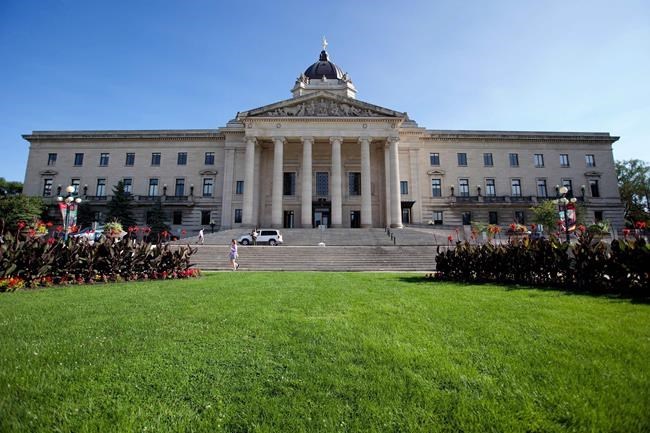
To coincide with the hearings, the First Nations Family Advocate Office is hosting an event outside the Manitoba legislature until Oct. 28 to offer people a safe space to discuss their experiences with the child welfare system.
There are 9,850 children in care in Manitoba and 91 per cent are Indigenous, according to the province’s latest annual report.
At the end of the week, a judge may be able to force the government to repay the funds.
This report by The Canadian Press was first published Oct. 26, 2021.
—
This story was produced with the financial assistance of the Facebook and Canadian Press News Fellowship.