

Hospital outbreaks kept quiet
WRHA fails to tell public when superbugs hit wards
Advertisement
Read this article for free:
or
Already have an account? Log in here »
To continue reading, please subscribe:
Digital Subscription
One year of digital access for only $1.44 a week*
- Enjoy unlimited reading on winnipegfreepress.com
- Read the E-Edition, our digital replica newspaper
- Access News Break, our award-winning app
- Play interactive puzzles
*Billed as $5.77 plus GST every four weeks. After 52 weeks, price increases to the regular rate of $19.95 plus GST every four weeks. Offer available to new and qualified returning subscribers only. Cancel any time.
To continue reading, please subscribe:
Add Free Press access to your Brandon Sun subscription for only an additional
$1 for the first 4 weeks*
- Enjoy unlimited reading on winnipegfreepress.com
- Read the E-Edition, our digital replica newspaper
- Access News Break, our award-winning app
- Play interactive puzzles
*Your next Brandon Sun subscription payment will increase by $1.00 and you will be charged $17.95 plus GST for four weeks. After four weeks, your payment will increase to $24.95 plus GST every four weeks.
Read unlimited articles for free today:
or
Already have an account? Log in here »
Hey there, time traveller!
This article was published 13/04/2009 (6403 days ago), so information in it may no longer be current.
In the last two years, outbreaks of highly contagious viruses and antibiotic-resistant superbugs in city hospitals infected more than 1,400 people with explosive diarrhea, violent stomach upset and hard-to-treat skin infections.
However, unlike other Canadian health jurisdictions, the Winnipeg Regional Health Authority doesn’t tell the public about the spread of potentially harmful illnesses that have become a fact of life in every hospital ward.
Outside experts say that’s a paternalistic, outdated approach that keeps the public in the dark about efforts to keep patients safe.
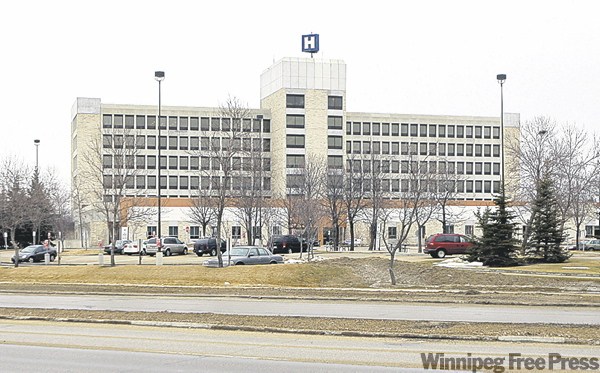
Data obtained through the Freedom of Information Act reveal that 18 outbreaks of serious illnesses were reported in local hospitals between 2006 and 2008. Documents show 803 patients and 609 hospital staff were infected with illnesses such as Norovirus, methicillin-resistant staphylococcus aureus (MRSA), C. difficile, and vancomycin-resistant enterococci (VRE).
Some of the largest outbreaks were reported at St. Boniface General Hospital, where five outbreaks of extremely contagious gastrointestinal virus erupted over a two-year period, infecting 409 patients and 609 staff. The group of viruses, which includes Norovirus, can cause severe diarrhea, vomiting and stomach cramps.
Outbreaks of drug-resistant infections were also reported at three community hospitals, including Grace Hospital, where an outbreak of C. difficile left 33 people with infectious diarrhea last year. The drug-resistant infection can lead to severe intestinal problems such as colitis and its spores can linger on anything including walls, bed rails, toilet seats and lab coats. C. difficile bacteria make their way into the body when people ingest them by touching their mouths.
It’s unknown whether anyone infected during an outbreak died. WRHA officials wanted to charge $900 to release documents about what happened to patients and staff who fell seriously ill.
By comparison, Ontario hospitals must post any outbreaks, along with their monthly infection rates, online in a searchable database.
Winnipeg infection-control officials declined to comment on the merit of making outbreak information publicly available.
Experts such as Dr. Michael Gardam think the information should be released in order to engage the public and help people understand the gaps in infection control and potential solutions.
"People want, need, and, I think, have a right to transparency — that’s why I’ll tell you our hand hygiene isn’t perfect. It’s very important that people know people are working on it, that someone is paying attention to it," said Gardam, the director of infection prevention and control at Toronto’s University Health Network, the country’s largest research hospital.
"Why wouldn’t we demand that kind of transparency in health care?"
Reducing the number of infections patients pick up is part of a national safety push.
Gastrointestinal viruses can cause dehydration and increase a patient’s length of stay in hospital, while drug-resistant superbugs such as MRSA can cause simple sores or boils to severe blood infections, pneumonia and even death.
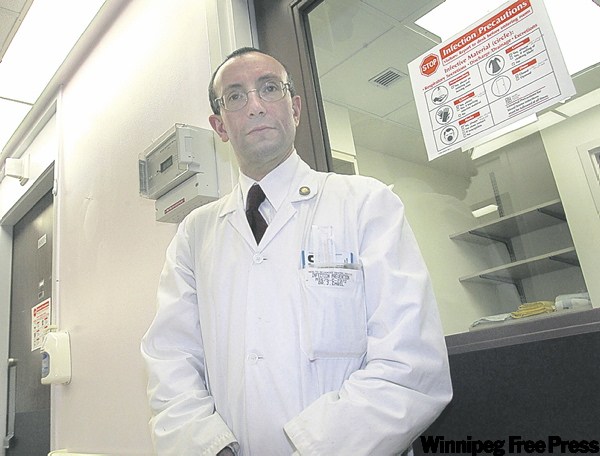
Dr. John Embil, director of infection control for the Winnipeg region, said health officials anticipate outbreaks every year, since patients who are hospitalized for complications from the illness can spread the disease. Family members can also bring infections into hospitals, he said.
Patients with symptoms of Norovirus or other drug-resistant infections are isolated to contain the germs. "For reasons that are beyond the control of routine heightened infection-control measures, these germs spread," Embil said. "This is all old news. Quite honestly, this is no news. It happens, it’s the reality of taking care of sick people."
Embil said Winnipeg’s overall hospital-infection rates are on par or lower than the national average, and that local health officials stress the importance of routine handwashing to all staff.
Phil Hassen, chief executive officer of the Edmonton-based Canadian Patient Safety Institute, said the increasing prevalence of drug-resistant infections has made hospitals a reservoir for bacteria and transmission of disease.
Part of the problem, he said, is that viruses are spread by health-care workers — studies have found less than 40 per cent of health-care workers wash their hands properly and many hospital staff don’t follow infection-control guidelines because they’re so busy. Hospital officials across Canada are brainstorming over how to fix this, and Hassen said small changes such as adding a hand-sanitizer dispenser next to a patient’s bedside could increase compliance.
Encouraging patients to ask doctors and nurses whether they’ve washed their hands is another solution. "It sounds so small, but it’s big. It’s these little things that become big things if they’re not attended to," he said. "Patients should be able to ask, with respect, if you’ve washed your hands."
jen.skerritt@freepress.mb.ca
2008
St. Boniface Hospital: Norovirus infects 34 patients and 29 staff
Grace Hospital: C. difficile outbreak infects 33 people
Victoria Hospital: VRE outbreak infects 10 people
Deer Lodge Centre: explosive gastrointestinal virus outbreak infects 8 patients
Riverview Health Centre: gastrointestinal virus infects 27 people
2007
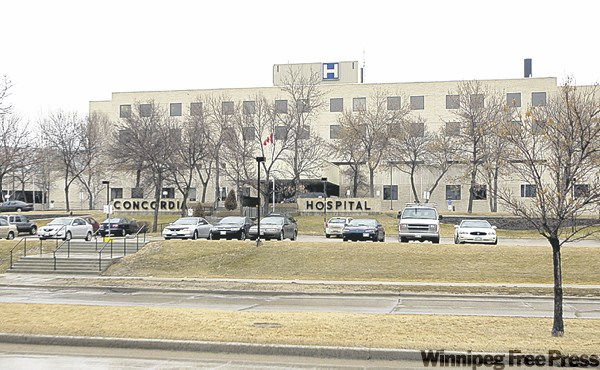
Concordia Hospital: MRSA outbreak infects 42 people; Norovirus infects 30 people
Grace Hospital: C. difficile infects 15 people
St. Boniface Hospital: Norovirus infects 20 patients and 29 staff; a second outbreak of Norovirus infects 24 patients and 14 staff
Victoria Hospital: explosive gastrointestinal virus infects 14 people
Riverview Health Centre: gastrointestinal virus infects 16 people
Deer Lodge Centre: explosive gastrointestinal virus infects 22 people

2006
Concordia Hospital: Norovirus infects 82 people

Riverview Health Centre: Norovirus infects 29 people
St. Boniface Hospital: explosive gastrointestinal virus infects 185 patients and 275 staff; a second outbreak of the virus infects 146 patients and 262 staff
Victoria Hospital: explosive gastrointestinal virus infects 66 people
— Source: Winnipeg Regional Health Authority
Related Articles
What are other centres doing?
Advertisement Advertise With Us
Advertisement Advertise With Us