

Neepawa enjoys the HyLife
Company's arrival in '08 sparks town's growth spurt
Advertisement
Read this article for free:
or
Already have an account? Log in here »
To continue reading, please subscribe:
Digital Subscription
One year of digital access for only $75*
- Enjoy unlimited reading on winnipegfreepress.com
- Read the E-Edition, our digital replica newspaper
- Access News Break, our award-winning app
- Play interactive puzzles
*Billed as $5.77 plus GST every four weeks. After 52 weeks, price increases to the regular rate of $19.95 plus GST every four weeks. Offer available to new and qualified returning subscribers only. Cancel any time.
Monthly Digital Subscription
$4.99/week*
- Enjoy unlimited reading on winnipegfreepress.com
- Read the E-Edition, our digital replica newspaper
- Access News Break, our award-winning app
- Play interactive puzzles
*Billed as $19.95 plus GST every four weeks. Cancel any time.
To continue reading, please subscribe:
Add Free Press access to your Brandon Sun subscription for only an additional
$1 for the first 4 weeks*
- Enjoy unlimited reading on winnipegfreepress.com
- Read the E-Edition, our digital replica newspaper
- Access News Break, our award-winning app
- Play interactive puzzles
*Your next Brandon Sun subscription payment will increase by $1.00 and you will be charged $17.95 plus GST for four weeks. After four weeks, your payment will increase to $24.95 plus GST every four weeks.
Read unlimited articles for free today:
or
Already have an account? Log in here »
Hey there, time traveller!
This article was published 23/04/2011 (5507 days ago), so information in it may no longer be current.
NEEPAWA — Stores opening, developers descending, immigrants flocking, merchants smiling, schools bursting, church pews refilling — Neepawa is living the HyLife, thanks to Winnipeg.
And no smell from all those hogs.
When Winnipeggers rejected a new hog plant proposed by Olymel of Quebec, and locally owned Hytek, now called HyLife Foods, HyLife took its money elsewhere.
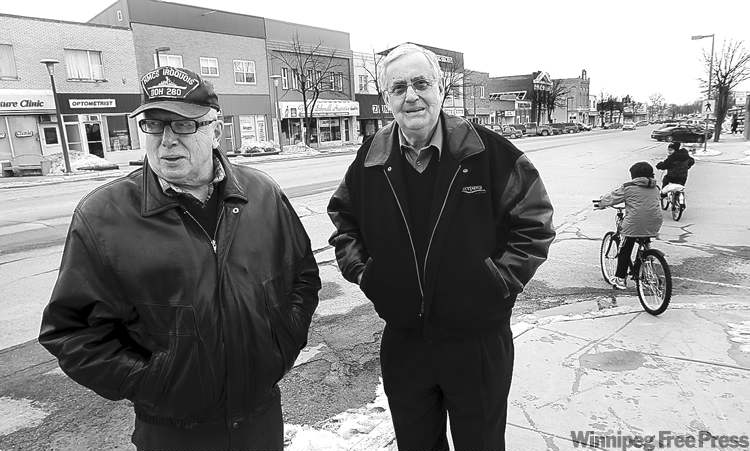
It purchased an existing hog plant in Neepawa, expanded production and created hundreds of new jobs. Scores of immigrants from Korea, Ukraine and especially the Philippines arrived to fill those jobs, launching boom times in the town made famous as the birthplace (and often subject matter) of the late author Margaret Laurence.
Neepawa’s population has already surpassed 4,000 residents, from 3,200 three years ago — a 25 per cent increase. The town expects the population to reach 5,000 to 6,000 within five years.
But for a small town that’s never had to deal with much change, it’s a bit like Toyota’s sticking gas pedals. The town had been coasting along at about the same speed for the past 100 years, when suddenly the accelerator stuck to the floor and now officials are trying to steer the crazy thing. Immigrants are literally having to sleep in cupboards while the community scrambles to find housing.
“It’s putting a pressure that the town has never had to face before,” said Rick Donaldson, economic development officer for the area.
Most people will recall back in 2005 when a proposal to build a $200-million hog-kill plant in Winnipeg’s St. Boniface Industrial Park became mired in controversy. The plant was to create 1,100 jobs. It was backed by two companies with solid track records of working with communities in Olymel and HyLife. HyLife was recently named one of the 50 best managed companies in the country for the sixth straight year.
But the project couldn’t overcome public fears about manure smells, extra traffic and potential environmental harm. Ken Waddell, who was a long-shot candidate for the provincial Progressive Conservatives leadership in 2006, and who oversees family-owned newspaper Neepawa Banner, recalled a conversation with HyLife executive Guy Baudry in the midst of the storm.
“I phoned Guy and said, ‘I don’t think you can win this. You need to go to the country where you would be appreciated,’ ” said Waddell. But Waddell never considered that HyLife might set up in Neepawa because the town already had the Springhill hog-processing plant, owned by 16 Hutterite colonies.
No one did. When protests killed any chance for the hog plant to be built in Winnipeg, HyLife scouted several rural Manitoba communities looking for an alternative site. Neepawa wasn’t even on the radar. Quebec’s Olymel had tried to buy the Springhill plant a few years earlier, only to be firmly rebuffed.
But the hog-processing industry is a small community. As the story goes, someone at Hytek joked to someone at Springhill that maybe Hytek should buy Springhill. The Springhill official didn’t laugh. The hog plant needed to expand and the Hutterite colonies weren’t thrilled about putting up more money.
Negotiations moved fairly quickly. Hytek bought the plant — still relatively new, having opened in 1985 — and sunk $40 million into expansion and upgrades. It upgraded the sewage plant to meet and exceed environmental regulations. Even so, Hytek expected protests like there were in Winnipeg.
“They were amazed there was no public outcry,” said Bob Durnston, Neepawa mayor at the time.
HyLife is a unique company in that it was started by two farm families out of southeastern Manitoba. In 1994, three Vielfaure brothers (Paul, Denis and Claude) and Don Janzen pooled their resources and launched the company out of La Broquerie.
Successful at farming, and knowing the problems farmers face, the families built their company from the ground up, primarily focused on Manitoba. “It was a natural extension from owning our farms to processing our pigs,” Baudry, the Neepawa plant’s general manager, said.
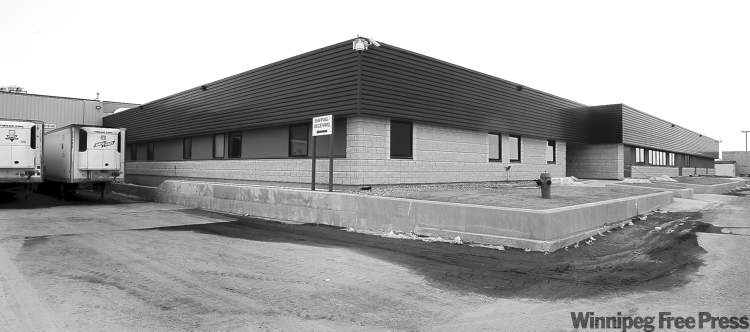
After purchasing Springhill in 2008, HyLife increased the plant’s capacity to 940,000 hogs a year from 300,000. It will be capable of processing 1.4 million hogs by next spring, when a further $15-million expansion is complete.
That has swelled its workforce. The Springhill plant has gone from about 300 employees when HyLife bought it to 550 today. By the summer of 2012, HyLife expects the plant to have about 800 employees. Most of its immigrant workers come from the Philippines.
HyLife’s move into Neepawa triggered a chain reaction. Safeway invested $1 million into its store. A Tim Hortons/Esso opened up and a Subway is under construction. Two Asian food stores are starting up. A bank branch is moving in. People are looking to move to Neepawa, and some people who grew up in Neepawa have moved back. And these are still early days.
There are regular lineups at the banks, the grocery checkouts, and the Western Union cash machine, from which many immigrants wire money home until their families are able to join them in Canada.
Recently, 15 kg bags of rice were featured at the local Shop Easy. “You probably wouldn’t have seen that five years ago,” Waddell said.
Meanwhile, housing prices have soared. A modest bungalow that sold for $50,000 to $70,000 three years ago, now goes for $100,000 to $150,000, said Marian Hijkoop, settlement services co-ordinator for the town.
A decision is expected soon to build a state-of-the-art hospital midway between Minnedosa and Neepawa, the way the Boundary Trails Hospital was built between Winkler and Morden. Neepawa and Minnedosa each have aging hospitals, but combined — and with Neepawa’s population growth — they could have better equipment and attract more doctors.
Some people aren’t enthused about all of the change, said Donaldson, economic development officer, but the growth helps the community in many ways, such as its ability to attract better medical care.
The hog plant has also been good for collection plates. Many of the Koreans are Presbyterians and helped fill pews in that faith’s church. The local Presbyterian church even has one of the Koreans, Jeanie Lee, as its pastor now. The Filipinos mostly attend Catholic services. “They have revitalized many churches and some of the churches were ready to close up,” said one resident. The same goes for schools.
As for odor, you might call it the smell of money, if you could smell it. Odor has simply not been an issue here. The plant is within the town’s borders, but several kilometres away from housing. There are always smells associated with trucking hogs to the plant, but that hasn’t been an issue. (There are also different smells contained in St. Boniface Industrial Park, for anyone keeping score.)

In the three days the Free Press was in the area, there was no smell in the town or at the plant. The biggest nuisance odor in Neepawa, people say, is when the chicken barns to the west of town are cleaned.
bill.redekop@freepress.mb.ca
Living the HyLife
Today: Boom times
Next: A sea of new faces