

Par-baked for success
FP Innovators: Questions & answers
Advertisement
Read this article for free:
or
Already have an account? Log in here »
To continue reading, please subscribe:
Digital Subscription
One year of digital access for only $1.44 a week*
- Enjoy unlimited reading on winnipegfreepress.com
- Read the E-Edition, our digital replica newspaper
- Access News Break, our award-winning app
- Play interactive puzzles
*Billed as $5.77 plus GST every four weeks. After 52 weeks, price increases to the regular rate of $19.95 plus GST every four weeks. Offer available to new and qualified returning subscribers only. Cancel any time.
To continue reading, please subscribe:
Add Free Press access to your Brandon Sun subscription for only an additional
$1 for the first 4 weeks*
- Enjoy unlimited reading on winnipegfreepress.com
- Read the E-Edition, our digital replica newspaper
- Access News Break, our award-winning app
- Play interactive puzzles
*Your next Brandon Sun subscription payment will increase by $1.00 and you will be charged $17.95 plus GST for four weeks. After four weeks, your payment will increase to $24.95 plus GST every four weeks.
Read unlimited articles for free today:
or
Already have an account? Log in here »
Hey there, time traveller!
This article was published 27/09/2011 (5506 days ago), so information in it may no longer be current.
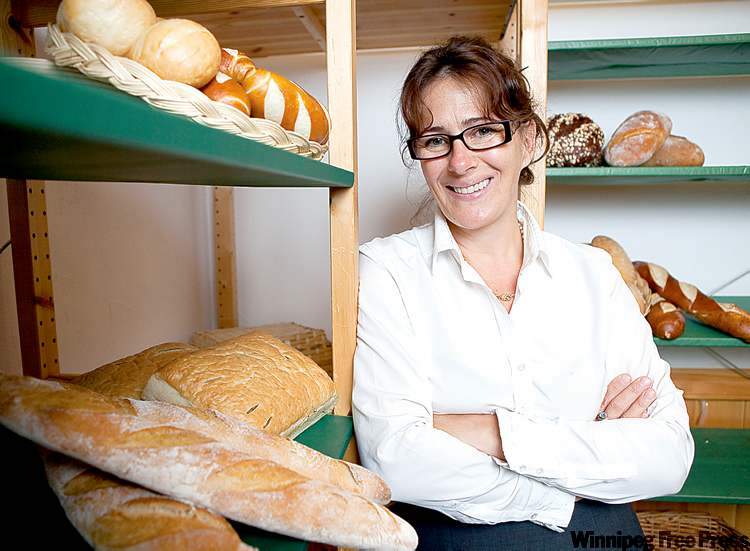
SABINE Veit, whose family has been in the business of bread since 1927 in Germany, started her artisan-style bakery in Woodbridge, Ont., in 1987. Now on the verge of its 25th anniversary, Backerhaus Veit Ltd. ships about 60 per cent of its products to customers in the United States, a mix of retail stores and restaurants. Its current success was built on Veit’s decision in 1993 to implement a par-baking system, giving her breads the longer shelf life demanded in North America as they are shipped to market frozen. The move paid off as customers embraced the products. The following is an edited transcript of Veit’s conversation with the Financial Post’s Christine Dobby.
Q: You started out as a fresh bakery but moved to a system of par-baking and freezing your bread. What prompted the change?
A: In the food business, the biggest innovation for us was changing people.
We came along as people became aware of better and different wines, olive oils, cheeses, and interest in bread was developing at about the same time.
We started to adapt along with the consumer’s taste and the perception of European food as more flavourful and interesting in appearance and taste.
I started the business in 1987 and we essentially evolved from a fresh business. I had to learn the hard way that retail — particularly the bakery café concept — wasn’t going to work the way I expected it to, the way it works in Europe. I tried wholesale first in a fresh capacity with trucks that went out early morning and dropped off boxes and bags of bread to delis and retailers and food service establishments. Ultimately, though, I realized that to survive and grow the business, I needed a product with shelf life.
And this is where frozen came in.
Q: Why did you choose a par-baking system in particular?
A: We built the bakery we’re in today in 1993, and around that time, retailers were just starting to realize that there was a lot of waste and a lot of inconsistencies. They were looking around for a different solution.
The solution at the time in Europe was pre-proofed frozen, which is a frozen piece of dough that’s ready to be baked. But that wouldn’t work here because it doesn’t have a long shelf life, so the solution was par-baked frozen.
Almost mid-construction, I realized I needed to upgrade the equipment for par-baked versus pre-proofed. I had to put in bigger compressors and more ovens and so on. It’s a high-capital business and we spend hundreds of thousands if not millions every year on upgrading equipment.
Q: Was it difficult to sell frozen bread products to North American customers?
A: We went cold turkey from fresh to frozen, and I had to learn very quickly how to sell frozen versus fresh products, particularly to clients in the United States. That was hard because if you sell someone a fresh product, you can show it on Tuesday, and you might have an order on Friday. But on the frozen cycle, it could take up to 18 months between when you show the product and when the trucks start rolling. It was hard for us at times to keep the cash flow going and to understand the buying cycle and all the documentation and all the positioning and all the logistics that were needed. But we persevered and ended up expanding again about five years ago, adding another 20,000 square feet of warehouse. Throughout the time, we have continuously sold only frozen products.
Q: How have you maintained momentum and dealt with challenges over the years?

A: The dollar, exchange rate, commodity prices, the lack of skilled labour — we deal with all of that continuously. But bread is something that everyone has a relationship to, no matter where you come from. Bread is the stuff of life. You bake some fresh bread and it makes you feel good, it tastes good, everybody agrees on that. That’s always kept us firing. I’ve always found that very inspiring, and to this day, I love talking with a customer about what kind of breads they want to see. As a company, we never really lost that spark. We’re good at manufacturing but we realized that we needed to do a better job at marketing ourselves and telling the story of our product versus simply making a great product. We put a push on marketing about a year ago and have had good feedback about making more information available.
Along the way we did away with everything sweet. The sweetest thing we make today is a walnut raisin bread. It’s all about bread and rolls. I think people are looking for food with integrity, less-processed food. You’ve just got to remember what you’re good at and stick with it. This can be hard, because it’s easy to diversify and it’s easy to lose sight of the business you’re actually in.
I think we did a good job remembering that and delivering an honest product.
— Financial Post
cdobby@nationalpost.com