

It’s ‘the end of global growth’
Economies face dilemma, expert says
Advertisement
Read this article for free:
or
Already have an account? Log in here »
To continue reading, please subscribe:

Digital Subscription
One year of digital access for only $205*
- Enjoy unlimited reading on winnipegfreepress.com
- Read the E-Edition, our digital replica newspaper
- Access News Break, our award-winning app
- Play interactive puzzles
*First annual payment billed as $205.00 + GST for one year. This annual subscription will automatically renew at $233.00 + GST every 52 weeks (10% off the regular annual price of $259.35). Offer available to new and qualified returning subscribers only. Cancel any time.
To continue reading, please subscribe:
Add Free Press access to your Brandon Sun subscription for only an additional
$1 for the first 4 weeks*
- Enjoy unlimited reading on winnipegfreepress.com
- Read the E-Edition, our digital replica newspaper
- Access News Break, our award-winning app
- Play interactive puzzles
*Your next Brandon Sun subscription payment will increase by $1.00 and you will be charged $17.95 plus GST for four weeks. After four weeks, your payment will increase to $24.95 plus GST every four weeks.
Read unlimited articles for free today:
or
Already have an account? Log in here »
Hey there, time traveller!
This article was published 04/05/2012 (5211 days ago), so information in it may no longer be current.
SATYAJIT Das, internationally respected commentator and author on the global financial industry, does not do cheery.
He ended a conversation Thursday on the state of the world’s economy by quoting a poet, saying, "Endless growth, mindless growth is the ideology of a cancer cell."
Nice.
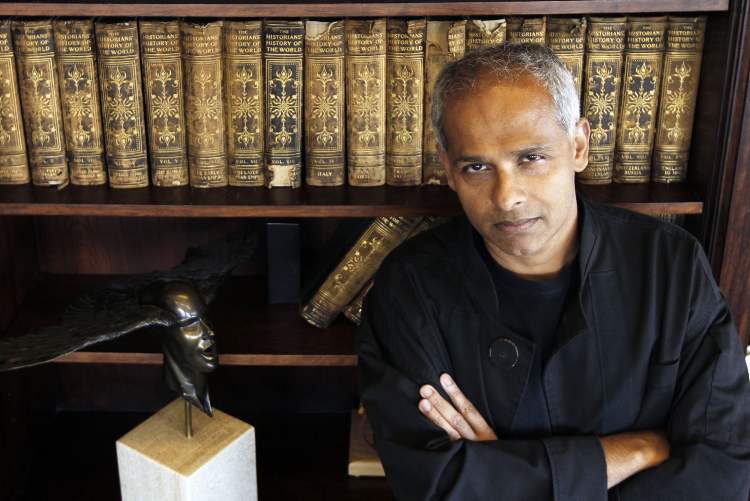
Das, most recently the author of a book called Extreme Money: Masters of the Universe and the Cult of Risk, was in Winnipeg for a presentation this week.
He has been one of those financial insiders who understands the booby traps contained in the trillions of dollars of structured debt instruments that blew up when the sub-prime mortgages started to go bad.
Among other things, he has written standard reference books on derivatives and risk management.
But according to Das, now an independent consultant and author based in Australia and also an occasional Free Press columnist, it doesn’t matter what form the debt takes.
brightcove.createExperiences();
The real problem is that excessive debt has fuelled growth around the world since the early 1980s, and it’s unsustainable
"We are seeing the end of global growth," Das said. "We are in for a period of low growth or no growth."
The most obvious evidence of it is in Greece, where austerity measures have been imposed in an attempt to restore some sense of fiscal prudence in a country that had famously overextended itself for a long time.
Das, who has had a long-standing relationship with Winnipeg’s Jory Capital, said that in the past, when a country’s debt burden became unmanageable, the debt would be written off, the national currency devalued and the country’s economy, in effect, forced to start over.
But he said that since the creation of the euro currency, there are too many other countries’ finances at stake to write off one nation’s debt.
As for the eurozone, the problem is a group of countries shares the same currency.
"When everyone has the debt, it is very difficult (for it be forgiven)," Das said.
"The only way to grow again is by wiping out the debt. But if you do that, you’ll wipe out enormous wealth, which means you can’t consume or invest.
"It’s a catch-22. It’s a problem that should have been raised 30 years ago. Now it’s too late."
Das said the current austerity program in Greece has driven living standards there back 10 years.
He said Greek hospitals lack basics such as insulin, pensions have been cut 30 to 40 per cent and everyone is suffering a devastating drop in living standards.
With black humour, he said it’s "just a stop on the way to the Dark Ages. There is no way around it."
While some of us thought continuing growth in China helped propel commodity-rich countries such as Canada out of the recession, Das noted the Chinese, too, have succumbed to debt addiction.
He said when the United States and European economies went into recession in 2009, China found its global customers had stopped placing orders and millions were left unemployed in the industrial heartland north of Hong Kong.
Since then, China has pumped debt-financed infrastructure spending totalling 40 per cent of its GDP into the economy.
"China prizes social stability," Das said. "The Chinese Communist party knows that the only way they can keep control is to have society stable by improving living standards and increasing prosperity. It’s the only way they can stay in power. And they panicked."
Even though most observers would say things are not going nearly as badly in Canada as elsewhere in the world, Das is not particularly impressed.
"Canada has some of the problems of a smaller open economy like Australia," he said.
"At the end of the day, it’s like a cork that bounces on the ocean, and when the great swells come, driven by the great powers, it’s difficult for them to say, ‘I will not go with the tide.’ "
martin.cash@freepress.mb.ca
The bad news

The mess we’re in, according to Satyajit Das:
— Global growth built on excessive debt is coming to an end.
— The world has mispriced environmental degradation hopelessly for 200 to 300 years.
— We have not properly priced non-renewable resources such as oil and water.
Related Articles
REPLAY: Cash talks with Satyajit Das at News Café
Advertisement Advertise With Us
Advertisement Advertise With Us