

Boeing banks on future with massive plant expansion in Winnipeg
Advertisement
Read this article for free:
or
Already have an account? Log in here »
To continue reading, please subscribe:

Digital Subscription
One year of digital access for only $205*
- Enjoy unlimited reading on winnipegfreepress.com
- Read the E-Edition, our digital replica newspaper
- Access News Break, our award-winning app
- Play interactive puzzles
*First annual payment billed as $205.00 + GST for one year. This annual subscription will automatically renew at $233.00 + GST every 52 weeks (10% off the regular annual price of $259.35). Offer available to new and qualified returning subscribers only. Cancel any time.
To continue reading, please subscribe:
Add Free Press access to your Brandon Sun subscription for only an additional
$1 for the first 4 weeks*
- Enjoy unlimited reading on winnipegfreepress.com
- Read the E-Edition, our digital replica newspaper
- Access News Break, our award-winning app
- Play interactive puzzles
*Your next Brandon Sun subscription payment will increase by $1.00 and you will be charged $17.95 plus GST for four weeks. After four weeks, your payment will increase to $24.95 plus GST every four weeks.
Read unlimited articles for free today:
or
Already have an account? Log in here »
Hey there, time traveller!
This article was published 24/04/2013 (4840 days ago), so information in it may no longer be current.
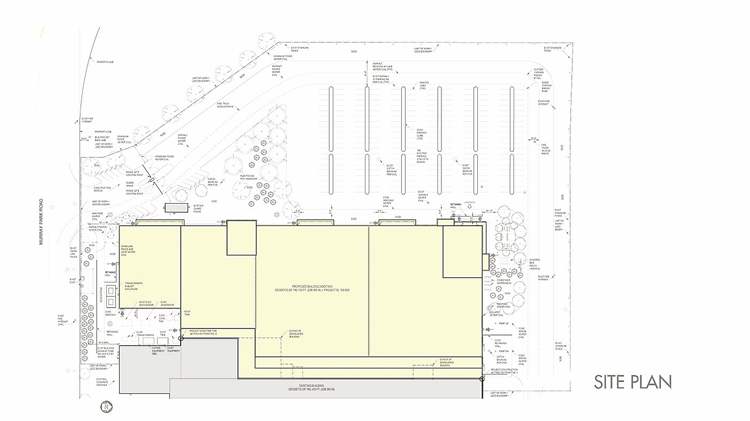
Out of the 12 plants in three countries in the Boeing fabrication division, the aircraft manufacturer chose Winnipeg as the site to build complex parts for its newest 737 model and the place to invest in a 150,000-square-foot expansion.
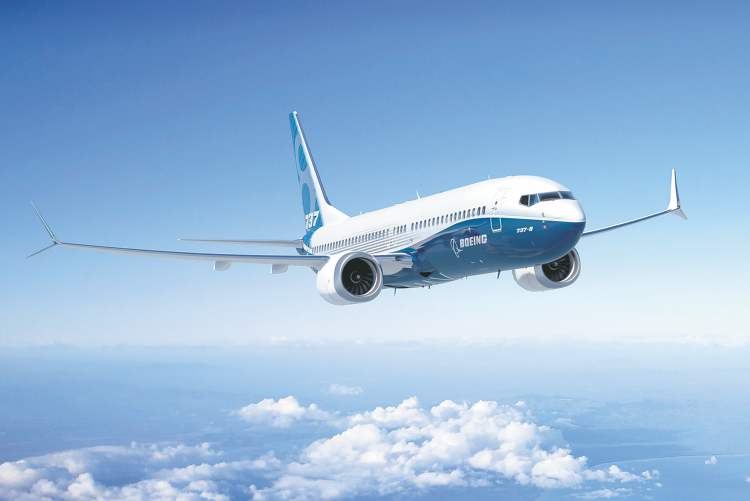
The new production space will primarily be used to build a particularly tricky one-piece composite acoustic inner barrel on the engine inlet for the global aerospace company’s new Boeing 737 MAX. It’s the first time Boeing has built this particular part in-house as opposed to outsourcing production.
The Winnipeg plant, originally built in the early 1970s, is the largest composites plant in the country and one of the largest in North America. This is its first expansion since the mid-1980s. Company officials would not disclose the cost of the expansion.
Since the Winnipeg plant won significant contracts to build parts for the 787 Dreamliner a decade ago, it has increasingly become Boeing’s go-to location to build some of its toughest composite-parts packages. As more complex parts packages are introduced, less sophisticated ones are moved to other sites.
For the last four years in a row, Winnipeg won an in-house Boeing award for efficiency, beating out close to 50 other sites.
Kevin Bartelson, Boeing Canada Winnipeg’s general manager, said, “We always compete for the work we get here in Winnipeg and frankly, we compete very well.”
Although the addition will mean 22 per cent more space at its Murray Park Road plant, it will not mean any additions to the current workforce of 1,600, which is about as large as it has ever been. The expanded footprint will allow the company to fold in work currently being done at two leased facilities, one on Redwood Avenue the other on Saskatchewan Avenue.
Company officials said the plan is for the Winnipeg workforce to stay at approximately the same size over the next 10 years.
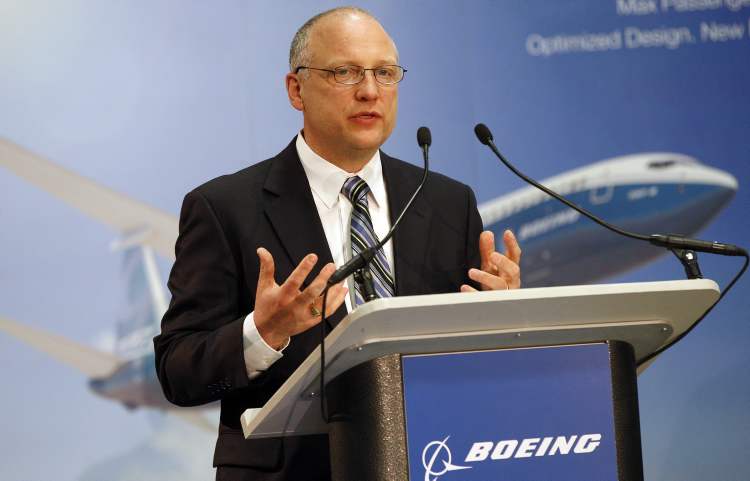
Ross Bogue, Boeing’s vice-president in charge of its fabrication division, said the company is migrating newer and more complex work to the Winnipeg plant, such as the tricky acoustic inner barrel that will help make the new 737 model 40 per cent quieter than it is today.
“This starts to position them (Winnipeg) to do more complex, higher-technology work inside our company,” said Bogue. “We are going to be doing something around the 777 product here sooner rather than later.”
Some years ago, Boeing divested some of its own production facilities in favour of outsourcing some work, but the Winnipeg operations have grown and taken on a more strategic role in the company.
“This place has endured,” Bogue said. “Our plan is that it will continue to endure. And it’s days like today that make that future real.”
It is also turning into the plant with one of the company’s most reliable and resilient workforces.
Earlier this year, in anticipation of the new parts package and plant expansion, the company’s 1,150 unionized workers in Winnipeg agreed to a four-year extension to their collective agreement, even though there was well over a year left on the existing pact.
Ken Lewenza, national president of the Canadian Auto Workers union, who participated in the Boeing announcement on Tuesday, said, “This is how business works today.”
Boeing officials spoke as enthusiastically about its workers in Winnipeg as they did about the actual excellence of the Boeing technology.
“The workforce here is eye-watering… such a great work ethic,” said Bogue. “Having a combination of academia, governments, labour and Boeing company officials on the same podium at the same time as we did today, I think is the economic model going forward.
The CAW rarely renegotiates contracts that still have time left on them. The extension to the Winnipeg contract through 2018 gave workers a $5,000 signing bonus and wage increases of about 10 per cent through the life of the contract.
Jerry Dias, the CAW’s assistant to the national president, said “Renegotiating contracts does not happen much. The reality is we do it if there is a damn good reason to do it and this is as good it gets.”
He said Boeing wanted to put the work in Winnipeg but they didn’t want a collective agreement to expire in the middle of a launch.
Lewenza said, “Boeing had options. It’s large enough and powerful enough to do what they want. The reality is we earned it (the new works.)”

Ken Webb, executive director of the Manitoba Aerospace Association, said Boeing was making a strategic long-term commitment to Winnipeg.
“They are building parts for the next generation of the world’s most popular commercial aircraft,” Webb said.
“That means they’ll be building parts for the next 20- to 30-year period as opposed to building parts for yesterday’s models.”
martin.cash@freepress.mb.ca
History
Updated on Wednesday, April 24, 2013 6:51 AM CDT: replaces photo, adds fact box