

Lobster shell disease making its way north
Illness turning up more often off coast of Maine
Advertisement
Read this article for free:
or
Already have an account? Log in here »
To continue reading, please subscribe:
Monthly Digital Subscription
$1 per week for 24 weeks*
- Enjoy unlimited reading on winnipegfreepress.com
- Read the E-Edition, our digital replica newspaper
- Access News Break, our award-winning app
- Play interactive puzzles
*Billed as $4.00 plus GST every four weeks. After 24 weeks, price increases to the regular rate of $19.95 plus GST every four weeks. Offer available to new and qualified returning subscribers only. Cancel any time.
Monthly Digital Subscription
$4.99/week*
- Enjoy unlimited reading on winnipegfreepress.com
- Read the E-Edition, our digital replica newspaper
- Access News Break, our award-winning app
- Play interactive puzzles
*Billed as $19.95 plus GST every four weeks. Cancel any time.
To continue reading, please subscribe:
Add Free Press access to your Brandon Sun subscription for only an additional
$1 for the first 4 weeks*
*Your next subscription payment will increase by $1.00 and you will be charged $16.99 plus GST for four weeks. After four weeks, your payment will increase to $23.99 plus GST every four weeks.
Read unlimited articles for free today:
or
Already have an account? Log in here »
Hey there, time traveller!
This article was published 12/08/2013 (4639 days ago), so information in it may no longer be current.
PORTLAND, Maine — A shell disease that has plagued the southern New England lobster industry for years by making lobsters unsightly and in some cases unmarketable appears to be creeping northward to the lobster-rich grounds off the coast of Maine.
The number of lobsters suffering from shell disease remains tiny in Maine — only three out of every 1,000 lobsters sampled last year had the disease. But scientists and lobstermen are concerned because the prevalence grew fivefold from 2010 to 2012.
The disease, which is not harmful to humans, first became noticeable in southern New England waters in the 1990s. About one in every three or four lobsters caught in waters off southern Massachusetts and Rhode Island in recent years has been diseased.
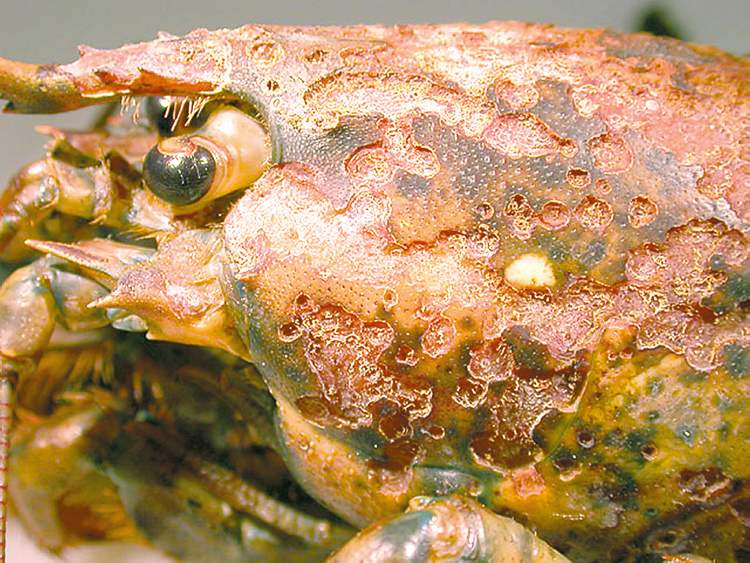
Carl Wilson, the state lobster biologist with the Department of Marine Resources, said people should be concerned — but not alarmed — by the numbers. People who look only at the percentage increase could get spooked and say, “Oh my God, that’s a huge increase,” he said.
“But it’s not, considering all the sampling we have and all the caveats of our sampling design,” Wilson said. “But it’s something we are watching.”
Lobster is one of the most important fisheries in Maine and New England, valued at more than $400 million to fishermen and hundreds of millions more to coastal communities.
The fishery in southern New England waters has already been hurt by the so-called epizootic shell disease, which is caused by bacteria that eat away at a lobster’s shell, leaving behind ugly lesions. Diseased lobsters can still be processed but are unmarketable in the more valuable live market. The disease stresses lobsters and can sometimes kill them but doesn’t taint their meat.
When biologists first began sampling for the disease in Rhode Island, the prevalence was small: less than one per cent in 1996 and four per cent in 1997. But in 1998, the percentage jumped to nearly 20 per cent; since then, it’s ranged from 18 to 34 per cent a year.
A similar story has played out in Massachusetts south of Cape Cod, where an average of 22 per cent of sampled lobsters have been diseased from 2000 to 2011. The rate peaked at 38 per cent in 2011.

Shell disease could be linked to a number of pressures such as rising water temperatures, pollution and low oxygen levels in the water, said Kathy Castro, a fisheries biologist at the University of Rhode Island Fisheries Center. Young lobsters can molt out of the disease when they shed their shells and grow new ones; egg-bearing females have the highest prevalence because they don’t molt while they’re carrying eggs. Lobsters can die when the infection gets particularly bad and prevents them from properly molting.
Shell disease is much less prevalent in the colder waters of the Gulf of Maine, which stretches from Cape Cod to Nova Scotia, than it is in southern New England. But it’s still around.
In Massachusetts waters north of Cape Cod, about three per cent of sampled lobsters have had the disease since 2000, with no upward trend.
— The Associated Press