

What’s with your attitude?
Bringing the right mindset to the workplace
Advertisement
Read this article for free:
or
Already have an account? Log in here »
To continue reading, please subscribe:
Monthly Digital Subscription
$1 per week for 24 weeks*
- Enjoy unlimited reading on winnipegfreepress.com
- Read the E-Edition, our digital replica newspaper
- Access News Break, our award-winning app
- Play interactive puzzles
*Billed as $4.00 plus GST every four weeks. After 24 weeks, price increases to the regular rate of $19.95 plus GST every four weeks. Offer available to new and qualified returning subscribers only. Cancel any time.
Monthly Digital Subscription
$4.99/week*
- Enjoy unlimited reading on winnipegfreepress.com
- Read the E-Edition, our digital replica newspaper
- Access News Break, our award-winning app
- Play interactive puzzles
*Billed as $19.95 plus GST every four weeks. Cancel any time.
To continue reading, please subscribe:
Add Free Press access to your Brandon Sun subscription for only an additional
$1 for the first 4 weeks*
*Your next subscription payment will increase by $1.00 and you will be charged $16.99 plus GST for four weeks. After four weeks, your payment will increase to $23.99 plus GST every four weeks.
Read unlimited articles for free today:
or
Already have an account? Log in here »
Hey there, time traveller!
This article was published 23/08/2014 (4258 days ago), so information in it may no longer be current.
What’s your opinion about people who are always late versus early for work? How do you value a college diploma versus a university degree? Why do you so dislike carrots versus broccoli as a favourite food? And why did you go ahead and purchase a white coloured Nissan car versus a blue coloured car from a competitor? Believe it or not, your answers will be influenced by attitude. In fact, all of your beliefs and your behaviour reflects your attitude. Yet, most of us don’t think very much about what exactly attitude is and how we acquire it. Nor do we think about how our attitude influences how we think, believe and act. But attitude does indeed influence us and it is visible for all to see.
So, what exactly is attitude? Attitude is all about how we evaluate people, issues, objects and events in our life. It determines how we act towards any of these elements. Attitude incorporates emotional, cognitive and behavioural components that lead us to hold a positive, negative, uncertain or neutral view of something. As well, our attitude can also be conscious or unconscious. When we are conscious of our attitude, we absolutely know how it impacts our beliefs and behaviour. On the other hand, some people are not consciously aware of their attitude nor are they aware of how their attitude impacts their beliefs and behaviour, nor how others perceive them. Unfortunately, this lack of self-awareness can lead to behavioural issues in the workplace, which in turn will impact on personal destiny, education and career success.
Yet, just how do we develop our attitude? Psychologists will tell you that attitude is not genetic, but rather it’s “learned.” And this learning starts within the family environment, followed by the influence of our schools and then society. It’s learned by copying people who are important to us, be it parents, siblings, teachers, religious leaders, bosses or coworkers. In other situations, especially with social issues such as smoking, an individual might try out a behaviour and if it was rewarded, the behaviour might continue. Attitude can also be influenced by persuasive communication and/or some sort of dramatic demonstration.
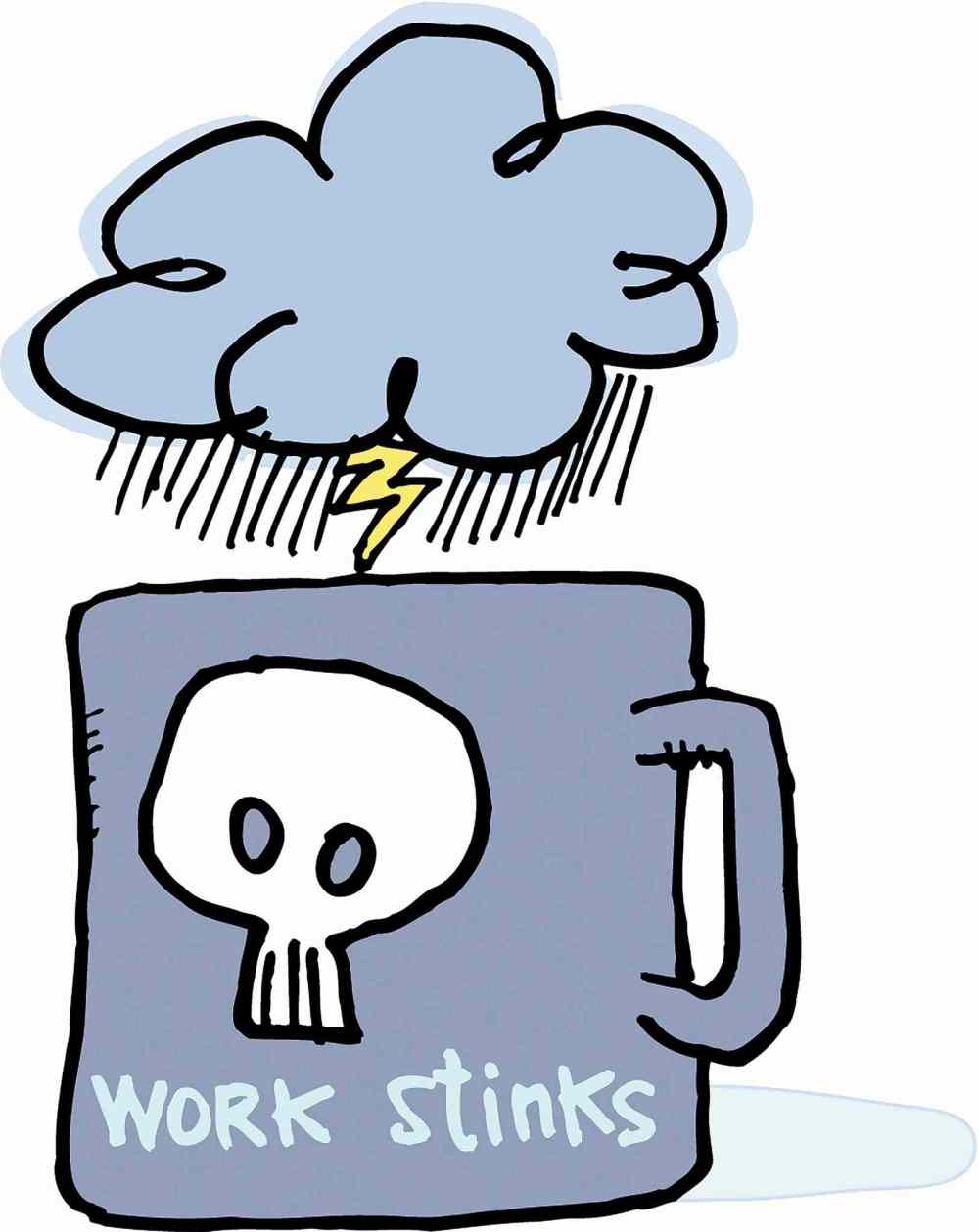
Just as we strive to assist students to overcome a negative attitude in school, managers can also assist individuals to overcome negative attitudes in the workplace. The following strategies for change are deemed to be effective.
A learning approach — changing a negative attitude and adopting a new one can be successfully achieved through learning. The strategy is to help the individual identify the “disconnect” between his/her behaviour and a stated attitude. A good example is an individual who speaks highly about environmentalism, yet drives a gas-guzzler car. When the discrepancy is pointed out, the individual will feel uncomfortable and will strive to reduce the discomfort, hopefully by changing their behaviour.
Persuasive communication — with this approach, someone can present new information that helps an individual to agree with the observations and/or the conclusions. Following this, point out the contradictions with the observed behaviour and the new information to which they have agreed. When the individual recognizes the “disconnect,” they will be motivated to change their attitude and behaviour.
Reward and reinforcement — as with young students, adults can be encouraged to adopt new attitudes through reward and reinforcement. Take time to identify a concrete reinforcement that would specifically support the desired attitude.
Social approach to change — invite speakers into the workplace to provide background and information that support the new desired attitude. Actively engage participants so that learning is experiential.
Select a role model — role modelling is a powerful social process to changing attitude and behaviour because individuals will want to emulate the behaviour of the role model.
Consensus building — changing attitudes through group process is also effective. Arrange for a group of individuals to help them understand the behavioural issues and then create a vision and a goal to change behaviour and attitude.
While managers need to play a key role in helping employees change negative attitudes and behaviours, the bigger responsibility lies with the individual. The following are suggestions for taking personal responsibility and being accountable for your behaviour.
Act and speak with purpose — before you make any comment and/or take any action, determine how this behaviour will serve your greater goal as well as how it will be perceived by others.
Choose the right company — in a global world, this means being comfortable in as many group settings as possible. Reach out and befriend new people as a means to explore, understand and accept different cultures, beliefs and values. Be open-minded.
Question yourself — each of us has cognitive blind spots that make it hard to self-evaluate. However, be introspective and ask how your behaviour or attitude has contributed to a situation you are concerned about.
Take ownership for your mistakes — denying a mistake is nothing but unproductive behaviour. Learn from mistakes instead of making excuses.
There is no doubt that our attitude influences how we think, believe and act and it impacts the perception others have of us. In fact, as John N. Mitchell said, “Our attitude toward life determines life’s attitude towards us.”

Source: Shaping Beliefs and Attitudes, J. Howard Johnston, PhD, University of South Florida.
Barbara J. Bowes, FCHRP, CMC, CCP, M.Ed., is president of Legacy Bowes Group and president of Career Partners internationl, Manitoba. She can be reached at barb@legacybowes.com