

U.S. malls running on empty
Hundreds face reinvention or oblivion
Advertisement
Read this article for free:
or
Already have an account? Log in here »
To continue reading, please subscribe:
Digital Subscription
One year of digital access for only $1.44 a week*
- Enjoy unlimited reading on winnipegfreepress.com
- Read the E-Edition, our digital replica newspaper
- Access News Break, our award-winning app
- Play interactive puzzles
*Billed as $5.77 plus GST every four weeks. After 52 weeks, price increases to the regular rate of $19.95 plus GST every four weeks. Offer available to new and qualified returning subscribers only. Cancel any time.
To continue reading, please subscribe:
Add Free Press access to your Brandon Sun subscription for only an additional
$1 for the first 4 weeks*
- Enjoy unlimited reading on winnipegfreepress.com
- Read the E-Edition, our digital replica newspaper
- Access News Break, our award-winning app
- Play interactive puzzles
*Your next Brandon Sun subscription payment will increase by $1.00 and you will be charged $17.95 plus GST for four weeks. After four weeks, your payment will increase to $24.95 plus GST every four weeks.
Read unlimited articles for free today:
or
Already have an account? Log in here »
Hey there, time traveller!
This article was published 24/11/2014 (4213 days ago), so information in it may no longer be current.
CONCORD, N.H. — On a crisp Friday evening in late October, Shannon Rich, 33, is standing in a dying American mall. Three customers wander the aisles in a Sears the size of two football fields. The RadioShack is empty. A woman selling smartphone cases watches Homeland on a laptop.
“It’s the quietest mall I’ve ever been to,” says Rich, who works for an education consulting firm and has been coming to the Steeplegate Mall in Concord, N.H., since she was a kid. “It bums me out.”
Built 24 years ago by a former subsidiary of Sears Holdings Corp., Steeplegate is one of about 300 U.S. malls facing a choice between reinvention and oblivion. Most are middle-market shopping centres being squeezed between big-box chains catering to low-income Americans and luxury malls lavishing white-glove service on One Percenters.
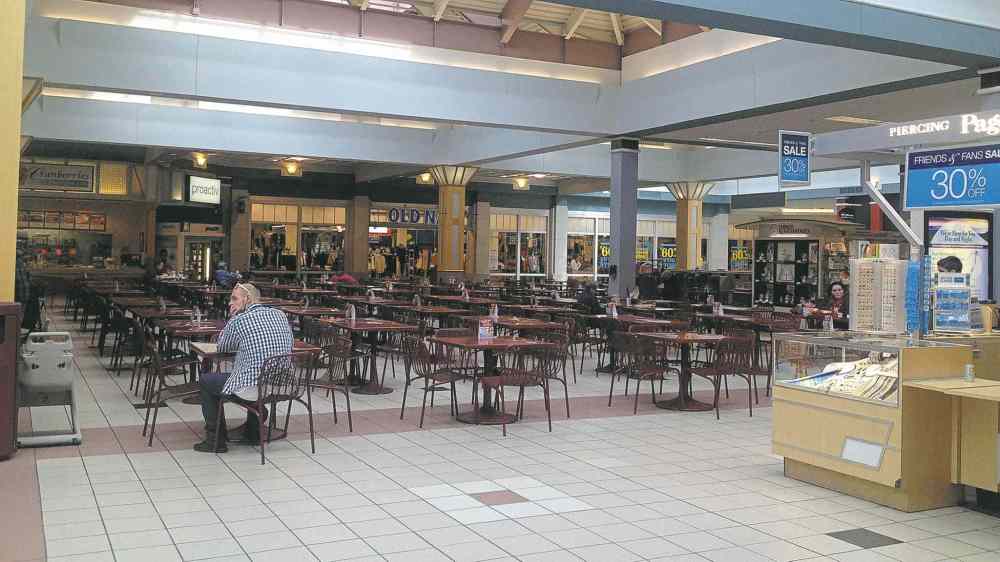
It’s a time of reckoning for an industry that once expanded pell-mell across the landscape armed with the certainty that if you build it, they will come. Those days are over. Malls like Steeplegate either rethink themselves or disappear.
This summer Rouse Properties Inc., a real estate investment trust with a long track record of turning around troubled properties, decided Steeplegate wasn’t salvageable and walked away. The mall is now in receivership.
As management buys time by renting space to temporary shops selling Christmas stuff, employees fret that if the holiday shopping season goes poorly, more stores will close. Should the mall lose one of its anchors — Sears, J.C. Penney Co. and Bon-Ton Stores Inc. — the odds of survival lengthen.
“Rouse is basically saying ‘We surrender,’ ” said Rich Moore, an analyst at RBC Capital Markets who has covered mall operators for more than 15 years. “If Rouse couldn’t make it work and that’s their specialty, then that’s a pretty tough sale to keep it as is.”
Rouse, based in New York, declined to comment beyond an emailed statement saying it had determined Steeplegate “would not meet our long-term return on investment criteria.”
The suburban mall once sat at the centre of American life. It was a place where parents one-stop-shopped and their kids hung out. The Galleria in Sherman Oaks, Calif., featured prominently in the seminal film Fast Times at Ridgemont High as well as Frank Zappa’s Valley Girl. Today the mall represents a darker mood. Consider the shuttered shopping centre colonized by the dispossessed in Gone Girl.
Steeplegate, or “Sleepygate” as many locals call it, confronts a familiar litany of woes: online competition, the increasing irrelevance of mass-market chains, fancier malls and factory outlets just up the highway.
The mall is also losing shoppers to Concord’s resurgent downtown, which like much of the United States is benefiting from a surge of people moving back from the suburbs and patronizing shops they can stroll to. Main Street has become a premium shopping district catering to consumers looking for local, unique merchandise. One store specializes in Birkenstock sandals. A farm-to-table Asian bistro called Sunny’s Table offers herb roast lobster and Korean fried chicken legs.
Some of the proprietors on Main were once Steeplegate tenants, including Mike Cohen, 60, who runs Pitchfork Records. Cohen hedged his bets in 1990 when the mall arrived: he kept his downtown store but also opened one at Steeplegate in case the new shopping centre sucked away all his customers. By the time he closed the mall location five years later, things were so slow Cohen amused himself by rolling a quarter across the mall to see if it hit anyone. It rarely did.
“That’s how dead it was, even back then,” said Cohen, whose remaining store is a no-frills ode to rock ‘n’ roll with rows of vinyl and album covers on the walls. “You want to know what was really wrong with it? No pizazz to the mall. None!”
The man charged with saving Steeplegate — or at least keeping it afloat until a buyer emerges — is Thomas Lavigne. A former cop and clothing model who has been running malls for two decades, Lavigne, 56, has been general manager since August. Each day, he does several laps around the mall, quizzing store managers and shoppers about what they like and what they don’t, how to make the mall better.
The walk takes Lavigne from his office next to Sears down the mall’s central concourse and back again. On the way, he passes a dozen vacant storefronts, or about a quarter of the mall’s retail inventory. In the centre court, he can still see the bright white facade of an Abercrombie & Fitch that went dark in January. The troubled teen chain joined recent departures such as Gap, Coach and New York & Co. The busiest store on his route is Xsmoke Vape Smart, a recent addition that sells e-cig liquid and accessories. It’s located in a prime spot just off the food court.
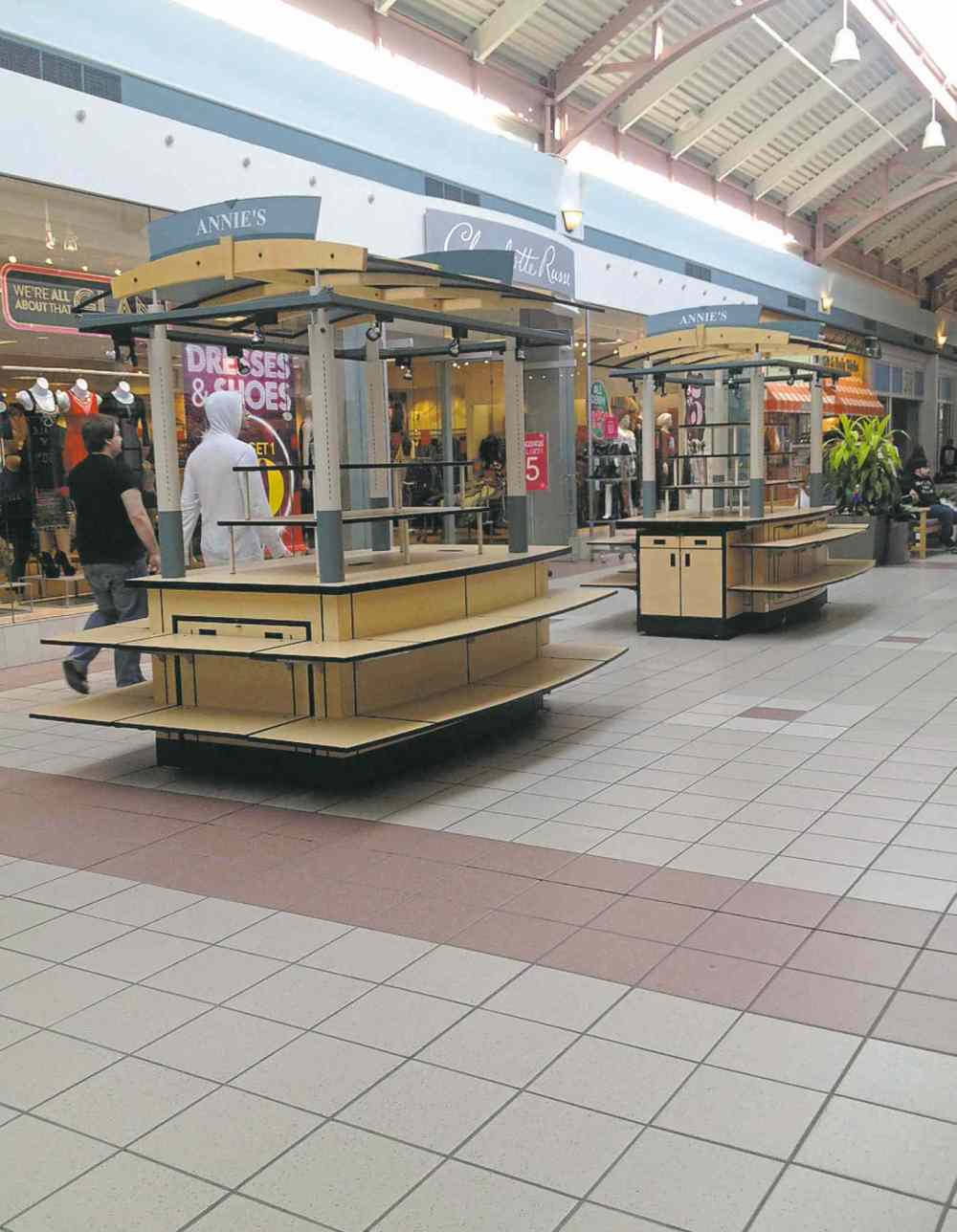
In a short interview, Lavigne described Steeplegate as a “gorgeous mall” with “potential.” The design is “plain enough that it’s timeless,” he said.
Lavigne was referring to skylights that flood the concourse with light and exposed beams and trusses that evoke an industrial space mashed up with a church.
At this point, he isn’t quite sure what specific steps need to be taken. He’s considering putting in a play area for kids.
“They need more stores,” said Ann Paquin, a 37-year-old mom who had come from nearby Pembroke to buy soccer shoes for one of her four kids. “If we don’t have any luck here, we’ll go to Manchester. Probably should have gone there first.”

When Steeplegate opened on Aug. 1, 1990, plenty of people said it was a good idea. The mall would create jobs, attract tourists on the way to Lake Winnipesaukee and provide shopping for state workers toiling in the area. The Sears on Concord’s Main Street became Steeplegate’s main anchor. The local J.C. Penney and Steinbach, a regional department store based in Asbury Park, N.J., followed suit.
At the opening, Mike Eruzione, captain of the Miracle on Ice hockey team, served as master of ceremonies.
The next day, the Concord Monitor’s front page blared Thousands Flock to Mall. Fifty people had waited in line for pizza at the Sbarro in the food court, the newspaper said. Deep inside the coverage was sobering news: About half of Steeplegate’s 80 spaces were vacant when the mall opened. In the coming years, the proprietors struggled to fill them.
— Bloomberg News
History
Updated on Monday, November 24, 2014 7:57 AM CST: Fixes cutlines, rearranges photos