

India’s wheat crops poor
Rain and hail bring about import boost
Advertisement
Read this article for free:
or
Already have an account? Log in here »
To continue reading, please subscribe:
Monthly Digital Subscription
$1 per week for 24 weeks*
- Enjoy unlimited reading on winnipegfreepress.com
- Read the E-Edition, our digital replica newspaper
- Access News Break, our award-winning app
- Play interactive puzzles
*Billed as $4.00 plus GST every four weeks. After 24 weeks, price increases to the regular rate of $19.95 plus GST every four weeks. Offer available to new and qualified returning subscribers only. Cancel any time.
Monthly Digital Subscription
$4.99/week*
- Enjoy unlimited reading on winnipegfreepress.com
- Read the E-Edition, our digital replica newspaper
- Access News Break, our award-winning app
- Play interactive puzzles
*Billed as $19.95 plus GST every four weeks. Cancel any time.
To continue reading, please subscribe:
Add Free Press access to your Brandon Sun subscription for only an additional
$1 for the first 4 weeks*
*Your next subscription payment will increase by $1.00 and you will be charged $16.99 plus GST for four weeks. After four weeks, your payment will increase to $23.99 plus GST every four weeks.
Read unlimited articles for free today:
or
Already have an account? Log in here »
Hey there, time traveller!
This article was published 29/05/2015 (3889 days ago), so information in it may no longer be current.
NEW DELHI — India is probably heading for the smallest wheat harvest in seven years after rain and hail ravaged farms, forcing bread and pizza makers to boost imports.
Production is set to drop as much as 17 per cent to 80 million tonnes from a record 95.9 million tonnes a year earlier, said Pravin Dongre, chairman of the India Pulses and Grains Association. That’s the lowest since 2008, official data show. The government estimates output at 90.78 million tonnes.
Unseasonal rain has ruined crops and lowered the quality of wheat in the world’s largest producer after China. That’s spurred flour mills to increase imports for blending with local grain as global prices trade near the lowest level since 2010. The harvest normally starts in April and ends by June.
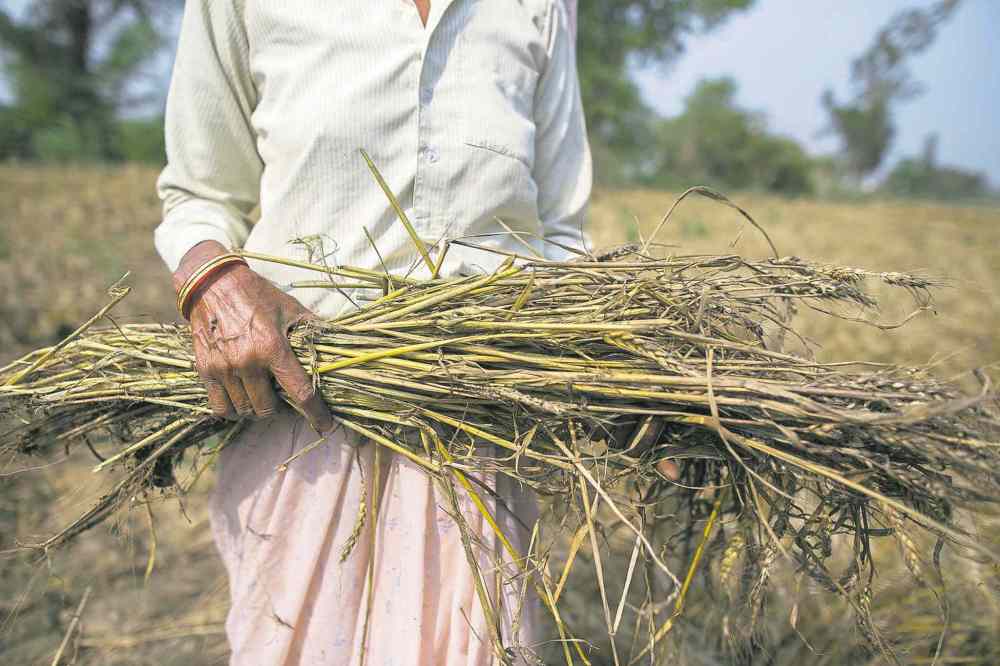
“We’re shattered as almost all my wheat, potato and mustard crops were damaged by the untimely rains,” said Sateesh Kumar, a farmer from Uttar Pradesh state. He harvested 5.2 tonnes from 11 acres, down from 22 tonnes last year.
Crops from wheat to canola and vegetables were damaged on about 47 million acres as rainfall more than double the 50-year average in February and March drenched fields, said government data. The main wheat-producing regions had almost five times the average, data show. That’s discoloured the grain and raised moisture content.
“What we are hearing from our sources is that there is huge damage to the crops,” Dongre said. “In some areas, there is no grain at all.”
Mills in southern India, which depend on supplies from growing regions in the north, say imports from Australia are cheaper and of better quality. The grain transported from central and northern India to Chennai and Coimbatore in the south sells at about US$289 a tonne, compared with Australian wheat which is available for US$265 to US$270 a tonne in bulk at Tuticorin port, said P. Gunasekaran, president of the Tamil Nadu Roller Flour Mills Association.

Wheat traded in Chicago, which entered a bear market in January, tumbled 23 per cent in the past year, more than the 4.2 per cent decline in Mumbai prices. The contract for delivery in July traded 1.1 per cent higher at $4.93 a bushel on the Chicago Board of Trade on Thursday.
“We have to import as the quality of Indian wheat has been affected by the untimely rains,” said M.K. Dattaraj, managing director of Krishna Flour Mills Bangalore Pvt. Ltd., which processes about 84,000 tonnes annually. “We are blending Australian wheat with Indian varieties to meet specific requirements from bakeries and quick-service restaurants.”
Imports may surge to one million tonnes from 45,000 tonnes a year earlier if purchases from Russia and the Black Sea region are allowed, said Faiyaz Hudani, associate vice-president at Kotak Commodity Services Ltd. in Mumbai. Supplies from that area depend on the government easing phytosanitary requirements, according to Dongre.
— Bloomberg News