

Maker of Moose Knuckles parkas comes out swinging in ‘Made in Canada’ battle
Advertisement
Read this article for free:
or
Already have an account? Log in here »
To continue reading, please subscribe:

Digital Subscription
One year of digital access for only $205*
- Enjoy unlimited reading on winnipegfreepress.com
- Read the E-Edition, our digital replica newspaper
- Access News Break, our award-winning app
- Play interactive puzzles
*First annual payment billed as $205.00 + GST for one year. This annual subscription will automatically renew at $233.00 + GST every 52 weeks (10% off the regular annual price of $259.35). Offer available to new and qualified returning subscribers only. Cancel any time.
To continue reading, please subscribe:
Add Free Press access to your Brandon Sun subscription for only an additional
$1 for the first 4 weeks*
- Enjoy unlimited reading on winnipegfreepress.com
- Read the E-Edition, our digital replica newspaper
- Access News Break, our award-winning app
- Play interactive puzzles
*Your next Brandon Sun subscription payment will increase by $1.00 and you will be charged $17.95 plus GST for four weeks. After four weeks, your payment will increase to $24.95 plus GST every four weeks.
Read unlimited articles for free today:
or
Already have an account? Log in here »
Hey there, time traveller!
This article was published 13/06/2016 (3751 days ago), so information in it may no longer be current.
MONTREAL – The maker of Moose Knuckles parkas is ready to fight the Competition Bureau’s claim that its high-end winter coats shouldn’t boast the “Made in Canada” label.
The parkas sport an image of two fighting hockey players with a small red maple leaf and can retail from $595 to more than $1,000 each.
A filing from Moose International says at least 51 per cent of its production costs ����– and up to 85 per cent – were incurred in Canada at either its head office in Montreal or factories in Winnipeg.”
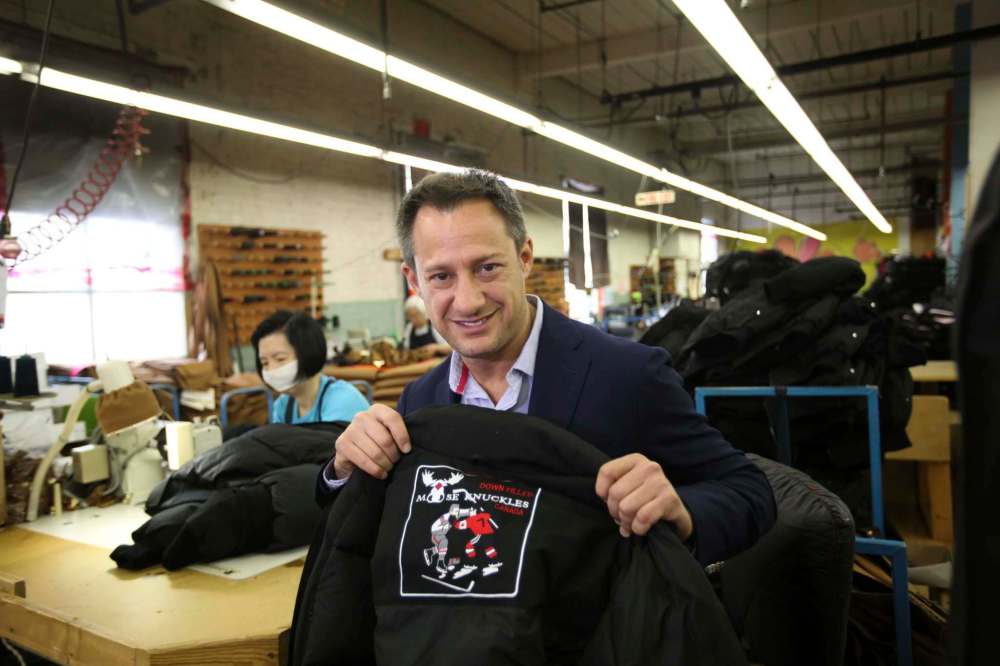
It also says it consulted with the Competition Bureau on two occasions — in October 2011 and March 2012, when it revised its production process.
The company says it was told by officials both times that the process complied with the federal agency’s guidelines.
Moose International is asking the independent Competition Tribunal to dismiss the bureau’s case and award costs to Moose.
In April, the Competition Bureau said it was seeking a $4 million penalty from Moose International, alleging that only the finishing touches to its jackets were done in Canada.
Under bureau guidelines, at least 51 per cent of total direct costs of producing or manufacturing should incur in Canada for products claiming to be “Made in Canada.”
They should also be accompanied by a qualifying statement such as “Made in Canada with imported parts,” or even more specific information such as “Made in Canada with 60 per cent Canadian content and 40 per cent imported content.”

Moose’s official response, released Monday, says the company has in fact met the terms of the bureau’s guidelines and alleges it’s being used as a test case about whether the agency can force Canadian manufacturers to comply.
Moose’s 20-page filing argues that the bureau’s guidelines are “not the law,” and the law doesn’t give the competition commissioner power to impose conditions
“Even applying the commissioner’s Canadian production ‘conditions,’ Moose’s parkas labelled ‘Made in Canada’ were made in Canada due to the substantial skilled labour, Canadian design, Canadian components and other work done in Canada to make them,” the company said.
“Moose’s care-and-contents label stated that its parkas were ‘Made in Canada with Imported Textiles.'”
Note to readers: This story clarifies a point. It specifies that Moose International says at least 51 per cent of its production, and up to 85 per cent, was incurred in Canada.