

Meet your new organ: the mesentery
Irish scientists discover error in 100-year-old anatomic description
Advertisement
Read this article for free:
or
Already have an account? Log in here »
To continue reading, please subscribe:
Digital Subscription
One year of digital access for only $1.44 a week*
- Enjoy unlimited reading on winnipegfreepress.com
- Read the E-Edition, our digital replica newspaper
- Access News Break, our award-winning app
- Play interactive puzzles
*Billed as $5.77 plus GST every four weeks. After 52 weeks, price increases to the regular rate of $19.95 plus GST every four weeks. Offer available to new and qualified returning subscribers only. Cancel any time.
To continue reading, please subscribe:
Add Free Press access to your Brandon Sun subscription for only an additional
$1 for the first 4 weeks*
- Enjoy unlimited reading on winnipegfreepress.com
- Read the E-Edition, our digital replica newspaper
- Access News Break, our award-winning app
- Play interactive puzzles
*Your next Brandon Sun subscription payment will increase by $1.00 and you will be charged $17.95 plus GST for four weeks. After four weeks, your payment will increase to $24.95 plus GST every four weeks.
Read unlimited articles for free today:
or
Already have an account? Log in here »
Hey there, time traveller!
This article was published 05/01/2017 (3429 days ago), so information in it may no longer be current.
In 1885, English surgeon Frederick Treves gave a series of talks at the Royal College of Surgeons of England. Treves’ most famous moment in abdominal history — treating Edward VII, a few days prior to the king’s coronation, by draining an abscess in the royal appendix — would come decades later. But even by the late 19th century, Treves was known among his peers as an expert of the guts. He spoke at length to his fellow doctors about the digestive tract, having examined it in a hundred or so cadavers.
The medical field was receptive to his findings. It remained so. As recently as 2008, textbooks such as the 40th edition of Gray’s Anatomy echoed descriptions Treves presented in his lectures. But Treves’ research contained an error that persisted for more than a century, wrote a pair of scientists in the Lancet Gastroenterology & Hepatology journal, published in November but spotted recently by the Independent: Treves neglected to give the mesentery, a double sheet of connective tissue that curls through the abdomen, the importance it deserved.
Treves declared the mesentery existed only sporadically, in disjointed ribbons, dispersed among the intestines. That was not so, the researchers wrote in the new report.
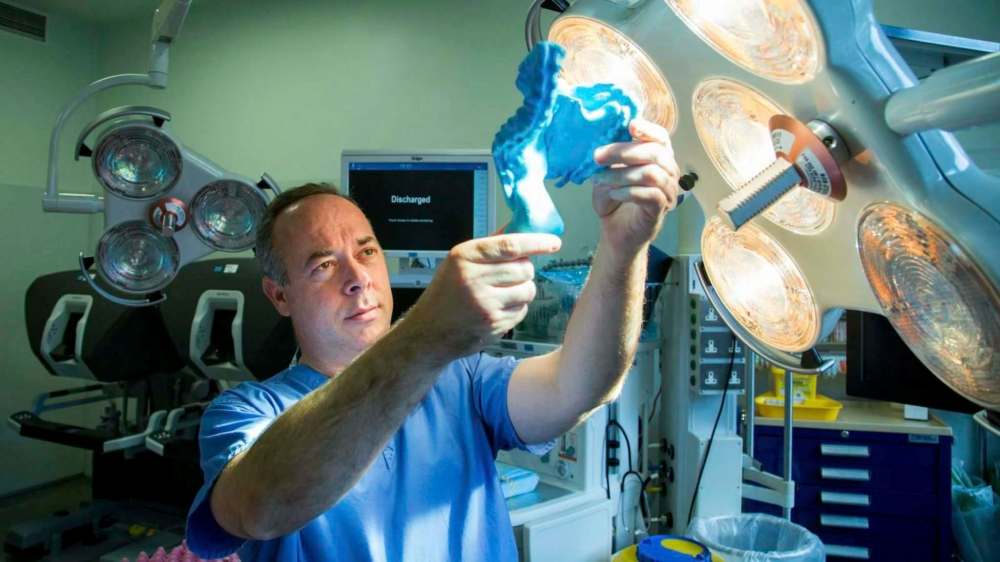
“The anatomic description that had been laid down over 100 years of anatomy was incorrect. This organ is far from fragmented and complex,” said J. Calvin Coffey, a study author and surgeon at the University of Limerick, Ireland, in a statement. “It is simply one continuous structure.”
Coffey, and his fellow scientists, argued the mesentery was not separate sections of connective wrap. As a single entity, it could be classified as an organ. (By most counts, tissues of the human body are lumped into 78 organs. The mesentery, then, would be No. 79.)
“We are now saying we have an organ in the body which hasn’t been acknowledged as such to date,” Coffey said.
Next to the thumping heart and the brain’s enigmatic mass, the mesentery may seem a humble thing. It is a fatty membrane that holds the intestines in place. Though the classification as an organ is new, the mesentery itself is not a contemporary discovery; what appears to be the mesentery can be seen in a drawing by Leonardo da Vinci.
The metaphors the mesentery inspires are a far cry from stomach butterflies or broken hearts. If you were to imagine the guts as dress fabric, as 19th-century physician Worthington Hooker did in his book Human Physiology, the mesentery would be a ruffle encircling the “puffed edging” of the intestines.
Without the mesentery, though, bound on one end to the backbone, the intestines would slop around in the belly. Coffey and his colleagues confirmed the mesentery was continuous, stretching from the rectum to the small intestine at the base of the stomach, in a series of studies in 2012 and 2014. After revealing its structure, the scientists argued they had enough evidence to “justify designation of the mesentery as an organ.” Coffey went as far as to argue life without the mesentery is impossible — “without it you can’t live,” he said to Discover Magazine.

If there existed a scientific organization charged with naming the organs, it was unclear even to surgeons such as Coffey. (“I actually don’t know who the final arbiter of that is,” he told Discover; Coffey was unable to respond to a request for comment from the Washington Post early Wednesday.) But, typically, anatomists classify organs not only by their continuity but also by a common function. The complete function of the mesentery remains a mystery.
“Many, but not all, organs have a distinct functional unit,” the researchers wrote in the Lancet report. “The functional unit of the mesentery is unknown, and whether a distinctive cell type is primarily responsible for its functionality should be investigated.”
Nor do the researchers know if doctors should view the body part as belonging to the intestinal system, they wrote, or if it would be better classified as part of the vascular system, the endocrine system or another system altogether. Perhaps it does not fit neatly into one. Evidence suggests the mesentery is more than a connector, too; the mesentery may regulate the migration of white blood cells throughout the intestines, the scientists wrote.
Coffey hoped shining a light on a body part not normally so exposed could widen the field of mesenteric science, offering a new target in the fight against gut diseases such as Crohn’s. In places, it appears a change, however small, has already begun: the mesentery, noted the study authors, was described as continuous in the 41st and most recent edition of Gray’s Anatomy.
— Washington Post