

The art of asking
Posing the right questions encourages problem-solving and decision-making
Advertisement
Read this article for free:
or
Already have an account? Log in here »
To continue reading, please subscribe:
Monthly Digital Subscription
$0 for the first 4 weeks*
- Enjoy unlimited reading on winnipegfreepress.com
- Read the E-Edition, our digital replica newspaper
- Access News Break, our award-winning app
- Play interactive puzzles
*No charge for 4 weeks then price increases to the regular rate of $19.95 plus GST every four weeks. Offer available to new and qualified returning subscribers only. Cancel any time.
Monthly Digital Subscription
$4.99/week*
- Enjoy unlimited reading on winnipegfreepress.com
- Read the E-Edition, our digital replica newspaper
- Access News Break, our award-winning app
- Play interactive puzzles
*Billed as $19.95 plus GST every four weeks. Cancel any time.
To continue reading, please subscribe:
Add Free Press access to your Brandon Sun subscription for only an additional
$1 for the first 4 weeks*
*Your next subscription payment will increase by $1.00 and you will be charged $16.99 plus GST for four weeks. After four weeks, your payment will increase to $23.99 plus GST every four weeks.
Read unlimited articles for free today:
or
Already have an account? Log in here »
Hey there, time traveller!
This article was published 20/05/2017 (3157 days ago), so information in it may no longer be current.
Have you ever paid attention to the practice of asking questions? If so, then you might note that many people either don’t ask questions at all, they don’t ask good questions or they don’t ask the right questions. The reason is that asking questions is more of an art than people think.
Whether you are an employee or a manager, being able to frame the right question at the right time is important to your success. Questions are key to learning new things. Questions help to engage people in conversation. Questions help employees understand directions and/or help to focus their attention on specific areas of concern.
Questions are also valuable tools for leaders. Applying a good set of questions can be effective in gaining a deeper insight into individual thought processes and challenging thinking. It can help to communicate organizational values and beliefs and set the cultural norms for communication. Questions can also be used to defuse challenging situations, persuade others, help align the values and goals of the organization or see new perspectives and explore new ideas.
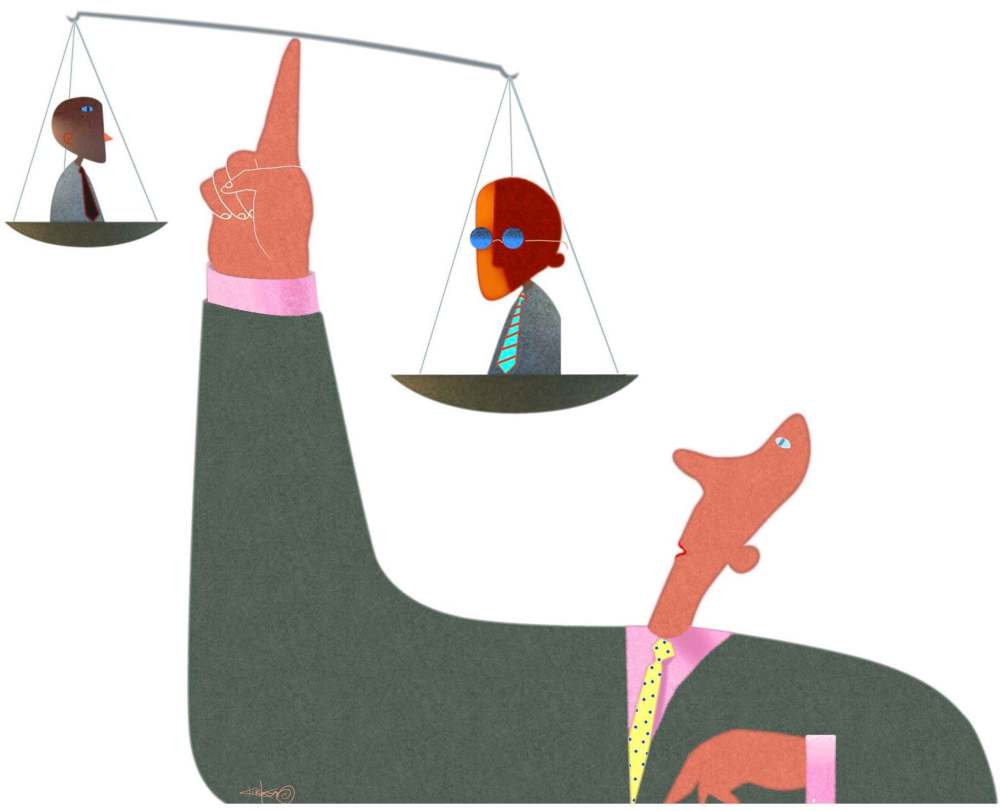
As you might know, there are several kinds of questions that could be asked in a number of different situations. However, the most effective style of questions is known as open-ended. This style of question is more thought-provoking, as it tends to ask “what” or “how” of a situation. It usually solicits longer responses that are more informative and sometimes creative.
The open-ended question can be used to solicit information that helps to identify an issue and to probe the situation further. It can be used to move a discussion toward a specific outcome and/or to take a specific action. Open-ended questions are good for getting an individual’s opinion on specific issues and/or seeking more details about a situation of interest.
At the same time, managers must be careful not to apply an open-ended question that is leading. For instance, asking your employee, “How are you doing with the new software program?” may be requesting a longer and informative response, but it also suggests an underlying ulterior motive. Perhaps, as the manager, you are not happy with your employee’s progress and/or not happy with the software itself. What kind of answer are you looking for?
Keep in mind the tone of your voice will affect the nature of the employee’s response.
Another strategy is called “funnelling.” This means you either start with an open-ended question and then get more specific and/or start the conversation by being very specific and then move toward more open-ended questions.
For instance, an open-ended question might be, “What can you tell me about the street closure in front of your office?” Then, a followup closed question might be “How long did it take you to get out of the parkade?”
Another tactic from an employer’s point of view is to teach employees how to ask questions of themselves. This is important so that they are not always coming to their manager, presenting a problem and asking for a solution. Instead, they are coming to you with recommended solutions.
Train your employees on problem-solving and decision-making. Ensure they get sufficient practise in asking probing questions to the issues and challenges they will deal with in their work.
Next, create a so-called issue-sheet strategy whereby employees must write down their thinking process on issues and to bring this to their management meeting. This forces individuals to think through a problem, brainstorm solutions and make recommendations with a rationale. It also helps them practise being big-picture thinkers as they must look at the impact on the organization.
On the other hand, the art of developing effective questions is also extremely important to leaders who actively engage in coaching their employees as well as those who are professional coaches.
This effective questioning tool can be used to help individuals focus their thinking, motivate people to engage in self-reflection and awareness and to discover new solutions to nagging issues, be it personal or for work. In fact, it is often said that the real power in coaching is the ability to ask good questions.
As might be expected, there are several ways to ask the same question, but the key challenge is to select questions that challenge people while, at the same time, encouraging healthy problem-solving and the development of good decision-making skills. When this goal is reached, you will find that employees are more motivated, engaged and accountable for their decisions and their behaviour.
Of course, as you might expect, the answers you receive in a coaching session are not always what you are looking for. For instance, instead of a direct and honest response, you may receive a lie. In normal circumstances, you can spot a lie because you’ll notice the individual’s voice will slow down, they may not look you in the eye and/or they may fidget while they respond to your question.
In other circumstances, you’ll find an individual responds with an answer that is totally out of context and/or only partially answers your question. Then again, you’ll find people who will avoid answering the question altogether by either stalling or refusing to answer.
This is where the skills of the manager and/or coach come in. In fact, this is the exact time to have a whole cadre of questions in your back pocket you know are effective. Take a deep breath and ask the same question, but in a different way.

Apply a strategy called “paraphrasing,” such as, “Did I hear you say that…?” or “Do I understand you when you said…?” Probe their responses even further by asking questions such as, “What made you decide to go in that direction?” or “How did you determine which solution was most effective?”
Some might say that developing effective questions is a lost art and one that must be recovered in order to increase the effectiveness of our organizations.
It’s true that many manufacturing organizations have engaged in lean manufacturing and process improvement initiatives in order to reduce waste, remove redundancies and increase efficiency and through these initiatives, they have taught employees good problem-solving and decision-making skills.
However, many of our smaller organizations still rely on management to solve all the problems. For success in the long term, this dependent behaviour has to change. And change means developing the art of asking questions.
Barbara J. Bowes, FCPHR, CMC, CCP, M.Ed, is president of Legacy Bowes Group. She is also an author of eight books, a professional speaker, executive coach and workshop leader. She can be reached at barb@legacybowes.com and/or barbarabowes.com.
History
Updated on Saturday, May 20, 2017 9:08 AM CDT: Photo added.