

Front-line managers need lots of attention
Leaders require the right tools to succeed
Advertisement
Read this article for free:
or
Already have an account? Log in here »
To continue reading, please subscribe:
Monthly Digital Subscription
$1 per week for 24 weeks*
- Enjoy unlimited reading on winnipegfreepress.com
- Read the E-Edition, our digital replica newspaper
- Access News Break, our award-winning app
- Play interactive puzzles
*Billed as $4.00 plus GST every four weeks. After 24 weeks, price increases to the regular rate of $19.95 plus GST every four weeks. Offer available to new and qualified returning subscribers only. Cancel any time.
Monthly Digital Subscription
$4.99/week*
- Enjoy unlimited reading on winnipegfreepress.com
- Read the E-Edition, our digital replica newspaper
- Access News Break, our award-winning app
- Play interactive puzzles
*Billed as $19.95 plus GST every four weeks. Cancel any time.
To continue reading, please subscribe:
Add Free Press access to your Brandon Sun subscription for only an additional
$1 for the first 4 weeks*
*Your next subscription payment will increase by $1.00 and you will be charged $16.99 plus GST for four weeks. After four weeks, your payment will increase to $23.99 plus GST every four weeks.
Read unlimited articles for free today:
or
Already have an account? Log in here »
Hey there, time traveller!
This article was published 30/06/2017 (3185 days ago), so information in it may no longer be current.
Every year, the accounting and consulting firm KPMG conducts an annual HR Transformation Survey of more than 800 organizations. The most recent study report (2016) indicated the top corporate initiative among all survey participants was improving the capability of front-line managers to deal with their people issues.
As most of us know, front-line managers play a crucial role in the day-to-day management of employees, increasing their engagement and working to create high performance. And it is these managers who are responsible for implementing the human-resource policies and moulding the behaviour of their employees.
Front-line managers, commonly known as “managerial foot soldiers,” also directly influence the view an employee has of their organization. As well, study after study has shown that employee job dissatisfaction often is linked to a lack of confidence in the ability of the line manager to do the job. In fact, the relationship is so powerful and so important that people don’t leave organizations, they leave managers.
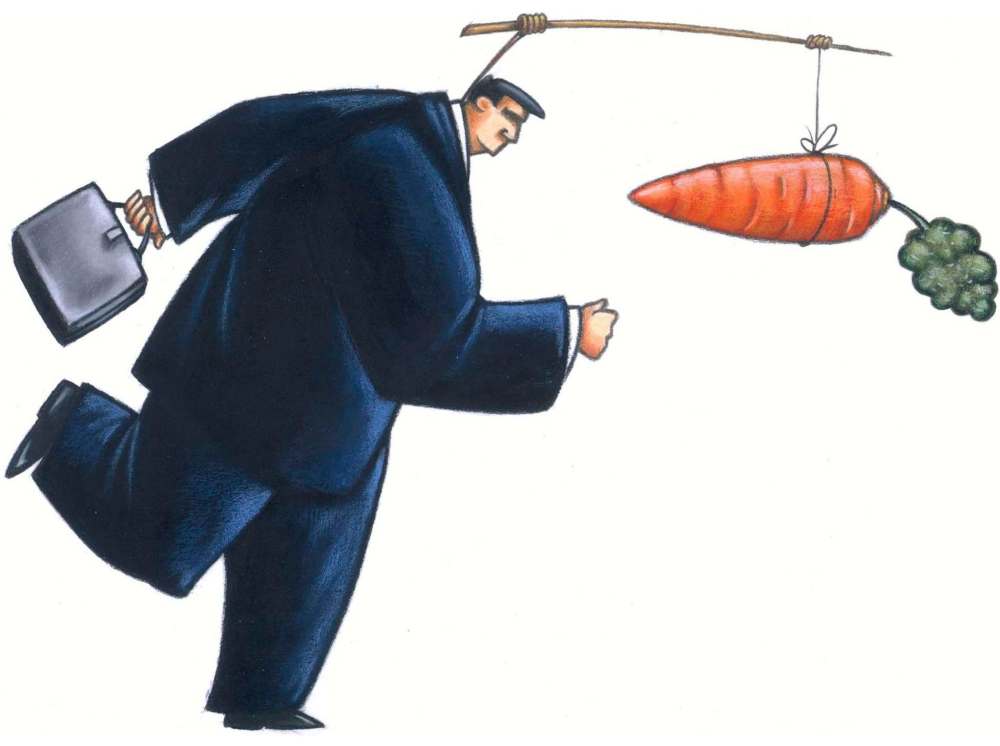
So what are some of the skills that front-line managers need to develop? One of the key skills is the area of communication.
The ability to speak well, listen well and ask good questions is key to developing strong working relationships with their employees. Front-line leaders need to be good critical thinkers and problem solvers and be able to teach their team members to solve problems independently and recommend solutions.
In addition, front-line managers need to be politically astute with an ability to navigate their organizational politics and influence others in order to meet their goals.
They need to be quick learners who can recognize problems, analyze and address them. They need to be able to inspire, guide and motivate their team even when goals are somewhat unclear.
Front-line managers also need to be courageous — in that they need to confront tough issues such as absenteeism and performance management — and deal with conflict well.
They need to be quite self-aware, understand their own personal motivation and how their behaviour affects others.
Yet in many cases, new front-line managers are being promoted and then left to their own devices. In other words, they find themselves dealing with challenging problems and people-management tasks on a daily basis but they haven’t been given the proper training to do so.
Since front-line managers make up approximately 40 to 60 per cent of the leadership population in any organization, this lack of training can have a substantial impact. Ineffective front-line managers can impact overall productivity and profitability significantly.
We all know that good management doesn’t just happen and so it is important to leverage this front-line group of professionals through effective leadership training. However, just what should front-line management training look like?
In my view, the best approach is a hands-on, practical learning program that occurs over a timeframe of approximately six months. The reason for this is that participants take what they learn back to work, apply their learning and return to discuss their successes and/or challenges.
My preference is for participation in a group where members can bounce ideas back and forth and receive feedback from peers as well as the moderator/facilitator.
In my view, the most effective training program I’ve encountered is called Results-Centred Leadership. This 12-module program includes written learning materials, brief readings, assessment tools, a goal planner, audio files and a success planner for easier learning and retention. The program begins by helping participants discover themselves — including strengths and areas of challenge — resulting in a personal growth plan.
One of the key learnings in any program should be an examination of leadership philosophy and how it has changed over the years.
Top-down authoritative leadership just doesn’t work anymore; the team- and relationship-based style requires a higher level of sophisticated skills. Front-ine leaders need to learn how to motivate and influence their team to do their best, involve employees in problem solving and encourage innovation.
If there is any fault with a front-line manager, it often lies with goal-setting and execution. First of all, many leaders don’t know how to write specific goals so that they are clear, measureable and attainable. Secondly, they don’t monitor goal achievement effectively, so before you know it, time has slipped by and a goal will not have been reached. And, if they can’t manage their own goals, they will certainly not manage the goals of their employees very well, either. Therefore, placing some focus on personal productivity and time management is also important.
Participants next need to move on to learning the skills required to develop others. They need to understand motivation beyond the old Maslow hierarchy of needs, learn to recognize what drives their employees and adapt work to meet these needs. They need to develop their conflict-management skills and become good at coaching and mentoring.
With change being the word of the day both inside and outside organizations, front-line managers must learn not only how to manage change themselves but also how to lead change within their organization.

They need to be able to plan for and implement change so that it is not a disruption that causes too much stress. They also need to understand the dynamics of stress itself, how to manage their own stress and how to recognize and deal with stress in others.
If you think all of this training is comprehensive, it is! Being a front-line manager today is complex yet it is these managers who have the largest impact on an organization. They are the linchpin to increased productivity, efficiency and effectiveness, employee morale and turnover. They need a broad base of expertise in several areas in addition to their technical skills so that they can communicate and operationalize the organization’s vision and goals.
Think of front-line leadership training as an investment and then bask in the immediate payoffs.
— Source: KPMG, HR Transformation Survey 2016: The future belongs to the bold (July 13, 2016)
Barbara J. Bowes, FCPHR, CMC, CCP, M.Ed, is president of Legacy Bowes Group. She is also an author of eight books, a professional speaker, executive coach and workshop leader. She can be reached at barb@legacybowes.com and/or barbarabowes.com.
History
Updated on Friday, June 30, 2017 8:41 AM CDT: Adds image