

A trailblazing female of finance
Winnipeg native Kiki Delaney has helped forge a path for Canadian women in an industry dominated by men
Advertisement
Read this article for free:
or
Already have an account? Log in here »
To continue reading, please subscribe:

Digital Subscription
One year of digital access for only $205*
- Enjoy unlimited reading on winnipegfreepress.com
- Read the E-Edition, our digital replica newspaper
- Access News Break, our award-winning app
- Play interactive puzzles
*First annual payment billed as $205.00 + GST for one year. This annual subscription will automatically renew at $233.00 + GST every 52 weeks (10% off the regular annual price of $259.35). Offer available to new and qualified returning subscribers only. Cancel any time.
To continue reading, please subscribe:
Add Free Press access to your Brandon Sun subscription for only an additional
$1 for the first 4 weeks*
- Enjoy unlimited reading on winnipegfreepress.com
- Read the E-Edition, our digital replica newspaper
- Access News Break, our award-winning app
- Play interactive puzzles
*Your next Brandon Sun subscription payment will increase by $1.00 and you will be charged $17.95 plus GST for four weeks. After four weeks, your payment will increase to $24.95 plus GST every four weeks.
Read unlimited articles for free today:
or
Already have an account? Log in here »
Hey there, time traveller!
This article was published 12/08/2017 (3297 days ago), so information in it may no longer be current.
A career in the investment industry seemed like a natural match for Kiki (Catherine) Delaney — even if at the time she didn’t fit the typical mould.
To be blunt: not a lot of women were in the business when she started out as a securities analyst in the early 1970s.
But investing ran in her blood, so to speak.
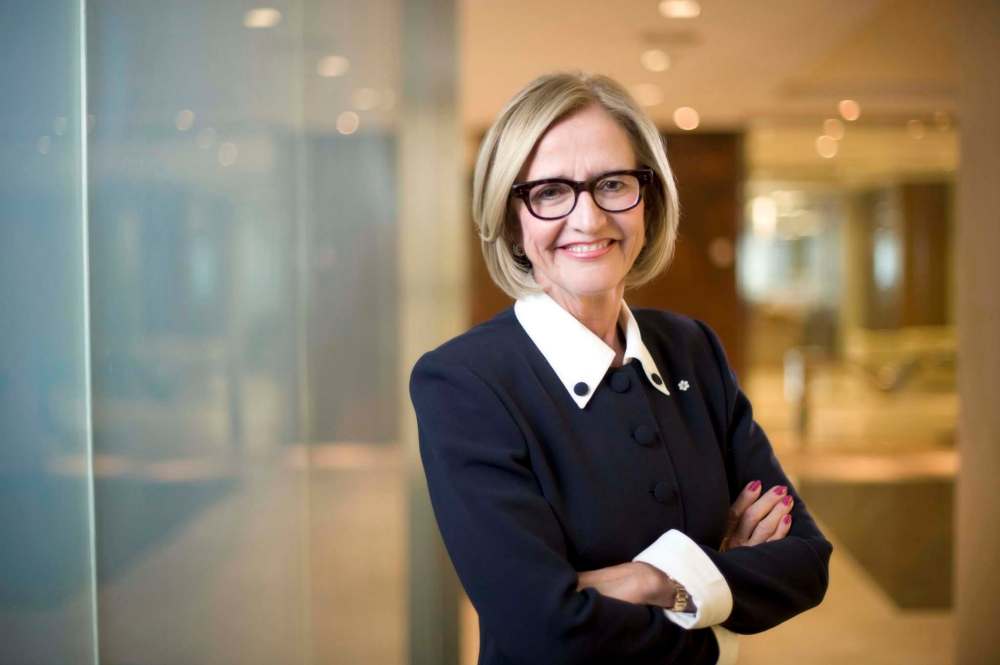
“My dad was in the investment business,” says the president of Delaney Capital Management in Toronto.
A currency trader in Holland, her father immigrated to Canada following the Second World War and set up a brokerage business in Winnipeg.
“Unlike a lot of girls of my era, I knew what the investment business was about,” says Delaney, who was born here and grew up in River Heights, attending Kelvin High School and then studying political science at the University of Manitoba.
Her father “lived and breathed the investment business” making it impossible not to be aware of what was going on in the stock market while she was growing up.
“In retrospect, it was probably not all that unusual that I would follow in his footsteps, even though I was the only one in my family that did do that,” says Delaney, who has two brothers.
Her choice turned out to be a good one. Today, Delaney is one of the top investment managers in Canada, heading up Delaney Capital Management, with more than $2 billion under management.
Running a successful independent wealth firm in an age where the big fish of the financial biz are snapping up the smaller ones is a notable achievement on its own.
Doing so as a woman in an industry still dominated by men makes her accomplishments all the more significant.
And her trailblazing is about to be recognized when she is inducted into the IIAC (Investment Industry Association of Canada) Investment Industry Hall of Fame this fall.
Delaney will only be the second woman to be named to the prestigious list of Canada’s most successful movers and shakers of the investment industry. (Jalynn H. Bennett was the first, posthumously inducted in 2015.)
The dearth of female members is somewhat reflective of the testosterone-tinged nature of the industry.
Delaney says women were much less common when she started than today — although even then they were not unheard of.
“Interestingly, in the firm where I worked in Toronto, there were two other professional women,” she says, referring to her first job as an analyst in the early ’70s.
As well, one of her first jobs in finance in Winnipeg was working as a clerk for renowned stock broker Ellen Ripstein (now deceased) in the late ’60s.
“She was a real mentor to me and a true trailblazer because there were very few women outside of clerical positions at that point.”
Over the years, Delaney worked her way up the corporate ladder, first as a securities analyst, then as a portfolio manager. Eventually she made the leap to running her own wealth management company in 1992.
By then, women were more commonplace in the industry. But heading up an investment company wasn’t.
“It was pretty unusual,” she says about women in leadership positions. “Even today, we’re very much in the minority.”
Of course, that’s not the case at her firm. Four of its seven partners are women, and “we have a very different dynamic going on here,” she says, adding there is no machismo stereotypically associated with Wall Street in New York and Bay Street, here in Canada.
Times have changed — considerably, Delaney adds.
“To be fair, if you look at some of the banks and brokerage firms, there are many more women today than there has been.”
She points to Katie Taylor, who is the chair of the Royal Bank.
“When I started the investment business, it was unheard of that a woman would be a chair of a major bank.”
A palpable lack of women in the business still persists, but it has less to do with sexism in the industry than it does with the difficulties women face in all professions where they may have to choose between pursuing careers and raising families.
Moreover, financial companies are making efforts to increase the number of women in their ranks.
“There is no doubt a lot of the firms desire to hire women, and they do hire women, but not a lot of them stay,” she says. “That’s really the question. Is the environment conducive to women flourishing?”
Firms have tried job sharing and other innovative flex-hour solutions to accommodate women, who often bear the majority of the burden involved in having children (for obvious reasons) and raising them.

“The investment business is not 9 to 5 and that can make it more difficult.”
Still, Delaney would “love to see more women in the business.”
It’s not that women invest differently — bringing something different to the table, she argues. The approach varies by individual, regardless of gender.
But certainly, it’s an occupation worth pursuing for women with an interest in the field.
“It is an absolutely fantastic business — exciting and dynamic — and you’re always learning something new,” she says. “I feel incredibly fortunate.”