

New regulations combat driving in the dark, permit new headlight technology

Advertisement
Read this article for free:
or
Already have an account? Log in here »
To continue reading, please subscribe:
Digital Subscription
One year of digital access for only $75*
- Enjoy unlimited reading on winnipegfreepress.com
- Read the E-Edition, our digital replica newspaper
- Access News Break, our award-winning app
- Play interactive puzzles
*Billed as $5.77 plus GST every four weeks. After 52 weeks, price increases to the regular rate of $19.95 plus GST every four weeks. Offer available to new and qualified returning subscribers only. Cancel any time.
Monthly Digital Subscription
$4.99/week*
- Enjoy unlimited reading on winnipegfreepress.com
- Read the E-Edition, our digital replica newspaper
- Access News Break, our award-winning app
- Play interactive puzzles
*Billed as $19.95 plus GST every four weeks. Cancel any time.
To continue reading, please subscribe:
Add Free Press access to your Brandon Sun subscription for only an additional
$1 for the first 4 weeks*
- Enjoy unlimited reading on winnipegfreepress.com
- Read the E-Edition, our digital replica newspaper
- Access News Break, our award-winning app
- Play interactive puzzles
*Your next Brandon Sun subscription payment will increase by $1.00 and you will be charged $17.95 plus GST for four weeks. After four weeks, your payment will increase to $24.95 plus GST every four weeks.
Read unlimited articles for free today:
or
Already have an account? Log in here »
Hey there, time traveller!
This article was published 21/03/2018 (2988 days ago), so information in it may no longer be current.
Driving in the dark in Canada could soon be a thing of the past thanks to new regulations unveiled in Ottawa Wednesday.
Transport Minister Marc Garneau released updated vehicle-lighting regulations that will, among other things, require all new cars sold in Canada by 2021 to feature automatic illumination of all relevant lights, including tail lights, in low-light conditions.
The move addresses a significant oversight in lighting regulations that have, since 1990, required cars to feature daytime running lights. The problem, Garneau said, is that some cars will light up the dash and daytime running lights automatically, but not the tail lights, presenting a hazard to vehicles approaching from the rear.
All jurisdictions in Canada require lights be turned on in low-light conditions, Garneau noted. In Manitoba, drivers must activate their lights between a half hour before sunset and a half hour after dawn.
“It’s a basic safety step that costs little in terms of money and to the environment,” Ian Jack, spokesman for the Canadian Automobile Association, said. “It’s not the hugest benefit — only five to seven per cent of collisions were due to lighting issues — but it’s not like you’re adding 10 pounds or $500 to the cost of the car.”
Winnipeg Police Service traffic division Staff Sgt. Sean Pollock hailed the move.
“This will likely enhance the safety of new vehicles once this feature is mandated, similar to daytime running lights,” he said.
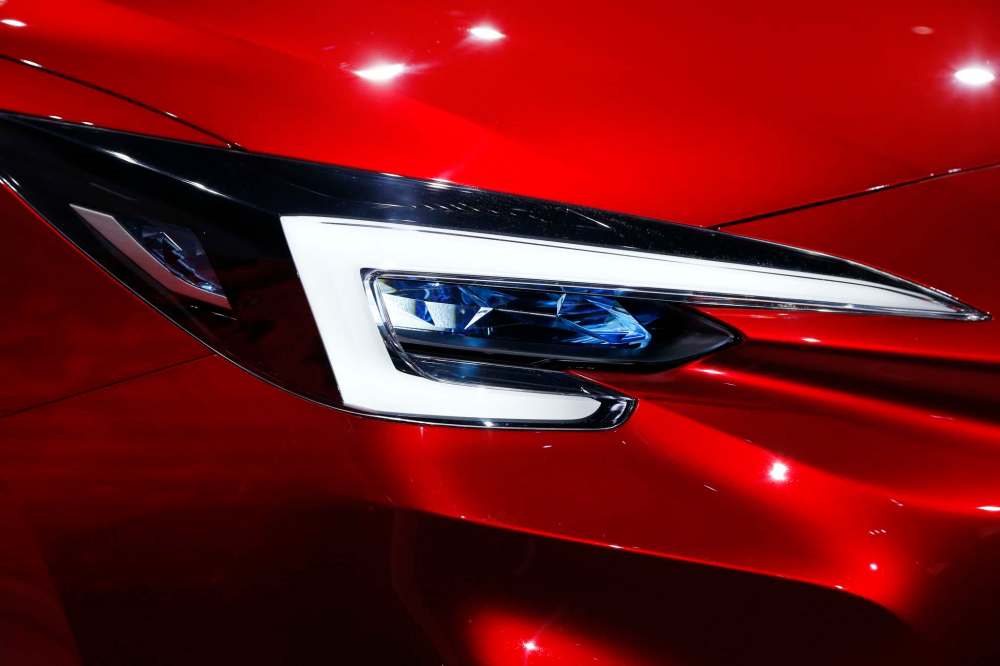
The regulations also now permit the use of LED matrix lighting technology — due soon on the 2019 Porsche Cayenne and on some Mercedes-Benz and BMW models — that provides greater flexibility in forward lighting than current high- and low-beam technology in regulations dating back to the 1950s.
The regulations are now based on achieving outcomes, such as certain levels of brightness at certain angles depending on the position of oncoming traffic, rather than dictating the use of a certain technology.
The LED technology uses a matrix of LEDs to provide full illumination to steer lights into corners (as opposed to mechanical systems available today) and create dark spots to shield oncoming vehicles from glare.
Porsche Cars of Canada spokesman Patrick Saint-Pierre said the new technology will be available on the new Cayenne sport-utility vehicle outside Canada later this year, but most features were expected to be defeated in models sold here. A decision on when and on what models the features would be offered has not been made.
One feature in the Cayenne combines the use of night-vision technology with the LED matrix headlights to detect and then illuminate a person walking on or near the road at night.

“We’re excited by the prospect of potentially being able to offer increased functionality once Transport Canada provides further details on these regulations,” Saint-Pierre said.
Mercedes-Benz Canada spokeswoman JoAnne Caza said the change is good news for drivers seeking the latest technology in headlights.
“We’re quietly encouraged. It’s been a long time coming,” she said. “Still too early to determine how this will all be rolled out.”
As with Porsche, Mercedes has had to defeat most of the benefits of LED matrix lighting on models sold here.
kelly.taylor@freepress.mb.ca
Kelly Taylor
Copy Editor, Autos Reporter
Kelly Taylor is a copy editor and award-winning automotive journalist, and he writes the Free Press‘s Business Weekly newsletter. Kelly got his start in journalism in 1988 at the Winnipeg Sun, straight out of the creative communications program at RRC Polytech (then Red River Community College). A detour to the Brandon Sun for eight months led to the Winnipeg Free Press in 1989. Read more about Kelly.
Every piece of reporting Kelly produces is reviewed by an editing team before it is posted online or published in print — part of the Free Press‘s tradition, since 1872, of producing reliable independent journalism. Read more about Free Press’s history and mandate, and learn how our newsroom operates.
Our newsroom depends on a growing audience of readers to power our journalism. If you are not a paid reader, please consider becoming a subscriber.
Our newsroom depends on its audience of readers to power our journalism. Thank you for your support.
Kelly Taylor
Copy Editor, Autos Reporter
Kelly Taylor is a copy editor and award-winning automotive journalist, and he writes the Free Press‘s Business Weekly newsletter. Kelly got his start in journalism in 1988 at the Winnipeg Sun, straight out of the creative communications program at RRC Polytech (then Red River Community College). A detour to the Brandon Sun for eight months led to the Winnipeg Free Press in 1989. Read more about Kelly.
Every piece of reporting Kelly produces is reviewed by an editing team before it is posted online or published in print — part of the Free Press‘s tradition, since 1872, of producing reliable independent journalism. Read more about Free Press’s history and mandate, and learn how our newsroom operates.
Our newsroom depends on a growing audience of readers to power our journalism. If you are not a paid reader, please consider becoming a subscriber.
Our newsroom depends on its audience of readers to power our journalism. Thank you for your support.
Advertisement Advertise With Us
Advertisement Advertise With Us