

Former Pixar CFO embraces Buddhism in quest for balance
Advertisement
Read this article for free:
or
Already have an account? Log in here »
To continue reading, please subscribe:
Digital Subscription
One year of digital access for only $1.44 a week*
- Enjoy unlimited reading on winnipegfreepress.com
- Read the E-Edition, our digital replica newspaper
- Access News Break, our award-winning app
- Play interactive puzzles
*Billed as $5.77 plus GST every four weeks. After 52 weeks, price increases to the regular rate of $19.95 plus GST every four weeks. Offer available to new and qualified returning subscribers only. Cancel any time.
To continue reading, please subscribe:
Add Free Press access to your Brandon Sun subscription for only an additional
$1 for the first 4 weeks*
- Enjoy unlimited reading on winnipegfreepress.com
- Read the E-Edition, our digital replica newspaper
- Access News Break, our award-winning app
- Play interactive puzzles
*Your next Brandon Sun subscription payment will increase by $1.00 and you will be charged $17.95 plus GST for four weeks. After four weeks, your payment will increase to $24.95 plus GST every four weeks.
Read unlimited articles for free today:
or
Already have an account? Log in here »
Hey there, time traveller!
This article was published 28/04/2018 (2956 days ago), so information in it may no longer be current.
When Lawrence Levy took a call from Apple founder Steve Jobs in 1994 to come and work with him at Pixar, it was a couple of years before the release of its breakthrough computer animation movie, Toy Story.
In fact, as Levy told a Winnipeg audience at the local information technology industry’s annual fundraising dinner this week, Pixar, at the time, was a shadow of what it would become.
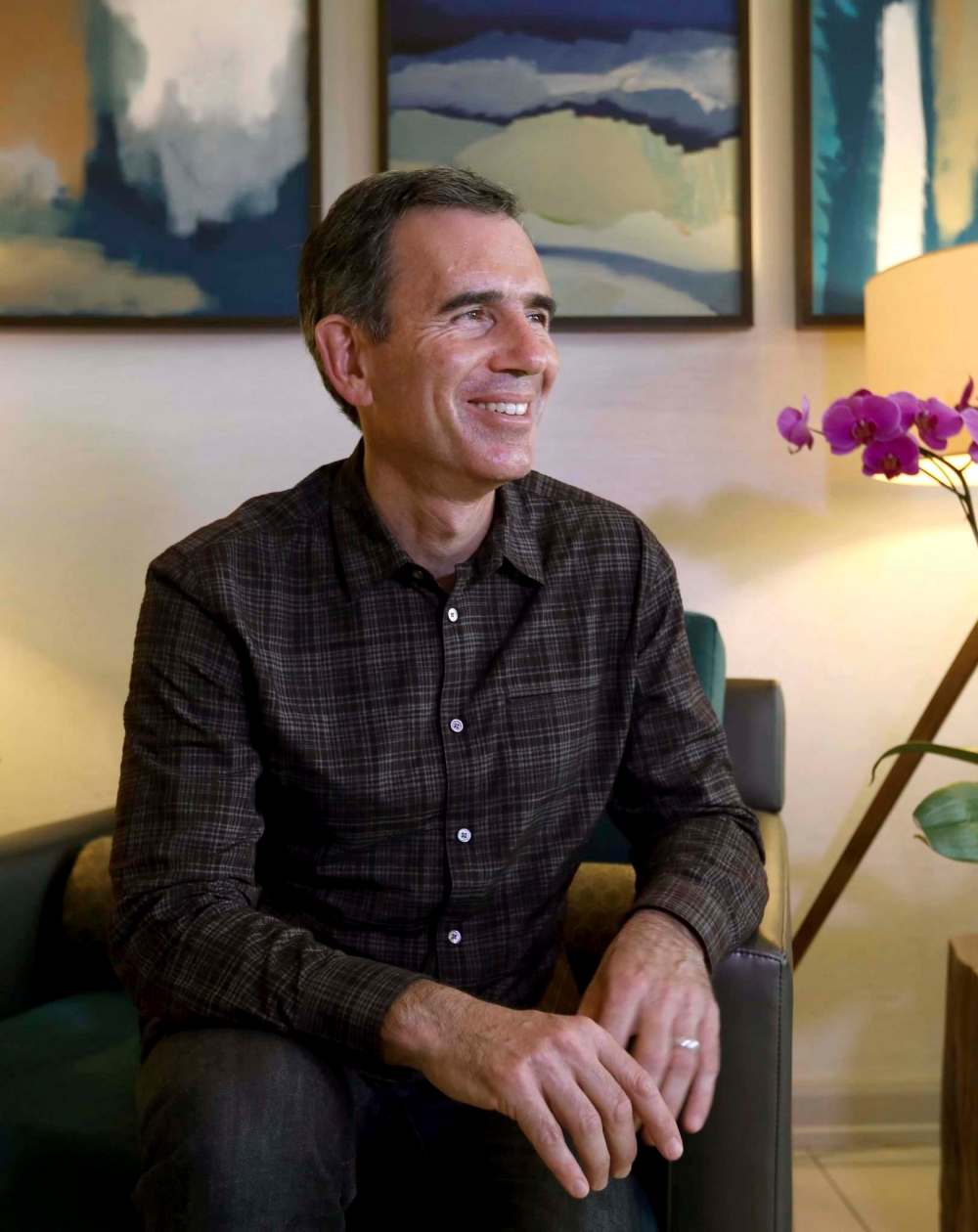
Levy, who became the company’s chief financial officer, board member and a close confidant of Jobs, said he was very concerned he’d made a big mistake until he saw a brief clip of the early stages of Toy Story.
Despite the grim setting of its studio across the road from a Chevron oil refinery in a dingy part of the San Francisco Bay Area and the poor financial prospects of the company at the time — it was US$50 million in the hole — Levy saw a spark of something in the clip and knew there was some kind of magic taking place there.
It has been more than a decade since Levy left Pixar, and the whole of the tech world in fact. He regaled the Winnipeg audience with anecdotes from his time with Jobs at Pixar that he writes about in a recently released book called To Pixar and Beyond: My Unlikely Journey with Steve Jobs to Make Entertainment History.
While Levy might be looking to earn a little with the book — Lord knows he must have done well when Disney acquired Pixar in 2006 for US$7.4 billion — he has effectively dropped out since then, pursuing a Buddhist journey toward a more balanced way of being.
But he’s still part of the Silicon Valley world. He said he never wanted to leave everything behind.
“For me, it was not about escape. I never wanted to move to some mountaintop,” he said. “This kind of way of being has to grow out of the life where we live.”
And not to say he is on a mission to change the world, but he does believe the incredible growth and material prosperity that the digital technology industry has created may be in need for a reset.
The current public concerns swirling around Silicon Valley regarding issues of privacy, toxic corporate cultures and a pervasive attitude about growth at any cost is causing brand-new kinds of questions about how technology may be leading us in a direction that may not be good for humanity.
“I would not want to be melodramatic and say the sky is falling,” Levy said in an interview.
“During my whole career in Silicon Valley, new technology was always seen as good. Now, for the first time, there are questions about whether it is a force for good or setting us back. I think people are questioning this quite deeply and it is leading to a bit a cultural crisis.”
The deployment of technology is happening so fast and it’s all so new that no one really knows what impact it will have on us all.
‘I never wanted to move to some mountaintop. This kind of way of being has to grow out of the life where we live’– Lawrence Levy
“Technology is sort of controlling us now,” he said.
“Part of the reason for that is that there are thousands of brilliant programmers at these technology companies that are figuring out, overtly, how to own our mindspace. They want us to click to the next video, buy that digital device, and they are very good at knowing how to do that. I love technology too, but I think we have to take back control of our mindspace.”
He is hopeful that society will get a handle on things. After all, we are only in the infancy of the digital era. He believes that this period will end up being a bit of an aberration.

Levy has teamed up with a spiritual mentor to form the Juniper Foundation, offering meditation programs and retreats.
He said the Silicon Valley community has been receptive to the message of the need for a better balance in the world. But he also acknowledges that the intense enterprise that takes place in the sector makes it particularly challenging to get to the kind of harmony that the ancient Buddhist ideas seek.
It’s the need for a balance between the two sides that exist in all of us that is the key to realizing our potential as individuals and create human-centred organizations that still foster creativity, dignity and excellence.
martin.cash@freepress.mb.ca