

New mining protocol unearths optimism
More involvement of First Nations among identified priorities
Advertisement
Read this article for free:
or
Already have an account? Log in here »
To continue reading, please subscribe:

Digital Subscription
One year of digital access for only $205*
- Enjoy unlimited reading on winnipegfreepress.com
- Read the E-Edition, our digital replica newspaper
- Access News Break, our award-winning app
- Play interactive puzzles
*First annual payment billed as $205.00 + GST for one year. This annual subscription will automatically renew at $233.00 + GST every 52 weeks (10% off the regular annual price of $259.35). Offer available to new and qualified returning subscribers only. Cancel any time.
To continue reading, please subscribe:
Add Free Press access to your Brandon Sun subscription for only an additional
$1 for the first 4 weeks*
- Enjoy unlimited reading on winnipegfreepress.com
- Read the E-Edition, our digital replica newspaper
- Access News Break, our award-winning app
- Play interactive puzzles
*Your next Brandon Sun subscription payment will increase by $1.00 and you will be charged $17.95 plus GST for four weeks. After four weeks, your payment will increase to $24.95 plus GST every four weeks.
Read unlimited articles for free today:
or
Already have an account? Log in here »
Hey there, time traveller!
This article was published 16/06/2018 (3020 days ago), so information in it may no longer be current.
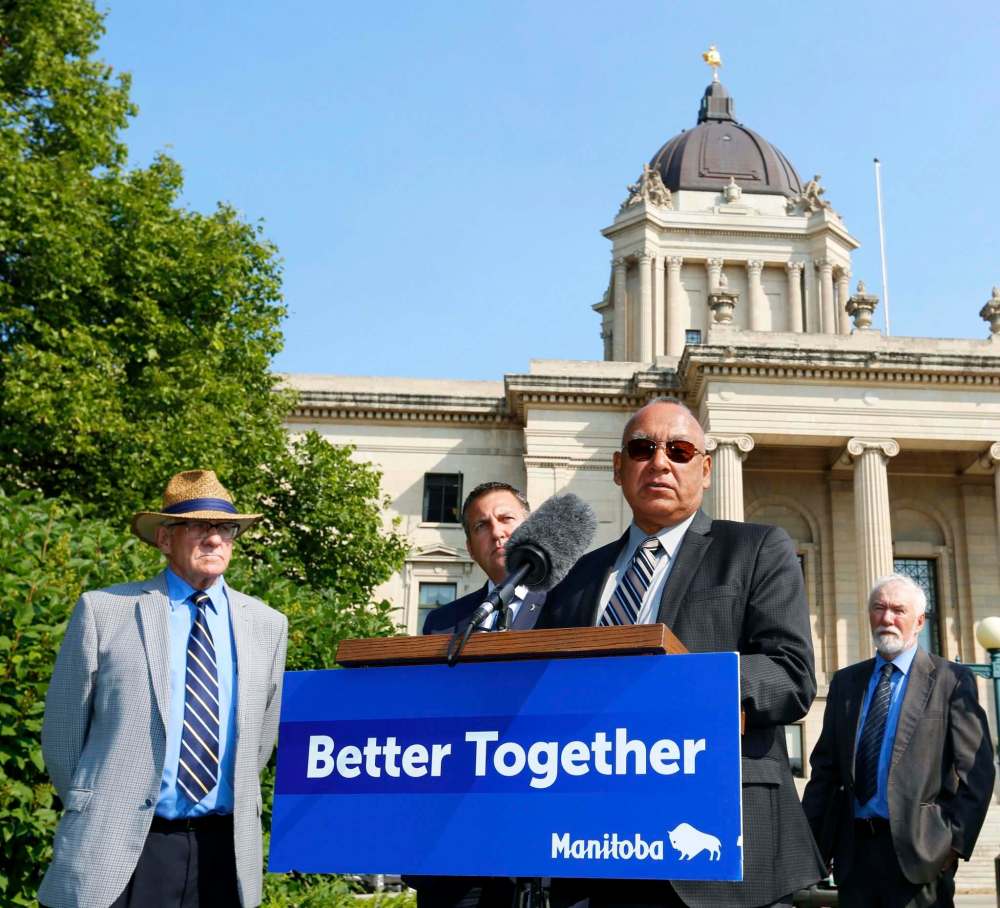
The province has released its long-anticipated First Nations Mineral Development Protocol, which is hoped to end some of the uncertainties that have dogged the industry in Manitoba.
The report, co-written by former Assembly of Manitoba Chiefs grand chief Ron Evans and former deputy premier of Manitoba Jim Downey, includes seven priority areas to be addressed.
They include common-sense issues such as better communication with First Nations about potential mineral exploration projects and more expeditious response from government regarding regulatory action it needs to take during mineral development projects. Priority areas also include a call for revenue-sharing and for First Nations to become engaged in more substantial economic partnerships with the mining companies.
Like other, similar reports to government, it runs the risk of sitting on a shelf and gathering dust — but there seems to be a sentiment shared by many that, this time, action is actually going to be taken.
Growth, Enterprise and Trade Minister Blaine Pedersen, whom sources say has made this a top priority, told industry officials as much at the Prospectors and Developers Association of Canada conference in Toronto this past March.
“We’re incredibly pleased with the positive interest it has generated,” he said.
“We understand what is at stake. The First Nations leadership is excited, the mining industry is excited. It is about getting it out into play and getting it going. We are very confident we will be able to see results.”
In spite of all of the talk over several years about the constitutionally mandated duty to consult First Nations about resource development on their traditional land, that duty has been undertaken only sporadically in Manitoba.
What seems to be different this time is that serious discussions took place with First Nation leaders and mining industry officials about what all the parties feel they need to be able to move ahead.
A key theme underlying the 20-page report is the need for capacity-building among the First Nation communities. Among other things, the report suggests that communities appoint a point person who can function as a sort of liaison with the complex industry, in which projects can often take as long as 10 years to mature into revenue-generating mines.
The report also stresses the need for early and ongoing information-sharing within the communities about what is actually happening in a resource development project.
Evans said, “Even I used to think that if you found some kind of (valuable) mineral on the ground, you’ve struck it rich right away. Obviously that is not the case.”
Evans said just getting representatives from the more than 20 First Nations to participate and prepare to learn was a key element of this process.
“Leadership in the communities need to understand that there is a lengthy process before a mine opens, getting people interested, getting investors in place,” he said. “We need to be open to have others explore the magnitude of the opportunity so they are properly informed and know what the potential is. Without getting that opportunity they (the First Nation communities) will never know.”
Andrea McLandress, executive director of the Mining Association of Manitoba, was encouraged by the report. The association represents mining companies with operations in Manitoba.
McLandress, who not long ago expressed serious concerns about the manner in which the province was managing the file during a time when mines are closing and Manitoba is losing exploration investment to neighbouring provinces, said there were some really good things in the report.
“What we see in the report are recommendations for duty to consult and to accommodate policy that is compliant with section 35 of the Constitution. That is very positive,” she said. “This is something that will provide exploration companies, mining companies and potential investors with some certainty.”
Almost as important as establishing a formula to consult is a commitment from government to be more responsive on its regulatory responsibilities.

Ken Klyne, president of the Manitoba Prospectors and Developers Association, said, “I think they are heading in the right direction. It will help speed up projects… and that’s really the end goal.”
Pedersen said the government is committed to conducting an internal review of the priority areas identified in the report and determine the best way to move forward, to consider the necessary capacity development initiatives needed to support increased Indigenous participation in mineral development projects as well as progressive policy and regulatory changes needed to move forward.
“We are committed to providing a detailed response and action plan in September of this year,” he said.
In the meantime, he said the province has already reached out to counterparts in the federal government to discuss what kinds of resources might be brought to bear to help First Nations tool up to establish community-based expertise to address resource industry projects when they arise.
martin.cash@freepress.mb.ca
History
Updated on Saturday, June 16, 2018 7:57 AM CDT: Photo added.