

The art of money
Original art can cost a pretty penny and may be a worthy investment -- just don't count on it growing into a fabulously high-value asset over the long term.
Advertisement
Read this article for free:
or
Already have an account? Log in here »
To continue reading, please subscribe:
Monthly Digital Subscription
$1 per week for 24 weeks*
- Enjoy unlimited reading on winnipegfreepress.com
- Read the E-Edition, our digital replica newspaper
- Access News Break, our award-winning app
- Play interactive puzzles
*Billed as $4.00 plus GST every four weeks. After 24 weeks, price increases to the regular rate of $19.95 plus GST every four weeks. Offer available to new and qualified returning subscribers only. Cancel any time.
Monthly Digital Subscription
$4.99/week*
- Enjoy unlimited reading on winnipegfreepress.com
- Read the E-Edition, our digital replica newspaper
- Access News Break, our award-winning app
- Play interactive puzzles
*Billed as $19.95 plus GST every four weeks. Cancel any time.
To continue reading, please subscribe:
Add Free Press access to your Brandon Sun subscription for only an additional
$1 for the first 4 weeks*
- Enjoy unlimited reading on winnipegfreepress.com
- Read the E-Edition, our digital replica newspaper
- Access News Break, our award-winning app
- Play interactive puzzles
*Your next Brandon Sun subscription payment will increase by $1.00 and you will be charged $17.95 plus GST for four weeks. After four weeks, your payment will increase to $24.95 plus GST every four weeks.
Read unlimited articles for free today:
or
Already have an account? Log in here »
Hey there, time traveller!
This article was published 01/02/2020 (2292 days ago), so information in it may no longer be current.
It’s often said that art is for everyone. And Woodlands Gallery on Academy Road reflects that notion to one degree or another with pieces ranging from a few hundred to several thousand dollars for sale.
“There’s so many people (in the city) that appreciate art and want artwork for their home as opposed to just a print or poster,” says Jennifer DeLury, director of the gallery, which features many local and Canadian contemporary artists.
“So it’s not necessarily that our clients have piles of extra money, but art is something they really appreciate.”
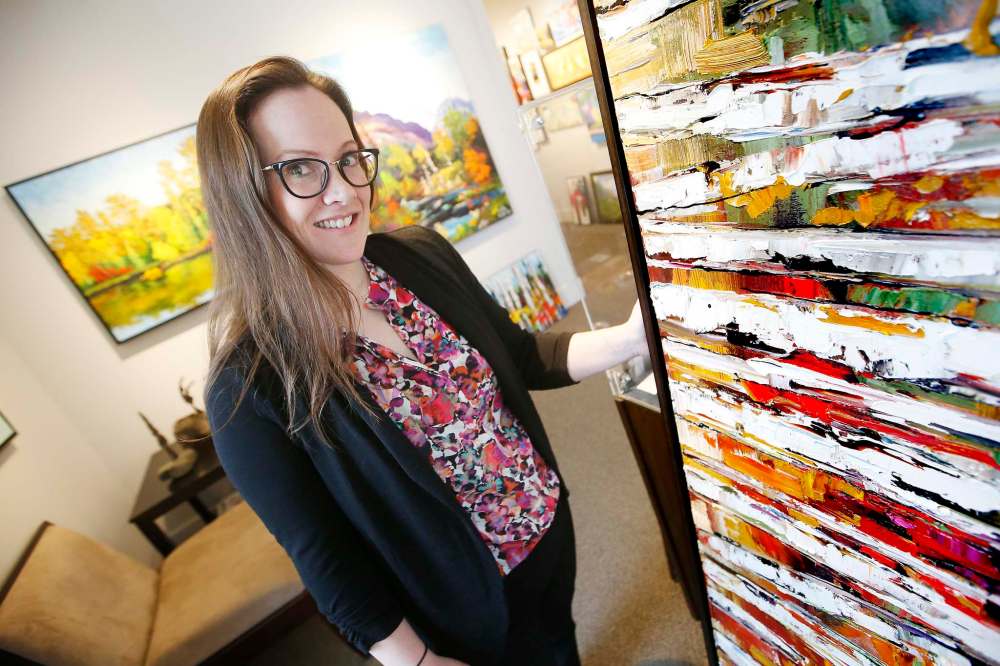
Of course, when it comes to collecting original art, having disposable cash doesn’t hurt.
Even a painting by a well-established Canadian contemporary artist, which few people outside the Canadian art community have ever heard of, can set you back $3,000.
Of course, sales of high-profile works by ultra-famous painters catch headlines selling at auction for millions of dollars. As such, it may be tempting, if you’ve got a yen for art, to think your investment in what can feel like a small fortune may parlay into a potentially massive treasure years down the road.
Certainly the upper echelon of art is among one of the best performing luxury assets on the planet, according to the Knight Frank Luxury Investment Index. Its 2019 report showed art grew by nine per cent year over year, and by nearly 160 per cent over the last decade.
Now, that doesn’t beat stock market returns necessarily, considering the S&P 500 in the U.S. grew by more than 200 per cent over the last decade. Then again, high art’s performance is an improvement over the TSX Composite Index, which has grown by about 60 per cent.
But those growth figures pertain only to the very exclusive market of expensive, in-demand and high-profile works, says Lisa Desilets, a Winnipeg art consultant and accredited art appraiser with International Society of Appraisers.
“And Canada is not as ferocious as other markets.” Still, would a work by Kent Monkman command six figures? “Absolutely,” she says, referring to one of the nation’s most celebrated contemporary artists, whose work is on display until later this month at the Winnipeg Art Gallery.
Of course, paintings by the crème de la crème of Canada’s art world, the Group of Seven, can auction for millions, including Lawren Harris’s Mountain Forms that sold for more than $11 million in 2016. That’s the highest price paid for any Canadian painting.
Desilets notes social context is critical to determine a piece’s cultural and monetary value.
For example, the piece by Harris, while renowned in Canada, may not have sold for what it did had it not been for famed comedian, turned serious art collector, Steve Martin taking an interest in the long-deceased painter’s work.
Even values for the works of the Old Masters — renowned European artists prior to 1800 — vary greatly depending on context. For instance, the highest price ever paid for a painting was for Leonardo da Vinci’s Salvator Mundi in 2017 for US$450 million. It fetched this fortune in part because it was among the artist’s only remaining works available for private ownership. Furthermore its history is fascinating, trading hands under the radar for centuries. It was even over-painted, only to be confirmed as an authentic da Vinci a few years ago.
So while beauty is in the eye of the collector, art’s monetary value depends on several often volatile drivers, she says.
“Art is fickle; there are fads, styles and traditions much like fashion,” she says, adding socio-economic factors generally determine whose works are valuable in the short and long term.
Consider a painting for $3,000 by an established contemporary painter whose work sells at galleries across Canada.
“Depending on the style, socio-cultural tastes and the renown of the artist, you may get your $3,000 back in 30 years, but my experience tells me, more often than not, people will have a hard time selling,” she says.
For this reason art is more of a passion investment than of wealth creation.
“You invest in it because it’s going to bring you pleasure, and then hopefully, a future generation will enjoy it too,” DeLury says. Still, works at Woodlands by more in-demand artists tend to appreciate in value over time, she adds.
Given the potential, serious art collecting requires maintenance, insurance and even estate planning considerations, and most individuals need professional help, says Sarah Johnson, director wealth planning at BMO Private Wealth in Kelowna, B.C., specializing in high-value assets like fine art.
“Serious art collectors don’t buy a piece to just hang it over the fireplace,” she says. “They’re very knowledgeable about the need to protect it.”
One key consideration is passing on pieces of value to the next generation, or selling it after several years of ownership. Both are related, partly because heirs may want to sell a piece that appealed to their parents but not to them.
Depending on value, Canada Revenue Agency may view gifting or selling the works to involve taxable gains in value. Johnson adds while this may involve a tax liability, it also presents charitable giving opportunities, particularly if it’s considered a cultural asset.
Johnson notes Canadian Cultural Property Export Review Board deems what older art, and even artifacts (old photos included), have cultural value and consequently are eligible for a tax credit. It’s also worth noting many people — not just the wealthy — have found art and similar items of cultural value in their homes, or those of a deceased loved one’s home, Johnson adds.
The more high-profile rare finds make the headlines, piquing the public’s imagination. And that’s really at the heart of the “human construct” that can lend outsized monetary value to art. The piece must be rare, and yet well recognized enough to be in demand by someone willing to pay for it.

Even then items are generally illiquid. (Unlike stocks, you can’t generally sell them the same day.)
But art offers so much more than cash value.
“Everybody would miss art if they don’t have it in their lives,” Desilets says.
So, although owning, or creating, it generally won’t make people rich, “our lives are richer for it,” DeLury says.
“If we didn’t have artists, painters, dancers and musicians, it’d be a pretty boring world.”