

To pay or not to pay?
With many tenants unable to pay more than 15 per cent of this month's rent, mall owners are making tough decisions

Advertisement
Read this article for free:
or
Already have an account? Log in here »
To continue reading, please subscribe:
Monthly Digital Subscription
$1 per week for 24 weeks*
- Enjoy unlimited reading on winnipegfreepress.com
- Read the E-Edition, our digital replica newspaper
- Access News Break, our award-winning app
- Play interactive puzzles
*Billed as $4.00 plus GST every four weeks. After 24 weeks, price increases to the regular rate of $19.95 plus GST every four weeks. Offer available to new and qualified returning subscribers only. Cancel any time.
Monthly Digital Subscription
$4.99/week*
- Enjoy unlimited reading on winnipegfreepress.com
- Read the E-Edition, our digital replica newspaper
- Access News Break, our award-winning app
- Play interactive puzzles
*Billed as $19.95 plus GST every four weeks. Cancel any time.
To continue reading, please subscribe:
Add Free Press access to your Brandon Sun subscription for only an additional
$1 for the first 4 weeks*
*Your next subscription payment will increase by $1.00 and you will be charged $16.99 plus GST for four weeks. After four weeks, your payment will increase to $23.99 plus GST every four weeks.
Read unlimited articles for free today:
or
Already have an account? Log in here »
Hey there, time traveller!
This article was published 19/05/2020 (2166 days ago), so information in it may no longer be current.
Major Canadian malls collected just 15 per cent of rent payments from tenants this month, representing a low point for the sector and an indication of struggles yet to come for large shopping centres in the country.
When the pandemic first reached the country, indoor malls were among the first to close, and their tenants, especially smaller kiosks and shops, faced unique challenges: in many cases, those stores’ sales model was entirely dependent on selling directly from the mall, and curbside pickup — which has proven a salve for many retailers — is more difficult without direct access to the outside; food courts immediately lost virtually all of their daily business.
The economic struggles haven’t stopped since, and many tenants held back on rent. In April, national mall operators received on average 25 per cent of tenants’ payments, according to Jones Lang LaSalle Inc., an American real-estate services firm with a Canadian arm. In May, that figure dropped to 15 per cent — an excruciating blow that could have major repercussions on what malls will look like once reopening is possible everywhere.
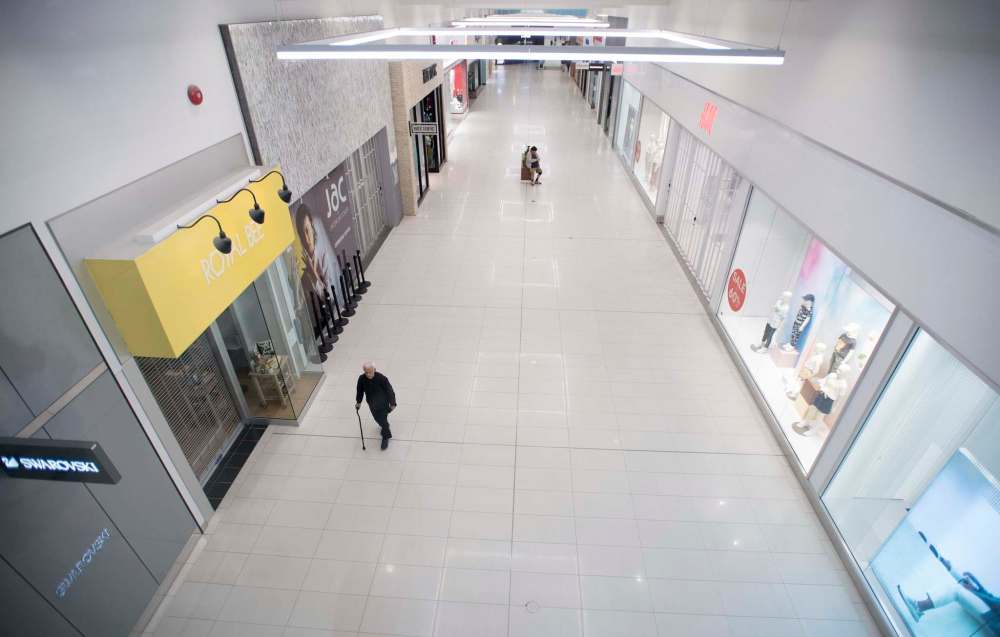
“You can’t sustain a business when you’re losing 85 to 87 per cent of your revenue,” said Tim Sanderson, Jones Lang LaSalle’s executive vice president. The firm’s data is based on surveys of the landlords who own the country’s Tier 1 mall real estate, many of whom have been vocal about their current financial strain.
Brad Jones, the head of retail for Oxford Properties Group, told Real Estate News EXchange (RENX) in April that his company, which owns 10 major malls, collected just 20 per cent of rent payments that month. And while some retailers, like Aldo or J.Crew, are in the process of filing for bankruptcy protection, “Jones believes some retailers had the financial capacity to pay, but simply didn’t,” the article reads.
Some firms have offered large payment deferment plans: the Financial Post reported that RioCan approved $15 million in deferral requests from commercial tenants. But some retailers like the Gap Inc., have publicly indicated they wouldn’t be paying their North American rent.
Sanderson said the decision to not pay rent is an example of struggling legacy retailers exercising their leverage, a risky gambit which mom and pop organizations are less likely to try. However, that leverage is anything but stable.
“Companies like Lululemon, Aritzia, Apple, they paid their rent, guaranteed employment, and took a high line on it,” Sanderson said. “But the Gap can’t even do that. It’s all about balance sheets and liquidity.”
Winnipeg’s malls reopened May 4, including the CF-owned Polo Park, Cushman & Wakefield-managed St. Vital mall, the RioCan-owned Garden City mall, and the Primaris Reit-owned Grant Park and Kildonan Place malls. None of those companies made themselves available for an interview, but they do face a present and future drastically different from their past.
Each mall has a single point of entry; seating areas have been reduced and spread further apart throughout the mall; food courts are closed or operating at a severely reduced capacity; security staff remind shoppers who show up to remain distant. Cleaning protocols have been boosted.
Sanderson, who’s analyzed retail for three decades, said opening is no simple task for malls. He says a shopper could show up expecting normalcy, only to find none of the stores they wanted to shop at are open due to reduced hours or an inability to staff. “It’s a bit of an underwhelming experience,” he said. “Guess what, she might go home, shop e-commerce, or go down the street to an open-air centre.”
Some anchor tenants think that thought process is not going away. Canadian Tire president and CEO Greg Hicks said in a May conference call that though revenues decreased with storefronts shut down, the company saw a 44 per cent increase in e-commerce sales, reported The Globe and Mail.
“We believe COVID-19 has permanently shifted the shopping behaviour of many,” he said.
While many savvy retailers were already deeply invested in an omni-channel approach of e-commerce and brick and mortar, the pandemic has led companies big and small to dig in their heels and invest in digital, even as reopening efforts ramp up.
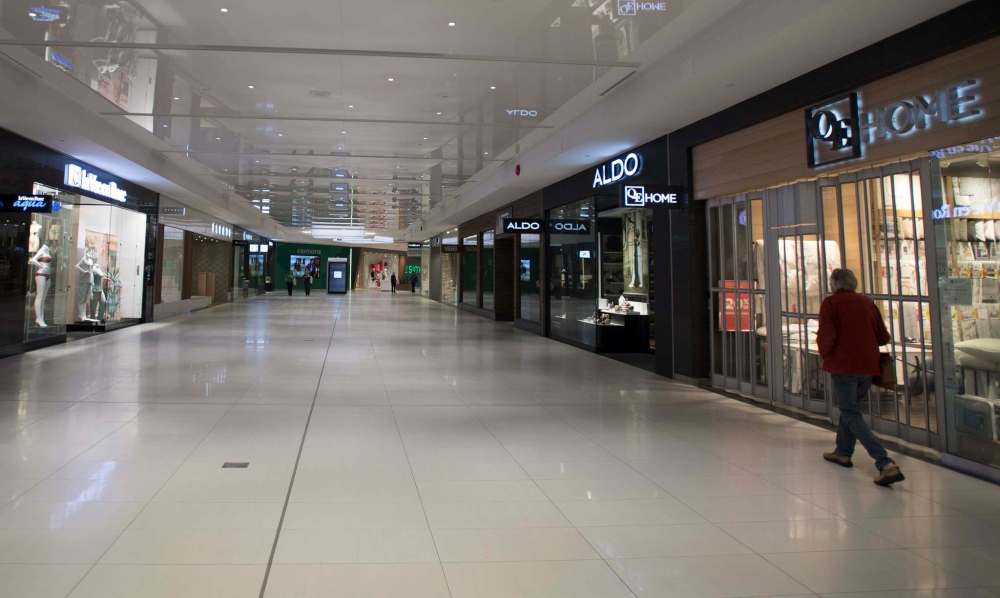
It presents a challenge for malls, which rely on in-person purchases. But with more Canadians using online options — Jay Freedman of Oberfield Snowcap told RENX three in 10 e-commerce shoppers are new to it — there’s potential for the behaviour to stick.
Aside from rent shortfalls, retail vacancy is also on the uptick, said Sanderson. The fourth quarter of 2019 and the first quarter of this year saw 2.6 per cent of all retail space vacant in Canada. “I think we’re on our way to six per cent,” he said.

However, during the 2008 economic recession, vacancy reached almost 9 per cent, and American retailers like Apple, American Eagle and more came flocking to Canada, which was hit less hard. A similar scenario could pan out, Sanderson said, with the U.S. again facing direr outlooks. But that’s entirely speculative, he said.
While malls are reopening, it’s too early to say with certainty how quickly, or if, they will rebound. A lot of it depends on how soon customers actually return to shop, and that all depends on buyer confidence and a sense of safety.
As far as rent is concerned, Sanderson said he doesn’t expect the percentage of retailers not paying to get higher than it is now. But there is an obvious reality that many retailers in malls won’t survive, and that vacancy rates will climb.
“You talk to landlords, and there are tenants who weren’t going to make it anyway (before COVID-19),” he said. “It’s the natural evolution in retail.”
ben.waldman@freepress.mb.ca
Ben Waldman is a National Newspaper Award-nominated reporter on the Arts & Life desk at the Free Press. Born and raised in Winnipeg, Ben completed three internships with the Free Press while earning his degree at Ryerson University’s (now Toronto Metropolitan University’s) School of Journalism before joining the newsroom full-time in 2019. Read more about Ben.
Every piece of reporting Ben produces is reviewed by an editing team before it is posted online or published in print — part of the Free Press‘s tradition, since 1872, of producing reliable independent journalism. Read more about Free Press’s history and mandate, and learn how our newsroom operates.
Our newsroom depends on a growing audience of readers to power our journalism. If you are not a paid reader, please consider becoming a subscriber.
Our newsroom depends on its audience of readers to power our journalism. Thank you for your support.
Ben Waldman is a National Newspaper Award-nominated reporter on the Arts & Life desk at the Free Press. Born and raised in Winnipeg, Ben completed three internships with the Free Press while earning his degree at Ryerson University’s (now Toronto Metropolitan University’s) School of Journalism before joining the newsroom full-time in 2019. Read more about Ben.
Every piece of reporting Ben produces is reviewed by an editing team before it is posted online or published in print — part of the Free Press‘s tradition, since 1872, of producing reliable independent journalism. Read more about Free Press’s history and mandate, and learn how our newsroom operates.
Our newsroom depends on a growing audience of readers to power our journalism. If you are not a paid reader, please consider becoming a subscriber.
Our newsroom depends on its audience of readers to power our journalism. Thank you for your support.
Advertisement Advertise With Us
Advertisement Advertise With Us
History
Updated on Tuesday, May 19, 2020 7:08 AM CDT: Corrects that malls opened May 4
Updated on Tuesday, May 19, 2020 1:00 PM CDT: St. Vital mall is managed by Cushman & Wakefield.