

New Flyer, Motor Coach uniting
Streamlining effort aims to save NFI Group up to $75 million by 2023
Advertisement
Read this article for free:
or
Already have an account? Log in here »
To continue reading, please subscribe:
Monthly Digital Subscription
$1 per week for 24 weeks*
- Enjoy unlimited reading on winnipegfreepress.com
- Read the E-Edition, our digital replica newspaper
- Access News Break, our award-winning app
- Play interactive puzzles
*Billed as $4.00 plus GST every four weeks. After 24 weeks, price increases to the regular rate of $19.95 plus GST every four weeks. Offer available to new and qualified returning subscribers only. Cancel any time.
Monthly Digital Subscription
$4.99/week*
- Enjoy unlimited reading on winnipegfreepress.com
- Read the E-Edition, our digital replica newspaper
- Access News Break, our award-winning app
- Play interactive puzzles
*Billed as $19.95 plus GST every four weeks. Cancel any time.
To continue reading, please subscribe:
Add Free Press access to your Brandon Sun subscription for only an additional
$1 for the first 4 weeks*
*Your next subscription payment will increase by $1.00 and you will be charged $16.99 plus GST for four weeks. After four weeks, your payment will increase to $23.99 plus GST every four weeks.
Read unlimited articles for free today:
or
Already have an account? Log in here »
Hey there, time traveller!
This article was published 28/07/2020 (2043 days ago), so information in it may no longer be current.
As part of a sweeping cost-cutting initiative aimed at generating up to $75 million in savings by the end of 2022, NFI Group Inc. is combining New Flyer and Motor Coach Industries into one company and will likely reduce its workforce.
“NFI Forward” as the effort is being called, will have a significant impact on its Winnipeg operation, which is both the site of the corporate headquarters and the largest manufacturing location for both New Flyer transit buses and MCI highway coaches.
Company officials said the bulk of the annualized cost savings is expected to come from the integration of the MCI and New Flyer business units.
In late March as the effect of the COVID-19 pandemic was quickly understood and non-essential travel was being shut down around the world — including the group tour travel business that stalled private motor coach sales — the company announced about 400 layoffs at MCI.
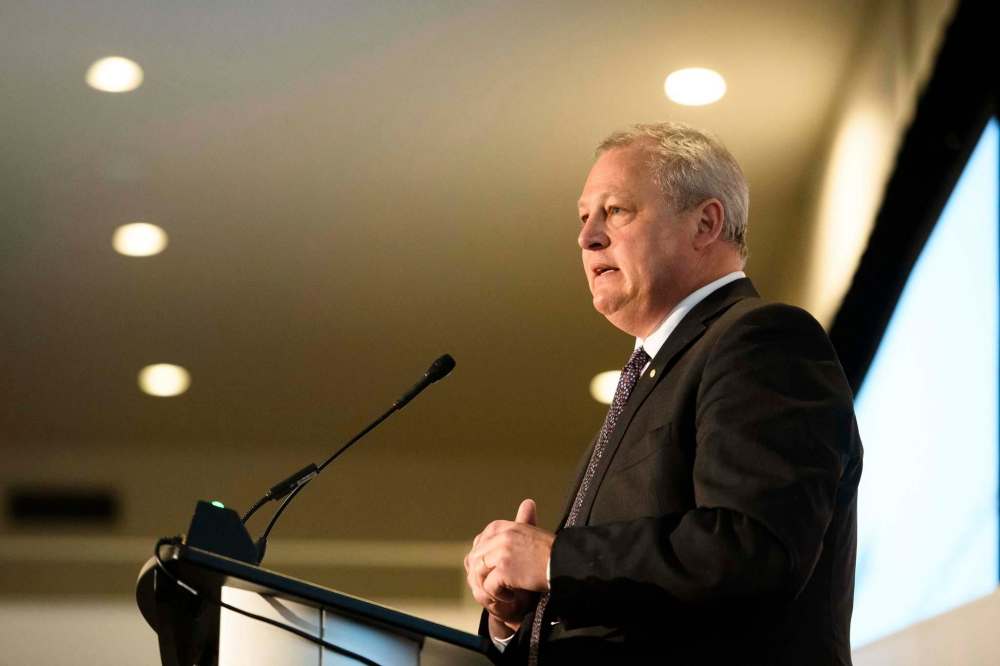
On Monday, company chief executive officer Paul Soubry made it clear that the system-wide rethink is likely going to mean further job losses from both the management ranks and hourly wage sectors from a workforce that now totals about 9,000 worldwide.
“We worked so hard over the last 10 to 11 years to build a business that is diversified and global where we were investing in factories and people and product and then the pandemic hit,” Soubry said. “It’s pretty hard to have to make decisions on people’s lives through no fault of their own.”
He said management had drawn up a three-year strategic plan that it pitched to its board at the beginning of the year which included much of what it is now contemplating, minus the rationalizations.
Soubry would not say how many people will be affected or what if any facilities might be closed. But he did say there will be “no stone unturned.”
NFI Forward is expected to deliver an eight per cent reduction in manufacturing overhead and a 10 per cent reduction in sales and general administrative expenses.
With the combination of management of both New Flyer and MCI, it will mean a number of management positions at the two companies will become redundant.
“But there is no question that workers will be affected, too,” Soubry said. “The good news is that we have built a backlog into many of our businesses. The bad news is that with no new orders for a while you burn down your backlog and if you have nothing to build, then there is no way you can economically afford to keep everyone standing around. That is the tightrope we are on.”
In trying to balance the needs of all its stakeholders — customers, employees and shareholders — the company said it expects to maintain its current dividend rate and expects to have sufficient capital liquidity. (In March the dividend rate was cut in half.)
The two distinct brands will be retained as further integration of the two companies takes place. New Flyer Industries, the largest heavy-duty transit bus manufacturer in North America, acquired MCI, the largest highway coach manufacturer, in 2015.
The streamlining process is designed to transform NFI Group from a holding company to an integrated operating business. It could mean the closing of some NFI facilities, which are located across North America and in the U.K., where it owns Alexander Dennis, the largest double-decker bus company in the world.
Although NFI Group has been hit just like almost every other element of the North American economy, Soubry remains confident that when the “new normal” is established there will continue to be a vital role for buses, especially urban transit buses.

“You are still going to need transit buses to move masses of people around cities,” he said. “There will be tweaks and changes in the way the product looks and operates but you are still going to have to move people. It’s an awful analogy, but given where we are today we have to go on a diet from a cost perspective.”
The company said that transit commissions in the U.S. continue to be funded by the federal government and in a note to clients on Monday, Cameron Doerksen, an analyst with National Bank of Canada Financial Markets, agreed, saying, “We note that about 70 per cent of NFI’s revenue is generated from public transit customers that we expect will remain well funded by governments in spite of near-term reductions in transit ridership.”
Since 2010, New Flyer has made eight acquisitions, including North American Bus Industries Inc. in 2013 and the parts business of another bus company so that it now has a patchwork of 22 different parts-stocking locations in Canada and the U.S. Those are the kinds of rationalizations the initiative will be addressing.
Shares in the company were up 52 cents on Monday, its biggest single-day gain in almost two months.
martin.cash@freepress.mb.ca
History
Updated on Tuesday, July 28, 2020 7:26 AM CDT: Adds photo