

User-generated content not a target of Broadcast Act changes, says heritage minister
Advertisement
Read this article for free:
or
Already have an account? Log in here »
To continue reading, please subscribe:

Digital Subscription
One year of digital access for only $205*
- Enjoy unlimited reading on winnipegfreepress.com
- Read the E-Edition, our digital replica newspaper
- Access News Break, our award-winning app
- Play interactive puzzles
*First annual payment billed as $205.00 + GST for one year. This annual subscription will automatically renew at $233.00 + GST every 52 weeks (10% off the regular annual price of $259.35). Offer available to new and qualified returning subscribers only. Cancel any time.
To continue reading, please subscribe:
Add Free Press access to your Brandon Sun subscription for only an additional
$1 for the first 4 weeks*
- Enjoy unlimited reading on winnipegfreepress.com
- Read the E-Edition, our digital replica newspaper
- Access News Break, our award-winning app
- Play interactive puzzles
*Your next Brandon Sun subscription payment will increase by $1.00 and you will be charged $17.95 plus GST for four weeks. After four weeks, your payment will increase to $24.95 plus GST every four weeks.
Read unlimited articles for free today:
or
Already have an account? Log in here »
Hey there, time traveller!
This article was published 08/03/2021 (2044 days ago), so information in it may no longer be current.
OTTAWA – The minister responsible for making changes to Canada’s broadcasting laws says legislation he introduced recently does not target user-generated online content.
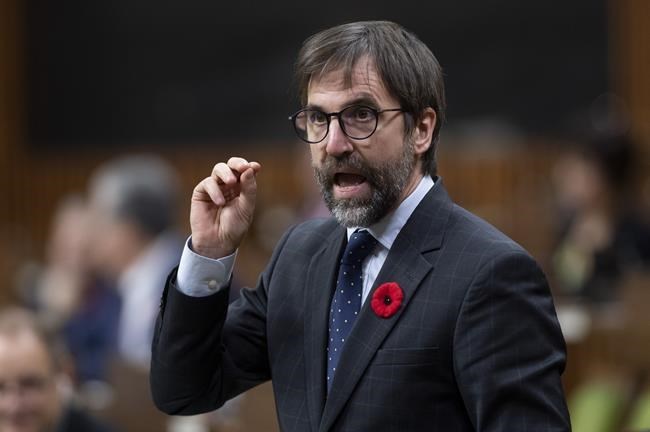
Heritage Minister Steven Guilbeault told a House of Commons committee Monday the aim of Bill C-10 is to regulate online video and music streaming services in much the same way as conventional broadcasters.
But Guilbeault says homegrown content carried online won’t be regulated under the legislation.
The bill, if passed, would expand the authority of Canada’s broadcasting regulator, the Canadian Radio-television and Telecommunications Commission, to include online video and music streaming services.
New Democrat MP Heather McPherson told the committee the legislation appears to exempt online giants Facebook and Google from CRTC regulations.
Guilbeault explained that is not the case and that online services would be regulated when they carry out business as broadcasters.
“When they will act as broadcasters, then the regulations will be able to apply to them,” Guilbeault explained.
“As a legislator, I am not particularly interested in when my step-uncle posts pictures of his cats on YouTube or Facebook.”

Guilbeault also faced questions over why Bill C-10 did not included provisions aimed at curbing online hate.
“That legislation will come later,” the minister said, arguing that it would take much longer to pass the bill had it included many more elements, if it’s to pass at all under the current legislative calendar.
The federal government tabled the proposed changes to the Broadcasting Act in November that could see online streaming services contribute as much as $830 million a year toward Canadian content by 2023.
While some Canadian media producers have welcomed the bill, other supporters of content rules have criticized it as being too soft. Critics of expanded regulation warn it will ultimately harm consumers.
This report by The Canadian Press was first published March 8, 2021.