

‘It’s really gotten worse’
Pandemic has exacerbated already significant problem of financial elder abuse, experts contend
Advertisement
Read this article for free:
or
Already have an account? Log in here »
To continue reading, please subscribe:

Digital Subscription
One year of digital access for only $205*
- Enjoy unlimited reading on winnipegfreepress.com
- Read the E-Edition, our digital replica newspaper
- Access News Break, our award-winning app
- Play interactive puzzles
*First annual payment billed as $205.00 + GST for one year. This annual subscription will automatically renew at $233.00 + GST every 52 weeks (10% off the regular annual price of $259.35). Offer available to new and qualified returning subscribers only. Cancel any time.
To continue reading, please subscribe:
Add Free Press access to your Brandon Sun subscription for only an additional
$1 for the first 4 weeks*
- Enjoy unlimited reading on winnipegfreepress.com
- Read the E-Edition, our digital replica newspaper
- Access News Break, our award-winning app
- Play interactive puzzles
*Your next Brandon Sun subscription payment will increase by $1.00 and you will be charged $17.95 plus GST for four weeks. After four weeks, your payment will increase to $24.95 plus GST every four weeks.
Read unlimited articles for free today:
or
Already have an account? Log in here »
Hey there, time traveller!
This article was published 26/06/2021 (1888 days ago), so information in it may no longer be current.
The pandemic has spawned a host of problems — to say the least.
Yet it also has exacerbated an ongoing problem in Canada, affecting some of our most vulnerable citizens: seniors.
That’s not just because the virus often poses a greater danger to their health than younger individuals.
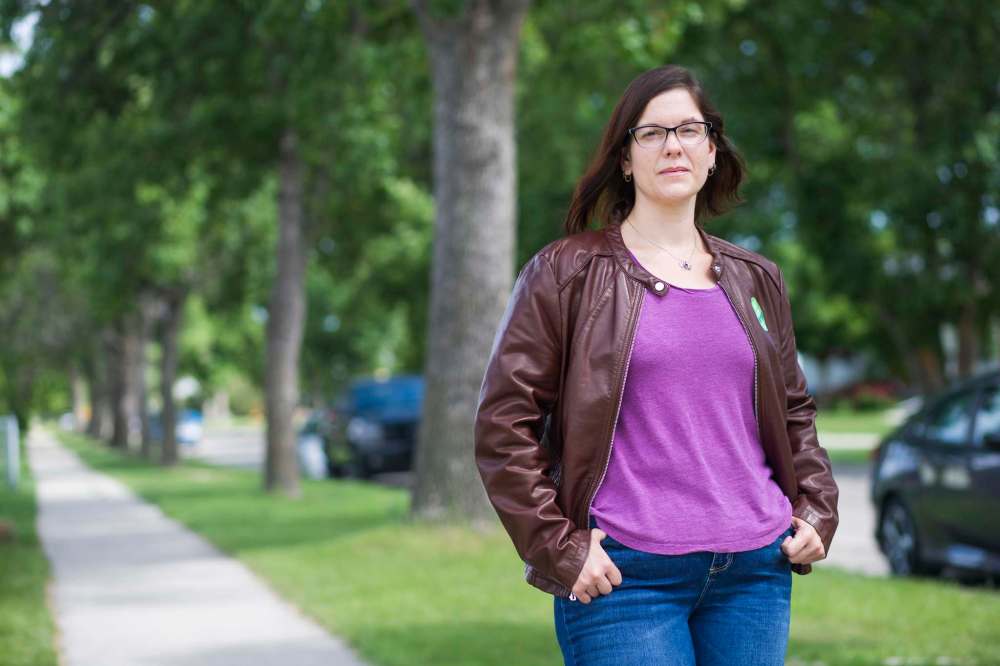
The pandemic has also sparked a sharp rise in elder abuse, including financial abuse, as many older Canadians have spent the past several months more isolated and often forced to carry out their financial lives in unfamiliar territory — the online world.
That’s made some seniors more susceptible to predatory behaviour by fraudsters and even the people closest to them, like adult children, experts say.
“It’s really gotten worse,” says lawyer Laura Tamblyn Watts, president and CEO of CanAge, a non-profit advancing the rights and well being of Canadians as they age.
“Pre-COVID-19, one in six seniors were subject to elder abuse or neglect, and since COVID-19, there is strong evidence that there has been an increase of about 250 per cent.”
The issue was brought into focus recently at a Facebook Live event hosted by the Manitoba Financial Services Agency (MFSA) to mark June as Seniors Month, and World Elder Abuse Awareness Day (WEAAD) on June 15.
Tamblyn Watts was among the speakers at the webinar that also included experts from Cambrian Credit Union and local law firm Fillmore Riley LLP.
She says the event could not be timelier, given our nation’s increasingly gray demographics.
“We are in the beginning of a 15-year span where we will see a transfer of a trillion dollars of inter-generational wealth, along with an increasing aged population,” says Watts, also executive member of the Canadian Bar Association’s National Elder Law section.
“Add in COVID-19’s impact… and we are facing a perfect storm for elder abuse.”
Elder abuse and neglect are often physical or emotional in nature, but financial abuse typically goes hand-in-hand with both.
“We know from our 2015 prevalence study that when there is financial abuse, there is almost always at least one form of other abuse,” she says.
During the pandemic, increased use of online banking, e-commerce, and credit and debit cards using tap technology has made exploiting victims easier for predators, says Nicole Prokoppa, policies and procedures administrator with Cambrian.
“It is often a crime of opportunity,” she adds.
As such many cases actually involve family members as the perpetrators.
“There is often this sense of entitlement where the adult children think they will get the money as inheritance anyway, ‘so what is the big deal if I dip into it right now?’” she explains.
“It’s almost this crime where people have no problem removing the criminal component in their minds to make it seem like it’s OK.”

Financial institutions are putting more time, money and effort to detect these crimes, says Larry Zelvin, head of the financial crimes unit at BMO.
In some instances, a client comes to the branch with a younger person asking for transactions that “make you scratch your head,” he adds. “And the good news is our employees are now trained to ask the appropriate questions and elevate concerns to more senior staff.”
Financial institutions are also using software to spot financial fraud and abuse.
Prokoppa points out one recent instance where Cambrian’s software flagged late-night ATM withdrawals by an aging member.
“What we found was the member was living in a nursing home, and through a thorough investigation it was detected… an adult child had taken the debit card,” to withdraw money to spend at a local casino.
In other cases, it’s strangers committing crimes, reaching out to seniors who are new to social media. Often this involves a new spin on romance scams, in which fraudsters prey on lonely and isolated individuals, Zelvin says.
“These can be really complicated to deal with because the customer is in a relationship,” he says. “So they’re asking us, ‘This is my new friend in need; why are you getting involved in my personal life?’”

Prevention is generally the best weapon to fight elder abuse and fraud, Tamblyn Watts says.
As such all individuals should be careful about who they trust to help them with their money, especially with respect to appointing a power of attorney. She also strongly recommends against making accounts joint with family members. In the past, some aging individuals sought to make accounts joint to avoid probates fees on the estate after they died, but these charges no longer apply in Manitoba.
Alternatively family and friends should look for warning signs an aging loved one is being exploited. Some red flags may be unpaid bills, not regularly visiting the dentist anymore, or being unable to afford medication.
Anything out of the usual should be of concern, Tamblyn Watts says.
“Is there a shiny new convertible in front of the 95-year-old’s house even though that person hasn’t driven in years?”