

They’re in it to win it
Lottery conglomerate Pollard Banknote the only Manitoba company to make TSX Top 30 performers
Advertisement
Read this article for free:
or
Already have an account? Log in here »
To continue reading, please subscribe:
Monthly Digital Subscription
$1 per week for 24 weeks*
- Enjoy unlimited reading on winnipegfreepress.com
- Read the E-Edition, our digital replica newspaper
- Access News Break, our award-winning app
- Play interactive puzzles
*Billed as $4.00 plus GST every four weeks. After 24 weeks, price increases to the regular rate of $19.95 plus GST every four weeks. Offer available to new and qualified returning subscribers only. Cancel any time.
Monthly Digital Subscription
$4.99/week*
- Enjoy unlimited reading on winnipegfreepress.com
- Read the E-Edition, our digital replica newspaper
- Access News Break, our award-winning app
- Play interactive puzzles
*Billed as $19.95 plus GST every four weeks. Cancel any time.
To continue reading, please subscribe:
Add Free Press access to your Brandon Sun subscription for only an additional
$1 for the first 4 weeks*
*Your next subscription payment will increase by $1.00 and you will be charged $16.99 plus GST for four weeks. After four weeks, your payment will increase to $23.99 plus GST every four weeks.
Read unlimited articles for free today:
or
Already have an account? Log in here »
Hey there, time traveller!
This article was published 17/09/2021 (1660 days ago), so information in it may no longer be current.
When Pollard Banknote went public as an income trust in 2005, the initial offering was $10 per unit.
Its shares did not hit $10 again until 2016.
But over the past three years, Pollard Banknote shares were among the top 30 best-performing stocks on the TSX (28th, to be exact), growing by 166 per cent. It is the only Manitoba listed company to make it on this year’s top 30 list.
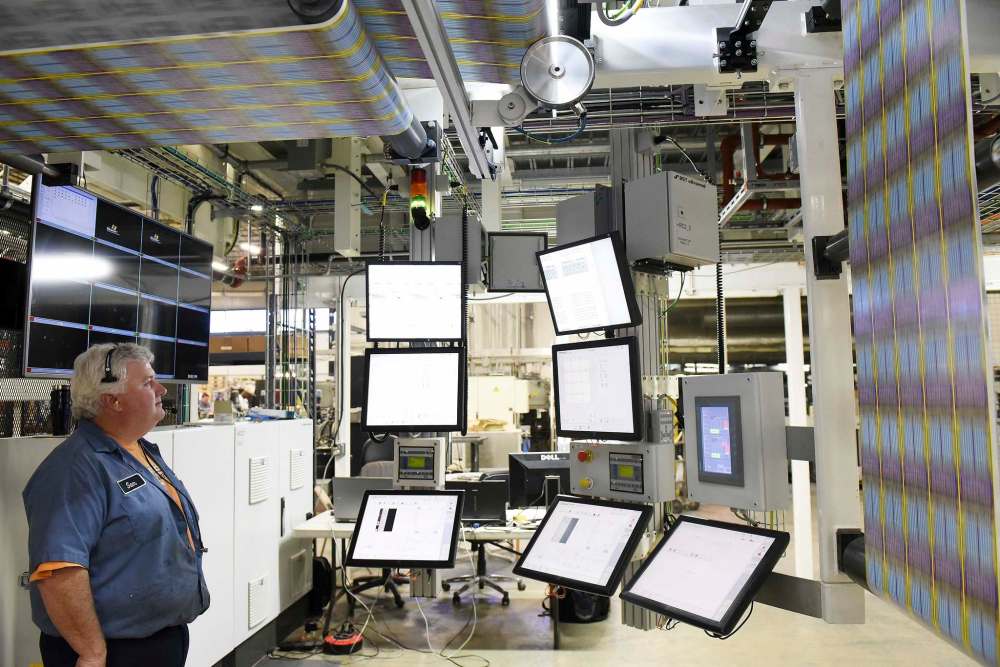
In the past its share price was dragged down by the spike in the Canadian dollar a decade ago (more than 60 per cent of Pollard’s revenue comes from the U.S.), the changes to the income trust regulations in 2010 and by the 2008 economic crash.
But it has also become a much more profitable company. It previously made the TSX top 30 performance list in 2019, when it ranked 13th.
“We’re happy for the people who have stuck it out with us,’ said Doug Pollard, the company’s co-CEO. “We debuted at $10 like every other income trust. We traded down as low as $2 to $3 and there are people who have stuck with us through that and have seen it come back to where it is today.”
Earlier this year it raised $34.5 million in a share offering at $36.95 per share. Pollard closed at $47.10 on Thursday.
It’s only the second time in three years it has gone to the market to raise new equity. It’s an important element of the business because it helps to dilute the Pollard family holdings in the company, which currently sit at about 64.3 per cent, a reality that prevents some institutional investors from holding Pollard stock.
Doug Pollard said, “The Pollard family is still very committed to the success of the business. We are not selling our shares but we are diluting down as the opportunity requires.”
Several strategic acquisitions over the past few years set the company up well for the digital transition that is overtaking the entire marketplace, including lotteries. Its 50-50 joint venture, called NeoPollard, has made the company the experts in the digital lottery space.
No one knew what the pandemic would do the lottery business, but what it did for Pollard was double the revenue in its internet lottery business.
“Our business has definitely changed,” said Pollard. “Ten to 15 years ago, we were a producer of good, attractive, nice lottery tickets but we have really broadened from that. We see ourselves as the best partner to help lotteries grow their business overall.”
Pollard now owns companies that design mobile apps, make ticket-dispensing machines, and produce hybrid printed and online games, as well as operating and managing iLottery games in Michigan, New Hampshire, Virginia, North Carolina and most recently in Alberta.
But the company’s printing legacy continues to be important.
“We have an expression that we wear the staff out with… we should never fall out of love with our core business,” he said. “We have a great core business. We have to be great at it.”
While instant tickets continue to be a fast-growing category in lotteries, Pollard understands it needs more than great tickets, it needs to have great retail solutions.
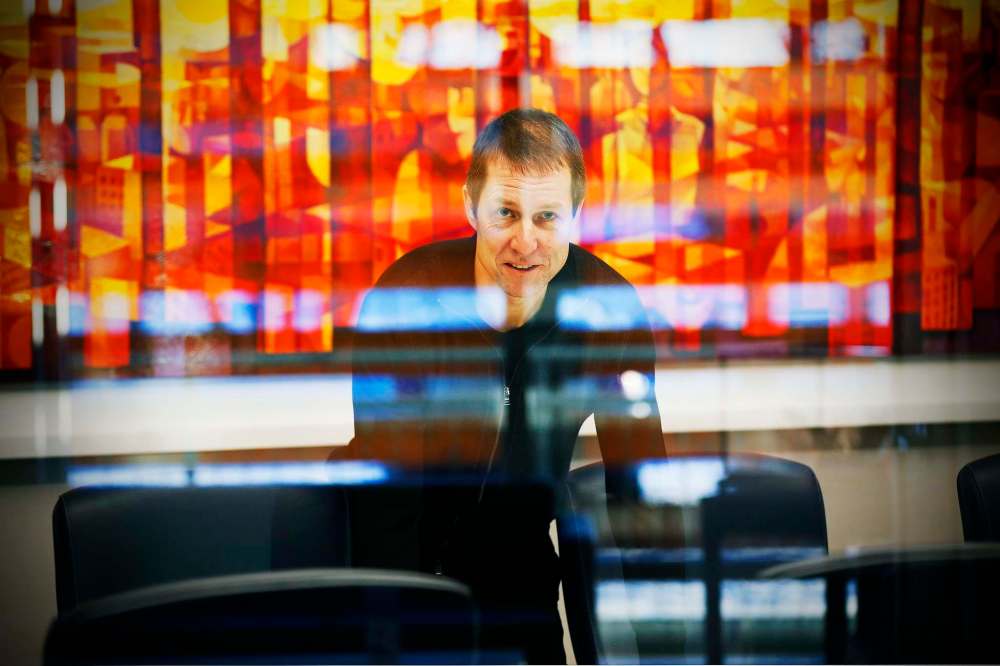
The fact that the online lottery business grew during the pandemic may not be a big surprise. Pollard says people play lotteries for two reasons — to win money and for entertainment. When other entertainment sources were shut down, lotteries might have received a larger portion of that traditional spend.
Before COVID, the online games had been a strategic piece of Pollard’s business, but it was not a materially large part. Now it is becoming that and the expectation is that it will keep growing.
“There are people whose whole world is on their phone,” Pollard pointed out. “And our iLottery player is 10 years younger than our retail player.”
The company also found that the states with iLottery offerings also had increases in the retail business, so it’s not like one game is cannibalizing the other.
Not only is Pollard well-positioned for lottery gaming’s gradual transition to online, it has also established an expansive global footprint.

It has maintained a fairly consistent split generating about 60 per cent of revenue from the U.S., 20 per cent from Canada and 20 per cent from Europe.
After a spate of acquisitions over the past five years the company now has a couple of operations in the U.K., a significant operation in Iceland (that also has a large programming shop in Serbia) and sizable U.S. operations in Michigan (where it has operated an instant ticket-printing operation for many years), Omaha/Council Bluffs, Iowa and Los Angeles.
In total, it now has a global workforce of about 2,000 people, about half of whom are in Winnipeg.
Pollard would love to increase its hometown workforce, that has already grown by about 60 per cent over the past decade.
martin.cash@freepress.mb.ca
History
Updated on Friday, September 17, 2021 6:25 AM CDT: Adds photos