

A demand-ing market
Weak real estate supply expected to temper volume but drive prices higher
Advertisement
Read this article for free:
or
Already have an account? Log in here »
To continue reading, please subscribe:

Digital Subscription
One year of digital access for only $205*
- Enjoy unlimited reading on winnipegfreepress.com
- Read the E-Edition, our digital replica newspaper
- Access News Break, our award-winning app
- Play interactive puzzles
*First annual payment billed as $205.00 + GST for one year. This annual subscription will automatically renew at $233.00 + GST every 52 weeks (10% off the regular annual price of $259.35). Offer available to new and qualified returning subscribers only. Cancel any time.
To continue reading, please subscribe:
Add Free Press access to your Brandon Sun subscription for only an additional
$1 for the first 4 weeks*
- Enjoy unlimited reading on winnipegfreepress.com
- Read the E-Edition, our digital replica newspaper
- Access News Break, our award-winning app
- Play interactive puzzles
*Your next Brandon Sun subscription payment will increase by $1.00 and you will be charged $17.95 plus GST for four weeks. After four weeks, your payment will increase to $24.95 plus GST every four weeks.
Read unlimited articles for free today:
or
Already have an account? Log in here »
Hey there, time traveller!
This article was published 18/02/2022 (1664 days ago), so information in it may no longer be current.
Winnipeg’s real estate market exploded to record highs in 2021 — coming off another record surge in the latter half of 2020 — and while activity is expected to slow in 2022, rising prices are not.
That’s the take from the relatively conservative forecasting style of Peter Squire, the Winnipeg Regional Real Estate Board’s (WRREB) head of market intelligence.
The pandemic-inspired national phenomenon that created an out of balance market with demand far outstripping supply has not necessarily changed. But at the WRREB’s annual market insight’s conference (held virtually) on Thursday, Squire pointed out that market gains started to relax a bit in the second half of 2021 with prices peaking in June.
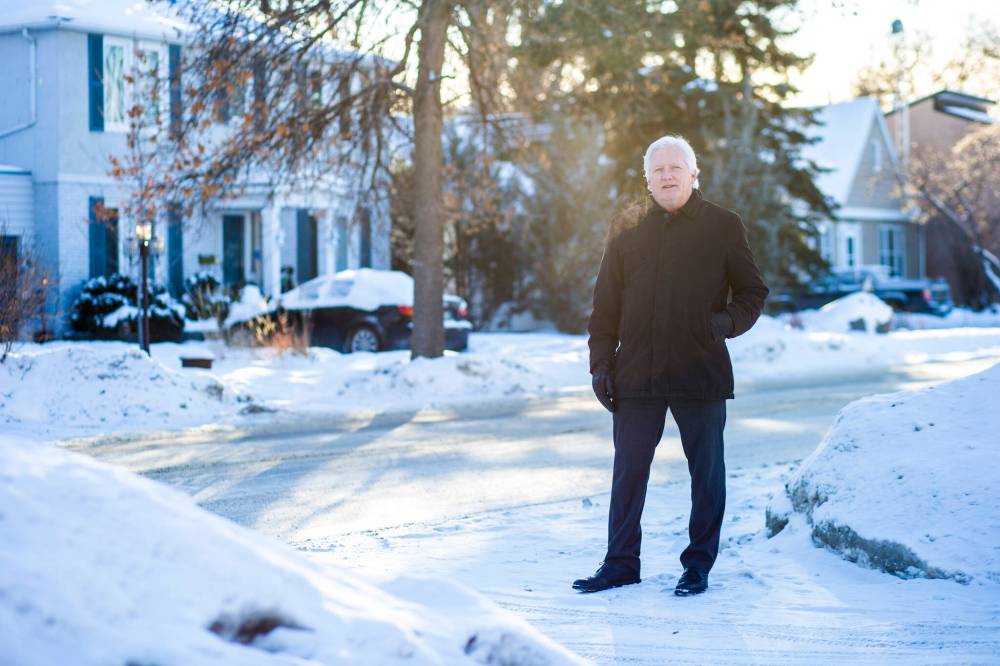
Records set last year may not be surpassed for some time. The 18,575 sales blew through the 10-year average of about 14,000 and the $6.25 billion in total dollar value of sales was more than 50 per cent higher than the previous 10-year average.
In the midst of that dynamic 2022 started with a much reduced supply of homes on the market than was the case even at the start of 2021 — 635 active listings as of Dec. 31, 2021 compared to 915 Dec. 31, 2020 and 1,884 at the end of 2019.
“Simply put we need more listing inventory to ameliorate the supply/demand imbalance,” said Squire. “This, in and of itself, is reducing our possibility of reaching and surpassing last year’s total.”
However, for better or worse, Squire said that scenario will sustain the pressure fuelling higher prices as was the case in 2021, where prices increased by 12 per cent over the previous year.
Many economists have said the volatility caused by COVID-19 variants coming and going makes proper forecasting difficult.
But Squire echoed remarks made previously by Benjamin Tal, deputy chief economist at CIBC, who said, “some moderation in market activity is in order in 2022.”

The fact that the Bank of Canada is about to start raising interest rates, albeit modestly at first, will certainly provide an aid to that dynamic.
But Squire said that the Winnipeg regional real estate market is still functioning with less than two months worth of supply on the market at any given time (when four months worth is what’s typically the case in a balanced market) which means that the sellers’ market is still entrenched.
“Depending on how much sellers are motivated to take advantage of a market where overall conversion ratios of listings to sales is at a higher level than it has ever been before and prices have been increasing will determine if we can move to a balanced market in 2022,” he said.
In 2021, 85 per cent of homes listed actually sold, 10 points higher than the year before and much higher than the 58 per cent-to-64 per cent ratio of the four years prior.
There were plenty of data points to indicate that 2021 was the year that Winnipeg real estate rocked, the fact that condominium sales were up 42 per cent — in a city where the single-family home rules the market — was a telling statistic.

Condos may have sold better than ever before but it’s not as though there was a complete rejection of norms. Where single family detached prices were up in the low double digits, condo prices inched up only 2.1 per cent. And while 51 per cent of residential detached homes sold above list price, only 16 per cent of condos did.
In his commercial market overview, Trevor Clay, founding partner of Capital Commercial Real Estate Services Inc., was both encouraging and depressing.
Industrial properties continue to be the hot segment of the sector, with vacancy rates at 3.8 per cent, down from 4.2 per cent in 2021 and plenty of demand from investors and users with prices strong and multiple offers on many transactions. Clay expects that trend to continue this year.

But to no one’s surprise office vacancies are at historic highs, with downtown class A buildings experiencing a vacancy rate of close to 20 per cent (exacerbated greatly by Canada Life’s decision not to renew its lease on more than 100,000 square feet of space in 444 St. Mary Ave. last summer). Wawanesa Insurance is building a 300,000 square foot headquarters downtown, but the market is going to have to wait for the decision of some of the larger employers as to when folks will return to their offices before any new developments would even be contemplated.
Perhaps the only surprise in the reckoning of last year’s commercial market was in the retail sector.
“While there was a lot of concerns about the retail category going through some majors shifts and challenges, and it certainly did, the retail market continues to perform well in 2021,” Clay said.

Ongoing grocery store demand led to commitments to new space — such as Red River Co-op’s new store in the Seasons of Tuxedo — and creative re-use of big box spaces moved retail vacancy rates down to 4.5 per cent from 5.5 per cent in 2020.
martin.cash@freepress.mb.ca