

Premier wants province to be more affordable, competitive
Two working groups announced: one to foster economic growth, the other to modernize the tax system

Advertisement
Read this article for free:
or
Already have an account? Log in here »
To continue reading, please subscribe:

Digital Subscription
One year of digital access for only $205*
- Enjoy unlimited reading on winnipegfreepress.com
- Read the E-Edition, our digital replica newspaper
- Access News Break, our award-winning app
- Play interactive puzzles
*First annual payment billed as $205.00 + GST for one year. This annual subscription will automatically renew at $233.00 + GST every 52 weeks (10% off the regular annual price of $259.35). Offer available to new and qualified returning subscribers only. Cancel any time.
To continue reading, please subscribe:
Add Free Press access to your Brandon Sun subscription for only an additional
$1 for the first 4 weeks*
- Enjoy unlimited reading on winnipegfreepress.com
- Read the E-Edition, our digital replica newspaper
- Access News Break, our award-winning app
- Play interactive puzzles
*Your next Brandon Sun subscription payment will increase by $1.00 and you will be charged $17.95 plus GST for four weeks. After four weeks, your payment will increase to $24.95 plus GST every four weeks.
Read unlimited articles for free today:
or
Already have an account? Log in here »
Hey there, time traveller!
This article was published 19/10/2022 (1443 days ago), so information in it may no longer be current.
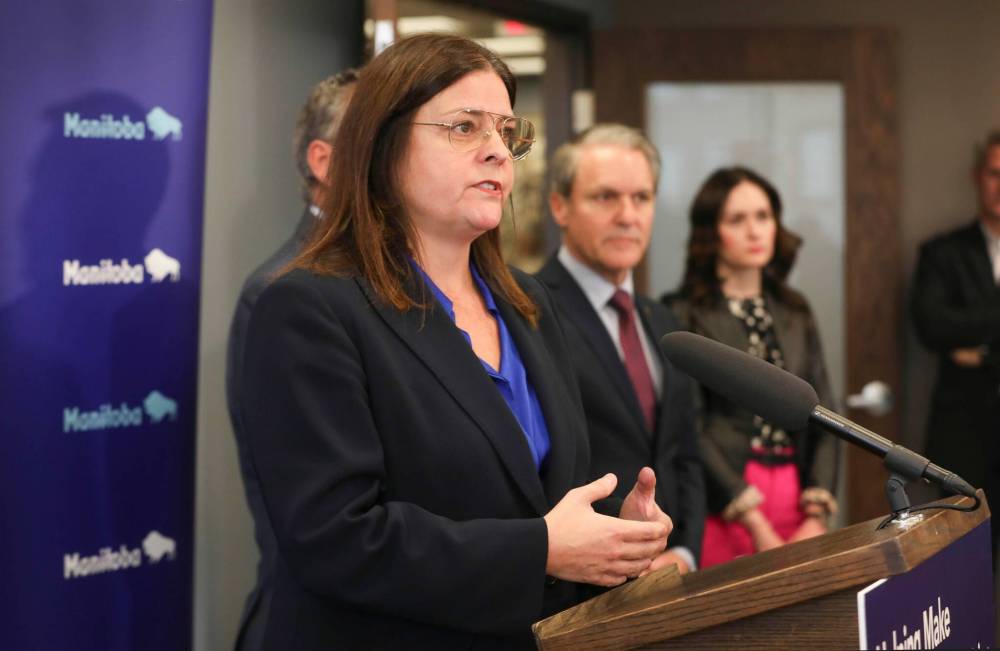
Provincial tax changes are coming, Premier Heather Stefanson announced Wednesday.
“We’re not as competitive as we need to be with other provinces,” Stefanson said at a downtown news conference.
She revealed two new groups: the Premier’s Economic Advisory Council on Competitiveness, which will report to the province’s economic development committee, and a tax competitiveness working group.
The first entity has 12 members from the business sector. It will provide recommendations on how to expand the province’s economic growth, in relation to other provinces and American states.
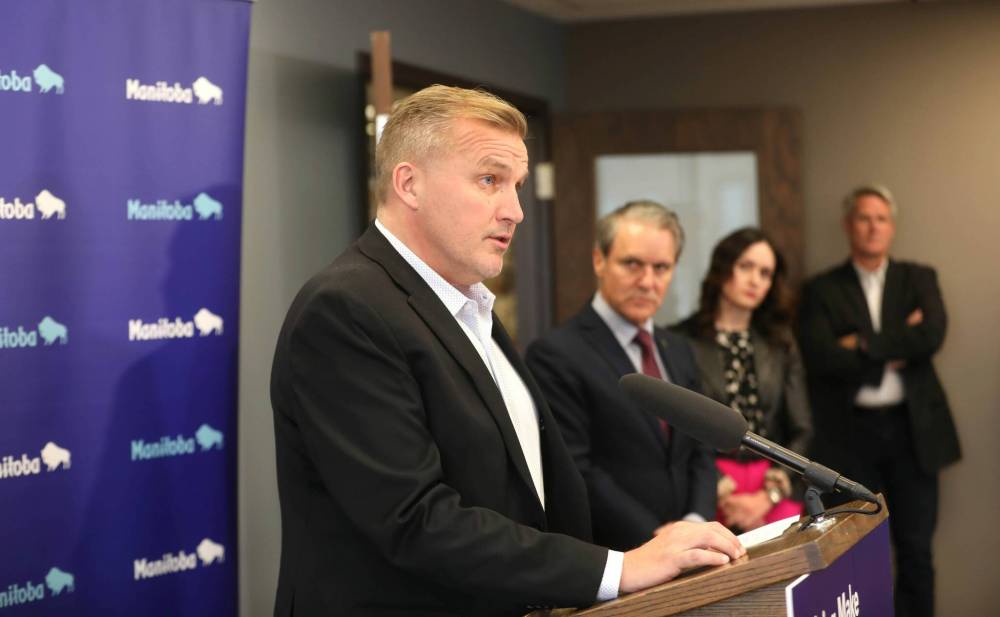
The tax competitiveness working group, made up of seven tax professionals and business experts, will advise government officials on how to make Manitoba’s tax system more competitive. Finance Minister Cameron Friesen will chair the group.
“We have a sales tax that needs work, we have a variety of taxes that need work. If we don’t deal with these things, it creates a drag on Manitoba,” Friesen said.
He noted the Progressive Conservatives have already taken measures to change Manitoba’s tax system, including reducing the PST, indexing the basic personal exemption tax and phasing out the education property tax.
“We want to keep… young people here. We’ve got jobs for them,” Stefanson said.
Manitobans have been moving to other provinces in numbers not seen for at least four decades, according to Statistics Canada data spanning April 1, 2021 to March 31, 2022.
Various business sectors — including hospitality and construction — continue to call for workers.
“Our personal taxes are off, and when you’re trying to attract people to work here, or businesses to set up here or grow here, that’s a deterrent,” said Bram Strain, CEO of the Business Council of Manitoba and a member of the new economic advisory council.
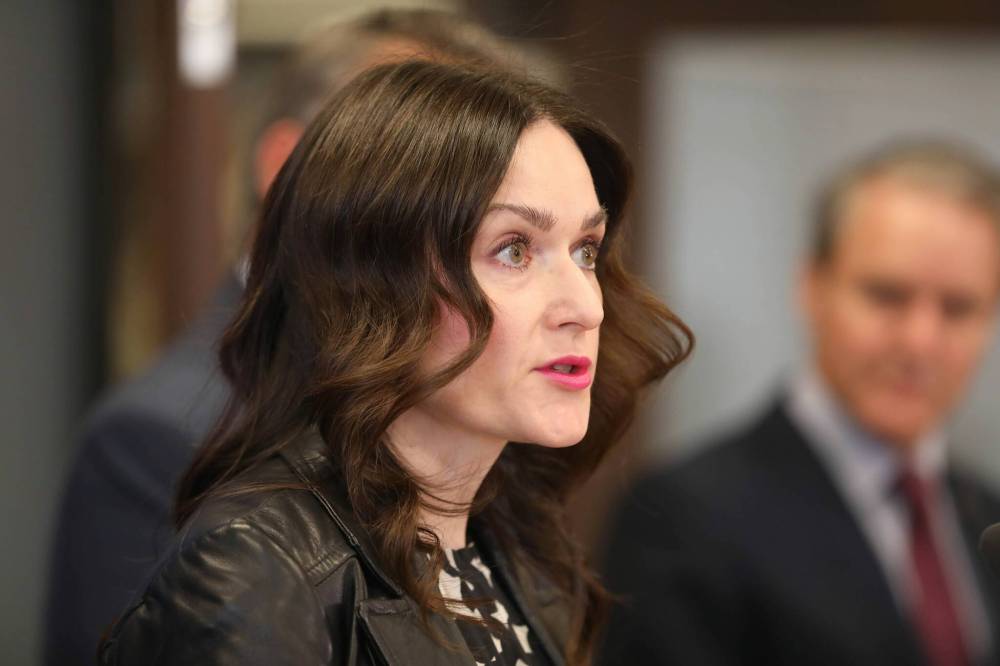
Personal income tax rates are just as important as corporate ones, Strain noted.
“We need more people paying taxes, we need more businesses growing here and establishing here to pay taxes,” he said.
Stefanson echoed his thoughts during Wednesday’s news conference.
“The way we will improve education and social services, health care, is by growing our economy,” she said. “If we are growing our economy, there’s more tax dollars that are coming to the province to be able to afford the social services that Manitobans need.”
The tax competitiveness working group will look at all provincial taxation, including the PST and the carbon tax, Stefanson said. She did not commit to reductions but reiterated any changes will be to make Manitoba more competitive.
The province will likely make changes to taxes in its next budget, Friesen added.
The initiatives have the Manitoba Chambers of Commerce’s full support, said Elisabeth Saftiuk, the non-profit’s vice-president of policy and government relations.

“When we compare ourselves to our neighbours on personal tax rates, we just aren’t where we need to be,” Saftiuk said.
Manitobans typically begin paying income tax after earning $10,145. People in Saskatchewan and Alberta begin paying later, after earning $16,615 and $19,369, respectively.
“Manitobans know Premier Stefanson’s plan when it comes to taxation is to help the rich get richer while making working people pay more,” Bernadette Smith, NDP MLA for Point Douglas, said in a statement.
“Her government gave cheques to billionaires and out-of-province landlords like the owners of Polo Park mall while raising hydro rates for working families and cutting health care and education,” Smith wrote.
gabrielle.piche@winnipegfreepress.com
Gabrielle Piché reports on business for the Free Press. She interned at the Free Press and worked for its sister outlet, Canstar Community News, before entering the business beat in 2021. Read more about Gabrielle.
Every piece of reporting Gabrielle produces is reviewed by an editing team before it is posted online or published in print — part of the Free Press‘s tradition, since 1872, of producing reliable independent journalism. Read more about Free Press’s history and mandate, and learn how our newsroom operates.
Our newsroom depends on a growing audience of readers to power our journalism. If you are not a paid reader, please consider becoming a subscriber.
Our newsroom depends on its audience of readers to power our journalism. Thank you for your support.
New subsidy for small
business owners paying minimum wageSmall business owners paying minimum wage are eligible for a new subsidy, Economic Development Minister Cliff Cullen announced.
Companies with a maximum 20 staff can receive up to 50 cents per hour back for each employee they pay minimum wage. The subsidy begins retroactive to Oct. 1 and ends March 31.
Still, the province will “be engaging with the business community” further on the matter, Cullen said when asked what happens come February.
— Gabrielle Piché
Members of the
new committeesCurt Vossen, Richardson International’s president and CEO, will chair the Premier’s Economic Advisory Council on Competitiveness. The rest include:
● Bram Strain, president and CEO, Business Council of Manitoba;
● Daniel Friedman, president and CEO, Pavilion Financial Corp.;
● Dan McConnell, CEO, North West Company;
● Jamie Brown, CEO and executive producer, Frantic Films;
● Darryl Levy, president, and CEO, Wynward Insurance Group;
● Chuck Davidson, president and CEO, Manitoba Chambers of Commerce;
● Tanya LaBuick, board president, Brandon Chamber of Commerce;
● Mark Jones, chair, Winnipeg Chamber of Commerce;
● Dayna Spiring, president and CEO, Economic Development Winnipeg;
● John Heimbecker, vice-president, Parrish and Heimbecker; and
● a representative from the Indigenous Chamber of Commerce.
Finance Minister Cameron Friesen will lead the tax competitiveness working group. Other members include:
● Kevin Ploegman, partner, Fort Group and chartered professional accountant;
● Mark Jones, chair, Winnipeg Chamber of Commerce;
● Al Babiuk, CEO, Loewen;
● Trevor Sprague, partner, MNP;
● Jessica Dumas, president, Jessica Dumas Institute of Diversity and Leadership;
● Ryan Palmer, partner, KPMG; and
● Dan Kelly, president and CEO, Canadian Federation of Independent Business or Kathleen Cook, provincial director, Manitoba, Saskatchewan and the North, Canadian Federation of Independent Business.
— From the Province of Manitoba
Gabrielle Piché reports on business for the Free Press. She interned at the Free Press and worked for its sister outlet, Canstar Community News, before entering the business beat in 2021. Read more about Gabrielle.
Every piece of reporting Gabrielle produces is reviewed by an editing team before it is posted online or published in print — part of the Free Press‘s tradition, since 1872, of producing reliable independent journalism. Read more about Free Press’s history and mandate, and learn how our newsroom operates.
Our newsroom depends on a growing audience of readers to power our journalism. If you are not a paid reader, please consider becoming a subscriber.
Our newsroom depends on its audience of readers to power our journalism. Thank you for your support.
Advertisement Advertise With Us
Advertisement Advertise With Us