

A quarter of Canadians think prices will eventually fall. Here’s why that’s unlikely
Advertisement
Read this article for free:
or
Already have an account? Log in here »
To continue reading, please subscribe:

Digital Subscription
One year of digital access for only $205*
- Enjoy unlimited reading on winnipegfreepress.com
- Read the E-Edition, our digital replica newspaper
- Access News Break, our award-winning app
- Play interactive puzzles
*First annual payment billed as $205.00 + GST for one year. This annual subscription will automatically renew at $233.00 + GST every 52 weeks (10% off the regular annual price of $259.35). Offer available to new and qualified returning subscribers only. Cancel any time.
To continue reading, please subscribe:
Add Free Press access to your Brandon Sun subscription for only an additional
$1 for the first 4 weeks*
- Enjoy unlimited reading on winnipegfreepress.com
- Read the E-Edition, our digital replica newspaper
- Access News Break, our award-winning app
- Play interactive puzzles
*Your next Brandon Sun subscription payment will increase by $1.00 and you will be charged $17.95 plus GST for four weeks. After four weeks, your payment will increase to $24.95 plus GST every four weeks.
Read unlimited articles for free today:
or
Already have an account? Log in here »
Hey there, time traveller!
This article was published 23/01/2023 (1307 days ago), so information in it may no longer be current.
OTTAWA – What goes up doesn’t necessarily come down.
That’s contrary to the sentiment of a surprisingly large proportion of respondents to the Bank of Canada’s quarterly consumer expectations survey, released last week.
According to the survey, more than a quarter of Canadians believe that current decades-high prices will drop five years from now.
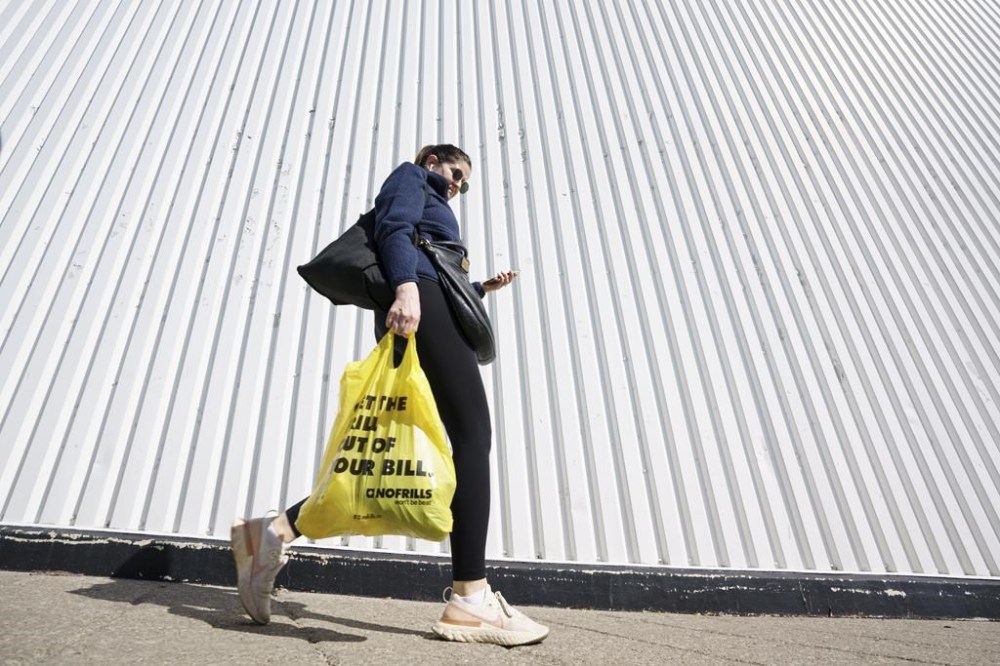
“What goes up must come down,” said one respondent in a post-survey interview.
The sentiment likely raised eyebrows at the central bank
The chance of deflation in five years is “extremely unlikely,” Laval University economics professor Stephen Gordon said.
Though some prices will come down, as has been the case with gasoline prices, Gordon said higher prices for goods feed into each other through the supply chain and become baked into the economy.
“It starts getting embedded into people’s expectations and it becomes a self-fulfilling prophecy,” he said.
Meanwhile, the Bank of Canada said confusion between deflation (falling prices) and disinflation (slowing price growth) wasn’t the reason the figure was so high, noting that its survey respondents understood the difference.
The central bank regularly monitors inflation expectations in the economy to make sure it has control over price growth. With inflation running well above its two per cent target, inflation expectations have been a top concern for the Bank of Canada.
If people and firms expect inflation to remain high in the future, that expectation can lead to businesses setting prices higher and workers asking for higher wages.
Normally, people expect deflation when the economy isn’t doing well. However, the Bank of Canada pointed out that respondents who said they are anticipating deflation were less likely than other Canadians to expect a recession in the next twelve months.
Instead, these respondents were more likely to believe that inflation was caused by supply chain disruptions. Once these temporary pressures on inflation fade, many of them believe prices that rose rapidly would then decline.
Although TD director of economics James Orlando agrees that deflation is unlikely on the horizon, he said there is logic behind what these respondents are thinking.
“As supply chains ease, and they’re easing very quickly right now, we’re going to start getting more and more discounting,” Orlando said.
Consumer price index data shows prices for some goods have already been falling in recent months.
The prices of durable goods for example, which includes products like furniture, fell between November and December.
However, that doesn’t mean the economy will experience broad-based deflation, Orlando said.
“The reason why we don’t think total inflation is going to be sustained in a negative territory … is because you got to consider that the economy isn’t just goods, but it’s also services,” he said.
Prices for services are driven by wages, he said, which are unlikely to fall given they’re sticky nature.
Though deflation may sound like good news on face value, Gordon said it isn’t something anyone should be wishing for.
“Business would have to be in really bad condition for firms to be cutting their prices. And if they’re in that situation, they’re probably cutting workers,” he said.
Similarly to high inflation, deflation would also set alarm bells off at the central bank. Orlando said Canada’s economic system expects there to be some inflation and has that built into expectations. It’s

If prices were to begin falling, that would force the Bank of Canada to jump in and to stabilize prices.
For now, the central bank’s worries are far-removed from fears of deflation.
Canada’s annual inflation rate was 6.3 per cent in December, a noticeable improvement from the month prior but still too high for the Bank of Canada’s comfort.
Though some Canadians appear to believe prices will repair themselves, the Bank of Canada isn’t counting on it as it gears up for one more — and potentially final — interest rate increase on Wednesday.
This report by The Canadian Press was first published Jan. 23, 2023.