

TC Energy says combination of factors caused Keystone pipeline leak
Advertisement
Read this article for free:
or
Already have an account? Log in here »
To continue reading, please subscribe:

Digital Subscription
One year of digital access for only $205*
- Enjoy unlimited reading on winnipegfreepress.com
- Read the E-Edition, our digital replica newspaper
- Access News Break, our award-winning app
- Play interactive puzzles
*First annual payment billed as $205.00 + GST for one year. This annual subscription will automatically renew at $233.00 + GST every 52 weeks (10% off the regular annual price of $259.35). Offer available to new and qualified returning subscribers only. Cancel any time.
To continue reading, please subscribe:
Add Free Press access to your Brandon Sun subscription for only an additional
$1 for the first 4 weeks*
- Enjoy unlimited reading on winnipegfreepress.com
- Read the E-Edition, our digital replica newspaper
- Access News Break, our award-winning app
- Play interactive puzzles
*Your next Brandon Sun subscription payment will increase by $1.00 and you will be charged $17.95 plus GST for four weeks. After four weeks, your payment will increase to $24.95 plus GST every four weeks.
Read unlimited articles for free today:
or
Already have an account? Log in here »
Hey there, time traveller!
This article was published 09/02/2023 (1307 days ago), so information in it may no longer be current.
CALGARY – TC Energy Corp. has pegged the cost of cleanup and remediation of December’s oil spill from its Keystone pipeline at an estimated US$480 million.
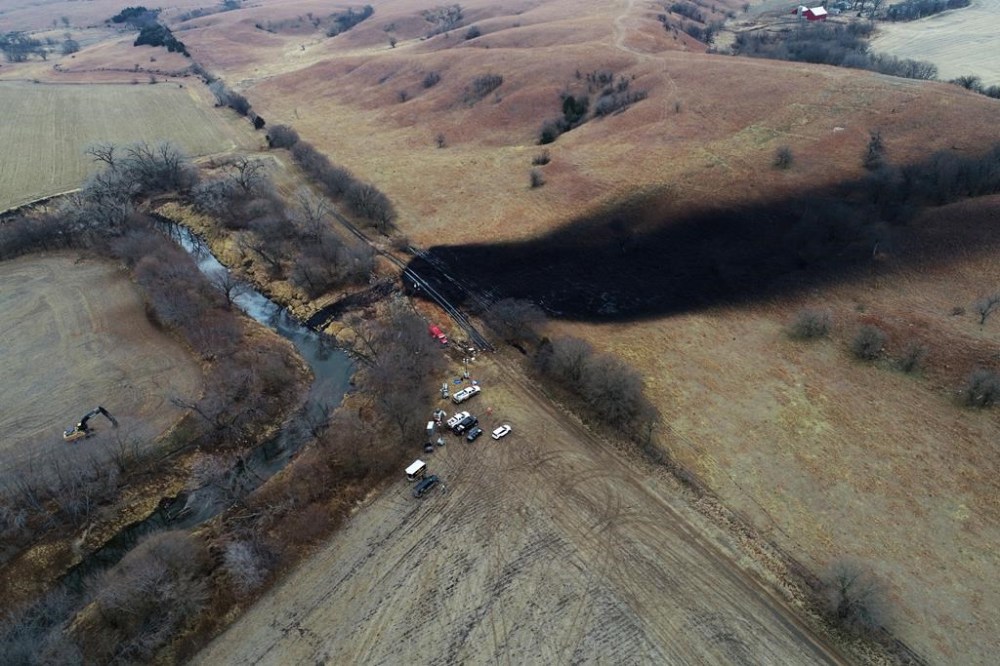
The Keystone pipeline system suffered the worst oil spill in its history on Dec. 7, 2022 when oil leaked into a creek in Washington County, Kansas.
The size of the spill was initially estimated at 14,000 barrels, though TC Energy revised that figure downwards Thursday to 12,937 barrels.

While most of the 4,324-kilometre pipeline system reopened a week after the spill, a 154-km section running from just south of Steele City, Nebraska to Cushing, Oklahoma remained shut down until the end of December.
On Thursday, the company put a price tag on the event for the first time, saying it is working with its insurers to maximize cost recoveries.
“This estimate may be adjusted as we continue to progress work on site,” the company said in a news release.
TC Energy also released the results of its investigation into the cause of the leak. The company said Thursday the spill was due to a combination of factors, including bending stress on the pipe and a welding flaw.
It said the weld flaw led to a crack that grew over time as a result of bending stress fatigue, leading to the leak. The cause of the bending stress remains under investigation.
The company added a metallurgical analysis identified no issues with the strength or material properties of the pipe or manufactured fitting, and the pipeline was operating within its operational design and within the pipeline design maximum operating pressure.
Recovery and remediation efforts at the site continue, TC Energy said, and the company is also conducting additional in-line inspections as well as an analysis of other segments of pipe with potentially similar conditions.
Pipelines are widely considered by experts to be a safer mode of crude transport than either rail or truck. Still, the risk of a spill has long been a factor cited by environmentalists and others who have opposed North American pipeline construction projects in recent years.
Fears about potential pipeline leaks (as well as concerns about climate change) helped stoke opposition to TC Energy’s proposed Keystone XL extension. That project would have cut across Montana, South Dakota and Nebraska but ultimately had its permit cancelled by U.S. President Joe Biden in 2021.

A report released last year from the U.S. Government Accountability Office (GOA), a congressional watchdog agency, said Keystone’s accident history has been similar to other crude oil pipelines since 2010, but the severity of spills has worsened in recent years.
In 2017, a Keystone leak resulted in an approximately 6,600-barrel spill in North Dakota, while in 2019, the pipeline spilled about 4,500 barrels of oil in South Dakota.
In both those spills, the GOA report identified “construction issues” leading to the material failure of pipe or welding material as a leading factor.
This report by The Canadian Press was first published Feb. 9, 2023.
Companies in this story: (TSX:TRP)